United States
Attention C-Suite: Place Matters
Mark Murro urges executives to further explore and understand the concept of "return on ecosystem" achieved by locating in particular, well situated places.
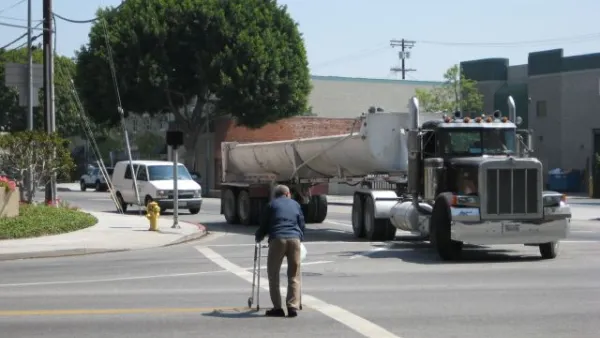
Intersection Designs that Prioritize Pedestrian Safety
Following the idea that pedestrian safety takes its cues from planners, Rachel Dovey's article on pedestrian safety lists six intersection designs that "actually prioritize pedestrians."

A Conservative Argument against 'Suburban Primacy'
Charles Marohn argues against the staunch conservative defense of suburbs (famously voiced by Joel Kotkin) by showing how suburban development falls short of conservative ideals and cities, on the contrary, embody them.
APA Seeking Input for Updated 'Planning for Sustainability Policy Guide'
The American Planning Association (APA) is seeking input for an update of the 2000 Planning for Sustainability Policy Guide.
The Incredible Climate Mitigation Potential of Compost
Research has shown that the world's largest land use, grazing, holds enormous potential when linked with composting, to dramatically reduce the carbon content of the atmosphere through sequestration while concurrently restoring degraded rangeland.
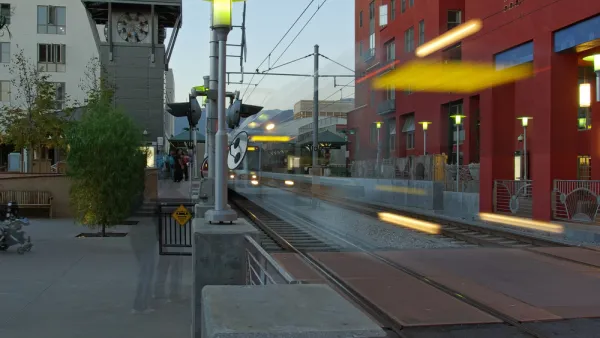
The New Transit User Fee: Real Estate Rent
Driven by a need to meet growing costs amid unstable federal subsidies, metropolitan transit agencies are eying their properties, particularly parking lots, as money makers from new residential and commercial development.
Fed Chair Janet Yellen Discusses Continuing Wealth Inequality in the United States
In a recent address to the Conference on Economic Opportunity and Inequality, chairwoman of the Federal Reserve Janet Yellen portrayed the stark inequalities growing within American society.
Freight Rail Conundrum: Speed vs. Safety
Safety would win hands down for passenger rail, but for-profit railroads have a bottom line to consider. Regulators have proposed reduced train speeds, opposed by railroads, to prevent fiery derailments that have resulted from shipping shale oil.

The Best Sentences of the Week (Volume 2)
By no means authoritative or comprehensive, here's a collection of noteworthy phrases, paragraphs, commentaries, observations, and more from the recent week in the planning and urbanism discussion.
More than 60 Percent of B Corps Located in Cities—What's Their Impact?
B Labs, the nonprofit that oversees and assesses B Corps, reports that, compared to other sustainable businesses, B Corps are 68 percent more likely to donate at least 10 percent of their profits to charity.
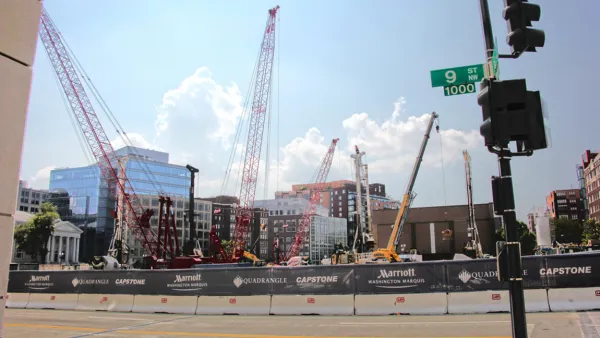
Is Urban Revitalization Possible Without Displacement and Gentrification?
Jared Green asks the billion dollar question for economic developers and planning agencies throughout the United States: is urban revitalization of neighborhoods possible without the subsequent gentrification and displacement of current residents?
Report: Expect Regular Coastal Floods Within 15 Years
Climate change and rising seas will mean higher flood risks for cities. But when exactly will impactful flooding become a regular occurrence? New analysis by the Union of Concerned Scientists says that time is fast approaching.

Why Millennials Opt to Rent
Sandie Angulo Chen of Trulia discusses the reasons why Millennials prefer to rent homes or apartments instead of buying properties.
Keeping Cities in the Dark
There's a third dimension to sprawl: all those photons that emanate from street lights, houses, and vehicles. As author Paul Bogard discusses in The End of Night, light pollution is an overlooked menace that presents a new frontier for planners.
Fracking's Formidable Foe
The worthy foe is not environmental regulations nor the the government or public demanding fracking moratoriums and bans. It is the falling global price of oil. Two radio reports explore how the global glut of oil affects U.S. shale oil production.
In Defense of Uncertainty in the Development Approval Process
While streamlining and anti-NIMBYism are in vogue, Murtaza Baxamusa reminds us what's really at stake.
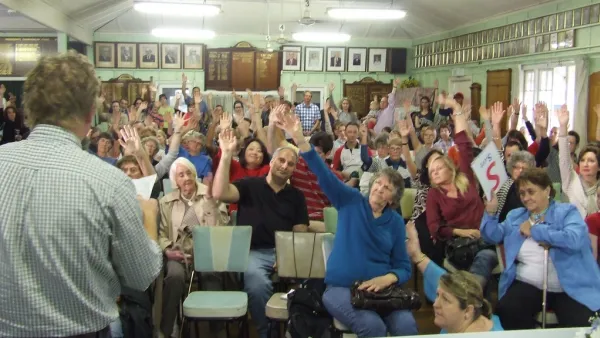
Poll: What are the Most Important Skills for Planning Staffers?
In the second in a series of posts, PlannersWeb recently posted the results of a poll asking: "What are the skills you’ve found most important in serving on a planning commission?"

Why Millennials Drive Less: Many Possibilities, Few Answers
Millennials are less likely to get driver's licenses, they tend to take fewer, shorter car trips, and they use alternative modes of transportation more than their predecessors. The question for the ages is why.
What Next for 'Rebuild By Design'?
The Rebuild By Design competition attracted plenty of hoopla thanks to its $920 million and the critical need for projects that protect coastal cities as sea levels rise. Now that the winners have been picked, how will they deliver on their promise?
Poll: What are the Most Important Skills for Planning Commissioners?
PlannersWeb recently posted the results of a poll asking: "What are the skills you’ve found most important in serving on a planning commission?"

FREE Course: Walkable City 1: Why Walkability?
After describing his path towards focusing on walkability as the essence of good planning, Jeff Speck marches through his five principal reasons for making more walkable places.
Reinventing Malls: Planning Alchemy—Turning Gray Fields Into Gold
The course focuses on the opportunities and imperatives that shape reinvention of mall sites.

One Hundred Miles
County of Mendocino
planning NEXT
The Architects Foundation
University of Cincinnati Online
Montrose County
Northern Illinois Transit Authority (NITA)
The Pocatello Development Authority









