Using a metric called "regional price parity," the Commerce Department's Bureau of Economic Analysis shows that urban areas are the most expensive places in the country. Honolulu, Hawaii rates as the most expensive metro area in the country.


"[Urban] Honolulu takes the prize as the most expensive metro area in the nation," according to analysis by Danielle Kurtzleben of figures recently released by the Commerce Department's Bureau of Economic Analysis. The recent figures measure "regional price parity," which provides a holistic picture of the costs associated with living in any given place in the country.
Kurtzleben's analysis, complete with maps and graphs, includes analysis of states and metro areas.
As for states: "DC had the highest prices in the nation as of 2012, with a regional price parity score of 118.2. That means its prices were 18.2 percent higher than the national price level in 2012. It is followed by Hawaii (117.2) and New York (115.4)."
And for metro areas, here's some of why Honolulu rates as the most expensive in the country: "Hawaii tends to have higher food prices than other states, for example, because so much of the food Hawaiians consume has to be shipped across the ocean. In addition, some have called the amount of money people are willing to pay to live in Hawaii "the price of paradise" — a book of that title penned 20 years ago discussed this problem, and the state has remained expensive since then."
Read the full story: Honolulu is even more expensive than New York or San Francisco
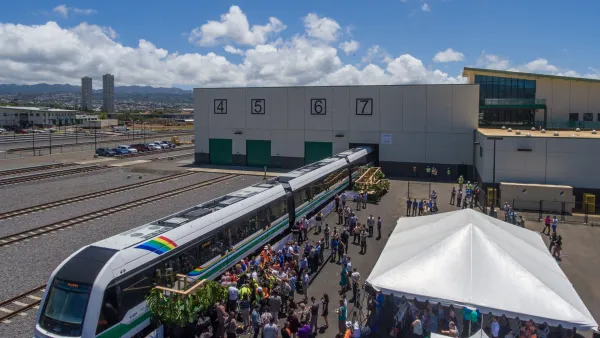
From robotaxis to robotrains: LA, DC weigh driverless transit
If approved, the projects will take years to implement and face financial and technical hurdles.
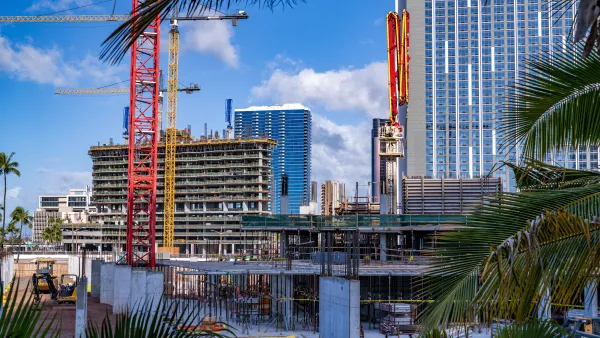
Is AI really the Panacea to our permitting woes?
Let’s have a look at what’s happening on the ground.
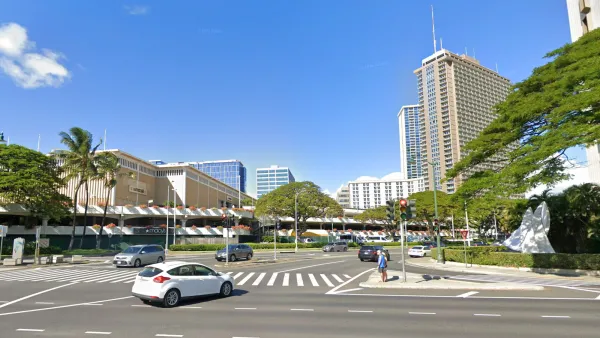
Hawaii DOT takes action after reporters call attention to dangerous crosswalk
The state made changes to a treacherous intersection after reporting revealed that traffic light timing was posting a threat to pedestrians.

Planetizen Federal Action Tracker
A weekly monitor of how Trump’s orders and actions are impacting planners and planning in America.

Eastern Nebraska is running out of electricity
Data centers and electrification are straining eastern Nebraska’s grid, throttling economic development.

Study reveals best places in the U.S. for cycling, walking
New research from Streetlight Data examines bicycle and pedestrian miles per capita in the 100 largest U.S. cities by population.

Developers reveal $10 billion stadium plan as ‘Hail Mary’ to keep Bears in Chicago
The plan would also boast a public park, high- and mid-rise buildings and a youth sports complex.

As Texas embraces carbon storage, a Black community questions the risks
Texas now issues permits for companies to store carbon dioxide underground. East Texas residents fear safety risks, and skeptics doubt the climate benefits.

New BLM proposal would slash public comment periods, environmental protections
The proposed rewrite would also strip legal leverage from Tribal nations and state governments.

FREE Course: Walkable City 1: Why Walkability?
After describing his path towards focusing on walkability as the essence of good planning, Jeff Speck marches through his five principal reasons for making more walkable places.
Reinventing Malls: Planning Alchemy—Turning Gray Fields Into Gold
The course focuses on the opportunities and imperatives that shape reinvention of mall sites.

City of Rosemead
Rutgers University, Edward J. Bloustein School of Planning and Public Policy
One Hundred Miles
University of Michigan School for Environment and Sustainability (SEAS)
Hunter College, City University of New York (CUNY)
The Architects Foundation
City of Cambridge
The Pocatello Development Authority
The Urban Renewal Agency of the City of Pocatello