Civic leaders chime in on how policy should guide technology and smart cities initiatives.


Adie Tomer and Rob Puentes from the Brookings Institution's Metropolitan Policy Program blog about their latest Brookings Institution's report "Getting Smarter About Smart Cities." The report summarizes key ideas from North American and European civic leaders who gathered during a two-day workshop to brainstorm how cities should guide technology to achieve their vision.
Per Tomer and Puentes, "By focusing on the cutting-edge technologies themselves and relying on private companies to move forward...we have lost sight of what we even want our cities to achieve with all that tech."
While commercials have romanticized the notion of smart cities, the co-authors provide realistic and grounded recommendations from the two-day workshop: 1) creating a city business plan that incorporates smart technology; 2) promoting technology that increases productivity, is inclusive and resilient; 3) restructuring and creating technology leadership within the city; 4) working with appropriately scaled projects; and 5) formalizing "city-level networks" with regard to smart cities and smart technology.
Read the full story: Here’s the Right Way to Build the Futuristic Cities of Our Dreams

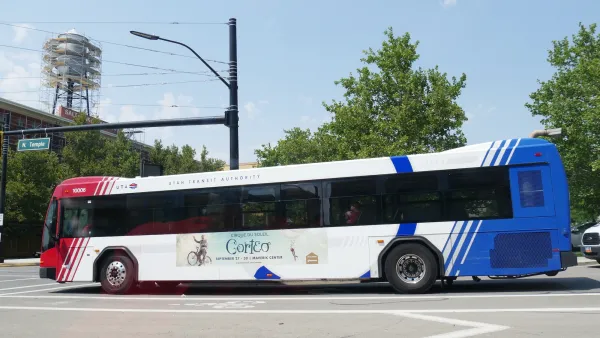
Salt Lake City debuts new bus rapid transit line
The third BRT line in the Utah Transit Authority system connects destinations from Taylorsville to the West Valley.

AI for Planners Explained: Urban Digital Twins
When AI stops talking and starts showing.
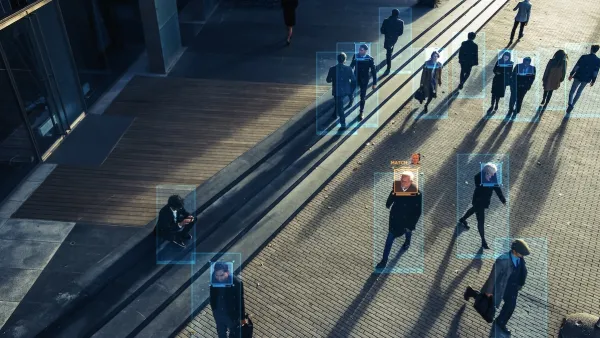
In Planning, the Possibilities With AI are High. So are the Stakes.
Planning history tells us that public trust is both fragile and essential. With AI, the time to set the right course is now.

Amtrak, CN end decades-long dispute with eight-year agreement
The new operating agreement establishes an updated framework for the companies to work together, including processes to resolve disputes.

Judges permit Denver to divert 77,000 acre feet from the Colorado River for reservoir expansion
Overuse and climate change have caused the Colorado River’s water levels to plummet.

Nation's most wind-powered state turns to coal as data centers increase energy demand
For the first time in decades, Iowa has increased its generation of coal power.

Boston has spent millions making the Green Line more accessible — and there’s no end in sight
While the city has invested millions into expanding and adding platforms to the Green Line to make it more accessible, new train cars set to arrive next year will be too tall for disabled passengers to board without raising the current platforms.

Idaho may see an 18% drop in federal surface transit funding — the largest estimated cut in the US
Transit systems in rural communities are much more reliant on federal funding to provide their services.

How ‘post-disaster gentrification’ alters neighborhoods after natural calamities
After hurricanes, fires or other calamities, the original residents of a community are often replaced by younger, wealthier residents.

FREE Course: Walkable City 1: Why Walkability?
After describing his path towards focusing on walkability as the essence of good planning, Jeff Speck marches through his five principal reasons for making more walkable places.
Reinventing Malls: Planning Alchemy—Turning Gray Fields Into Gold
The course focuses on the opportunities and imperatives that shape reinvention of mall sites.

City of Wisconsin Rapids
Harvard University Graduate School of Design
KFH Group Inc.
The Architects Foundation
University of Cincinnati Online
The Pocatello Development Authority
The Urban Renewal Agency of the City of Pocatello