Street trees add an interesting dimension to the built environment, providing shade, visual relief and more. They frame the public realm so well that we might be shocked to witness our Main Streets without them. This series of images does just that.


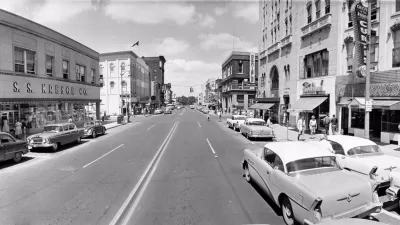
We at Community Builders will not be the first to point out the value of street trees. Dan Burden, Kaid Benfield, Chuck Marohn and many others have done that. But though elegantly and passionately described, there is something missing from the existing body of street tree advocacy: A visual examination of the stark difference between streets with trees, and streets without.
Streets Without Trees takes a look at several communities in the Rocky Mountain west through just this lens. Starting with images of streets already lined with trees, we manipulate the image to result in the same scene with our leafy friends removed. The difference is quite noticeable, and we hope will remind us of a deep-rooted appreciation for them.
Read the full story: Streets Without Trees
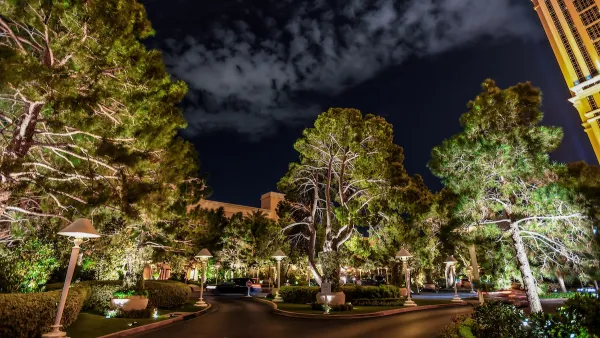
Urban Trees Have Bigger Impact in Hot, Dry Cities
The cooling effect of robust urban tree canopies is more pronounced in hotter, drier cities like Phoenix and Las Vegas.
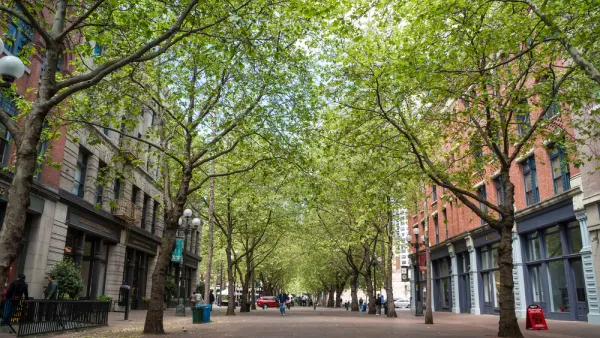
Symposium Highlights the Crucial Role of Trees in Combatting Extreme Heat
Experts emphasize that planting and maintaining trees in urban areas is essential for reducing extreme heat, cooling cities, and preventing heat-related illnesses, especially as heatwaves become more frequent and severe.
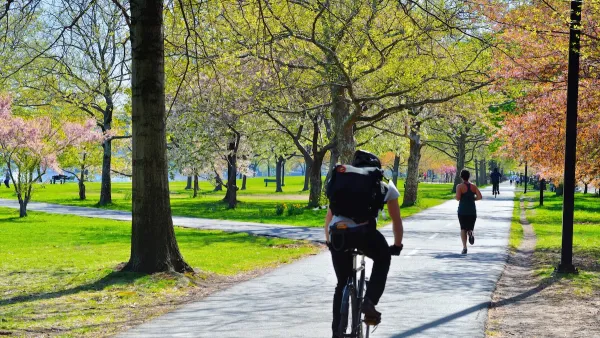
Urban Trees Are Vital in an Era of Extreme Heat
Urban trees are essential for cooling public spaces, promoting physical activity, and protecting vulnerable populations from extreme heat.

Planetizen Federal Action Tracker
A weekly monitor of how Trump’s orders and actions are impacting planners and planning in America.

California plans to bury El Niño’s downpour
If the state plays its cards right, it may be able to store a billion acre-feet of El Niño’s water in aquifers.

Desperate measures: Advocates weigh draining Lake Powell to fill Colorado River
Draining the reservoir could reduce evaporation losses by a couple hundred thousand acre-feet.

Mamdani’s pied-à-terre tax survives legal challenge
A panel of judges found that the plaintiffs failed to demonstrate injury as a result of New York City's implementation of the tax.

Eastern Nebraska is running out of electricity
Data centers and electrification are straining eastern Nebraska’s grid, throttling economic development.

Seattle passes record-breaking transit services expansion
Proposition 1 will double the city’s transit tax to add 95,000 more bus trips and preserve 180,000 bus trips annually.

FREE Course: Walkable City 1: Why Walkability?
After describing his path towards focusing on walkability as the essence of good planning, Jeff Speck marches through his five principal reasons for making more walkable places.
Reinventing Malls: Planning Alchemy—Turning Gray Fields Into Gold
The course focuses on the opportunities and imperatives that shape reinvention of mall sites.

City of Rosemead
Rutgers University, Edward J. Bloustein School of Planning and Public Policy
One Hundred Miles
University of Michigan School for Environment and Sustainability (SEAS)
Hunter College, City University of New York (CUNY)
The Architects Foundation
City of Cambridge
Montrose County
The Pocatello Development Authority