New York
Key Questions Remain for New York City's Affordable Housing Plan
Although Mayor Bill de Blasio's recent announcements provided some important details about his administration's affordable housing agenda, there are a few questions still left to be answered that will determine the success of the plan.
How the Gentrification Narrative Gets it Wrong
A writer points to surprising statistics about Brooklyn—mainly that much of the borough is growing poorer as real estate prices fall—to make a point about how the common gentrification narrative fails cities.
DOT's Emergency Actions on Shipping Bakken Crude by Rail Fall Short
In what is being billed as the first emergency order of more to come, the Department of Transportation (DOT), the federal regulator of transporting crude oil by rail, hopes to quell the growing national furor over what some call 'ticking time bombs'.

Urban America's 'Reconnaissance Mission for Progressive Politics'
Recent commenters have described cities as the locus for a new type of liberalism that benefits a broader swath of demographics. Dissenters wonder whether certain progressive cities, enabled by privilege, are merely drivers of inequality.
Comprehensive Crash Data for New York City Released Online
In a big victory for safe streets, New York City has released to the public an online database of crash data for the city. Previously, poor and incomplete data made creating safe streets "next to impossible."

'Housing New York' Would Invest $41 Billion in Affordable Housing
New York City Mayor Bill de Blasio announced the details of the "Housing New York" plan this week. The plan will guide the de Blasio Administration toward its goal of creating 200,000 affordable housing units in the city.
Study Finds Deteriorating Service on New York City Subway System
A new study analyzes thousands of MTA 'electronic alerts' to identify trends. One finding in particular jumps out: the number of alerts has increased 35 percent in two years.
Buffalo Releases Draft Green Code to Ease Permit Process
Buffalo recently released the draft of its new Green Code, which includes a Land Use Plan, Unified Development Ordinance, Local Waterfront Revitalization Program, Brownfield Opportunity Areas, and Urban Renewal Plans. Mark Sommer reports.
Can the MTA Speed Implementation of Communications-Based Train Control?
New York City is lagging behind cities like London, Paris, and Tokyo in implementing Communications-Based Train Control (CBTC). A recent report provides recommendations on how to speed up the process.
Oil Tanker Cars Derail; Fireball Erupts in Downtown Lynchburg, Va.
Fortunately, there were no injuries in the restored, downtown waterfront district in this city of 71,000. Fifteen cars derailed; three exploded into a six-story-high fireball. Oil spilled into the James River, threatening downstream water supplies.
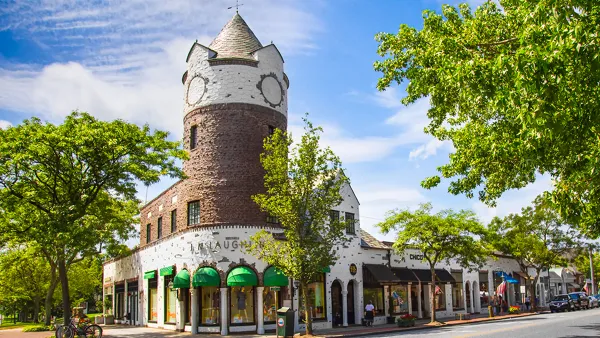
Lessons in Planning from the Future Long Island
Andy Freleng recently answered a series of questions about life on Long Island, and its future, from his perspective as chief planner of Suffolk County.
Older Residents Left Out of NYC's Housing Mix
New York City's population of older adults is growing quickly—by 2030, 300,000 more residents over the age of 65 will live in NYC than its current population of one million. But providing adequate housing for older residents is not yet a priority.
The Hudson Yards 'Quantified Community' Experiment
Undergirding the massive mix of uses and investments called Hudson Yards is an ambitious plan to gather and analyze data provided by the 65,000 people a day who make use of the facility.
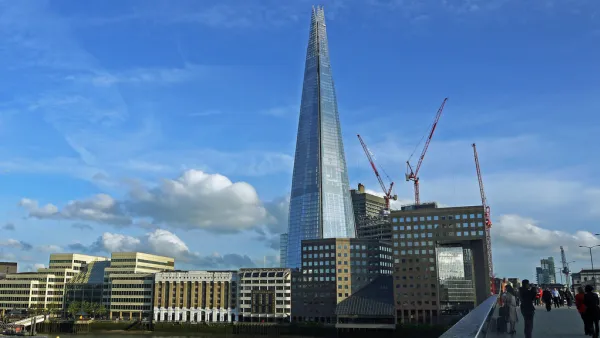
How Tall is Too Tall?
What is the best height to promote good urban living? It needs to be high to attain necessary density but not so high that it detracts from the quality of life, particularly for existing residents. In short, what is the Goldilocks height level?
Friday Funny: The Subway Oyster Shucker
To some people (or maybe just this one person), the N Train in the New York City subway system in a perfectly acceptable place to shuck some oysters.
Renewables Account for 92 Percent of New Power in the United States
Although the United States built less new energy capacity than in the same time period last year, renewable energy dominated the capacity to come online so far in 2014.
A Shot Across the Bow of the Shared Economy
New York Attorney General Eric T. Schneiderman penned an op-ed for the New York Times that specifically calls out Airbnb and Uber—two companies at the forefront of calls to regulate the emerging sharing economy.
New York City's Most Serious Pollution Continues to Plague its Residents
Imagine living high above Manhattan but unable to open your windows because of soot-laden smoke from surrounding buildings. Toxic emissions from burning dirty heating oil continues despite a 2011 law requiring conversion to a cleaner fuel.
Pitching a Queens-Brooklyn Streetcar
Michael Kimmelman resurrects an old plan by Alex Garvin to build a light rail connection between the waterfront neighborhoods of Queens and Brooklyn, except Kimmelman would build a streetcar line.

Two Kinds of Migration Drive Urban Growth
A new post by Richard Florida distinguished between the two different types of migration—domestic and international—driving the influx of residents in urban centers around the country.

FREE Course: Walkable City 1: Why Walkability?
After describing his path towards focusing on walkability as the essence of good planning, Jeff Speck marches through his five principal reasons for making more walkable places.
Reinventing Malls: Planning Alchemy—Turning Gray Fields Into Gold
The course focuses on the opportunities and imperatives that shape reinvention of mall sites.

City of Rosemead
Rutgers University, Edward J. Bloustein School of Planning and Public Policy
One Hundred Miles
University of Michigan School for Environment and Sustainability (SEAS)
Hunter College, City University of New York (CUNY)
The Architects Foundation
City of Cambridge
Montrose County
The Pocatello Development Authority









