Apparently the construction boom that's taken place over the last 12 years in New York hasn't quenched developers' appetites to build. Many are pushing to get their projects approved before the development-friendly administration leaves office.


"With nearly one-third of the city rezoned under the current administration, what's left to do?" asks Matt Chaban. "A lot, it turns out."
The massive Domino Sugar refinery redevelopment, a 63-story Ferris wheel on Staten Island, and the Mayor's own push the rezone Midtown East are among the dozens of projects hoping to advance through the approvals process before the Bloomberg administration leaves office at the end of the year.
"The reason for the frenzy is simple: The planning commission, along with the City Council, has the final say on the shape of all land-use projects," explains Chaban. "Without City Planning's approval now, dozens of projects will need to start from square one with a commission headed by the new mayor's appointees—seven of the 13 members—a prospect that will add great uncertainty, and potentially months or even years of work."
"In an effort to meet its titanic obligations, the [planning] department recently added four temporary planners at its Manhattan headquarters," he adds.
“Mayor Bloomberg has asked all city agencies to get as much done as they possibly can in the next 134 days, and the Department of City Planning is working hard to do just that,” said a spokesman for the department.
Read the full story: Developers push for approvals before Bloomberg leaves


Beverly Hills Put On Blast for High-Rise Approval Delay
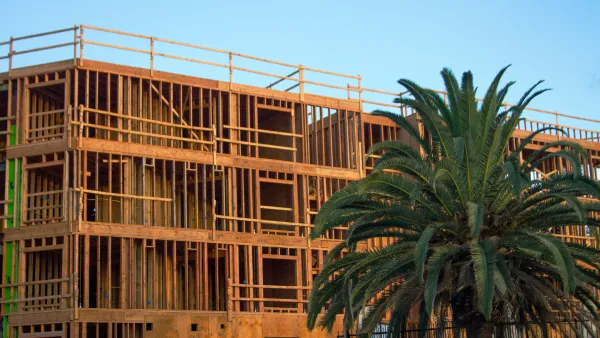
The Newsom administration sent a letter warning Beverly Hills that their failure to process an application for a residential high-rise is a violation of state housing law
L.A. Law Exempts Affordable Housing From Time-Consuming Review Process
Affordable housing and other qualifying projects will no longer be subject to Site Plan Review under a law signed by the city’s mayor last week.
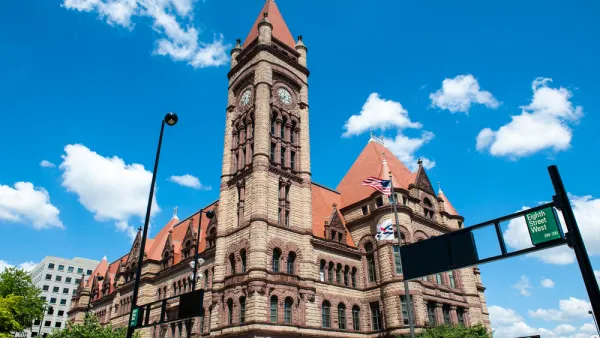
Cincinnati Ends Political Contributions by Developers in Response to Corruption Spree
Corruption is a common companion to the development approvals process—Cincinnati is no exception. But Cincinnati is attempting a new approach to conflicts of interest.

Amtrak, CN end decades-long dispute with eight-year agreement
The new operating agreement establishes an updated framework for the companies to work together, including processes to resolve disputes.

Judges permit Denver to divert 77,000 acre feet from the Colorado River for reservoir expansion
Overuse and climate change have caused the Colorado River’s water levels to plummet.

Nation's most wind-powered state turns to coal as data centers increase energy demand
For the first time in decades, Iowa has increased its generation of coal power.

Boston has spent millions making the Green Line more accessible — and there’s no end in sight
While the city has invested millions into expanding and adding platforms to the Green Line to make it more accessible, new train cars set to arrive next year will be too tall for disabled passengers to board without raising the current platforms.

Idaho may see an 18% drop in federal surface transit funding — the largest estimated cut in the US
Transit systems in rural communities are much more reliant on federal funding to provide their services.

How ‘post-disaster gentrification’ alters neighborhoods after natural calamities
After hurricanes, fires or other calamities, the original residents of a community are often replaced by younger, wealthier residents.

FREE Course: Walkable City 1: Why Walkability?
After describing his path towards focusing on walkability as the essence of good planning, Jeff Speck marches through his five principal reasons for making more walkable places.
Reinventing Malls: Planning Alchemy—Turning Gray Fields Into Gold
The course focuses on the opportunities and imperatives that shape reinvention of mall sites.

City of Wisconsin Rapids
Harvard University Graduate School of Design
KFH Group Inc.
The Architects Foundation
University of Cincinnati Online
The Pocatello Development Authority
The Urban Renewal Agency of the City of Pocatello