Sarah Watson makes the case for micro-apartments, those controversial 250-350 sq. ft. units that neighbors often oppose but meet a critical need.



A 50-member team from the San Francisco's SPUR organization went to the Big Apple to see what San Francisco and the Bay Area could learn from the country's largest city. Like San Francisco, singles make up a huge share of the population - about a third. (It's even higher in S.F. @ 38%). Sarah Watson, Deputy Director of the Citizens Housing & Planning Council (CHPC) which authored the Making Room initiative in New York City, asks, "Why aren’t we designing housing for that demographic?"
One reason it is difficult for policy makers, and the market, to digest these astounding numbers is our confused definition of household. Since the 1950 census, “household” has been synonymous with “family.” Data splits households into family and nonfamily categories, relegating single people and their housing need to an oddity.
This explains why housing is usually categorized as either single-family homes or multi-family buildings. However, the demographic composition of single-person households may not be what some think it to be.
(I)n New York City, only 19 percent of single-person households are under 35 years old. Twenty percent are 35–55 years old and just over 50 percent are over 55.
Watson also points to the numerous "repercussions of failing to respond to single people’s need for appropriate housing", such as singles forced to live "in shared arrangements in housing that is not designed for it."
Read the full story: Time to Make Room


Advocates Push for Gowanus Rezoning, Stuck in COVID-19 Limbo, to Move Forward
According to advocates, the relative affluence of Gowanus is the reason a plan to rezone the neighborhood must move forward.

Visualizing Manhattan's Shrinking Density
Although Manhattan has seen in influx of skyscrapers since 1910, overall residential density has shrunk since then.
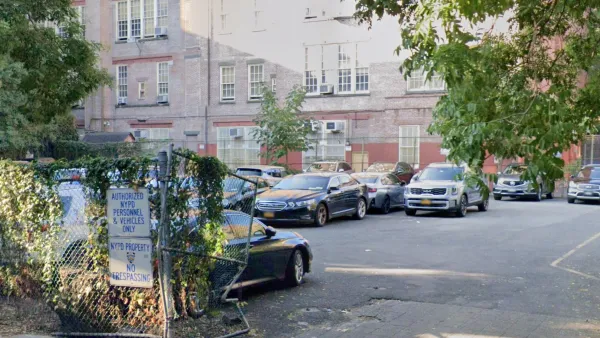
NYPD parking lot to become affordable housing as part of Mamdani's Block by Block initiative
The city awarded the lot to a group of developers to build a mixed-use project with 131 housing units.

Planetizen Federal Action Tracker
A weekly monitor of how Trump’s orders and actions are impacting planners and planning in America.

Amtrak, CN end decades-long dispute with eight-year agreement
The new operating agreement establishes an updated framework for the companies to work together, including processes to resolve disputes.

Judges permit Denver to divert 77,000 acre feet from the Colorado River for reservoir expansion
Overuse and climate change have caused the Colorado River’s water levels to plummet.

NYC DOT wants faster, more permanent street upgrades
The city is examining ways to build more concrete infrastructure without getting entangled in 'decades-long' projects.

'Something we’ve never seen before:' rising utility rates could strain city finances nationwide
Data centers, climate change and other factors have caused utility rates in the United States to increase by 38% since 2020.

Trump to overrule local leaders, lease millions of acres of America’s Pacific Island territories’ seafloors to mining companies
International law says that the Indigenous people of America’s territories have a right to prior and informed consent regarding projects that impact their countries.

FREE Course: Walkable City 1: Why Walkability?
After describing his path towards focusing on walkability as the essence of good planning, Jeff Speck marches through his five principal reasons for making more walkable places.
Reinventing Malls: Planning Alchemy—Turning Gray Fields Into Gold
The course focuses on the opportunities and imperatives that shape reinvention of mall sites.

Harvard University Graduate School of Design
KFH Group Inc.
Greater Baltimore Committee
The Architects Foundation
University of Cincinnati Online
The Pocatello Development Authority
The Urban Renewal Agency of the City of Pocatello