From student dorms to pop-up shops, the potential uses for the world's ubiquitous shipping containers seemingly has few bounds. A New Jersey parking lot and 1,300 containers play the part of the New York Metropolitan Opera's warehouse.


With space at a premium near the Met, the opera company has chosen to store its sets, costumes, and other supplies for its rotating operas in movable containers. It trucks in the supplies it needs for each performance, while the rest remain in Newark.
"The Met keeps the makings of about 100 different productions here: sets broken down into pieces marked with instructions for speedy assembly at Lincoln Center," reports James Barron. "The containers for an opera are trucked to Lincoln Center just before it goes into rehearsal, and the sets remain at the Met until after the season’s last performance of that opera. The Met has some backstage storage space; [the Met's master carpenter] Mr. Diaz said that he usually has the sets for four to seven operas on hand at any given time — about 80 containers’ worth.
The Met, which struggled financially during the recession, will not say how much it pays for storage or transport. But the Met’s repertory means that there are times when a marathon of trucks is coming and going, as the stage crew knocks down one set and takes in the next one. 'It is a 24/7 operation when they are in season,' said Larry Pucciarello, who coordinates the logistics for Daybreak Express. 'They’re on the phone: ''Where’s this truck? Where's that truck?''"
Read the full story: For the Met, Opera History Lives in a Newark Parking Lot

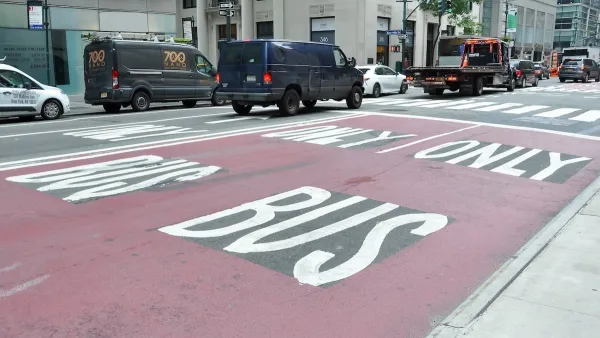
NYC DOT wants faster, more permanent street upgrades
The city is examining ways to build more concrete infrastructure without getting entangled in 'decades-long' projects.
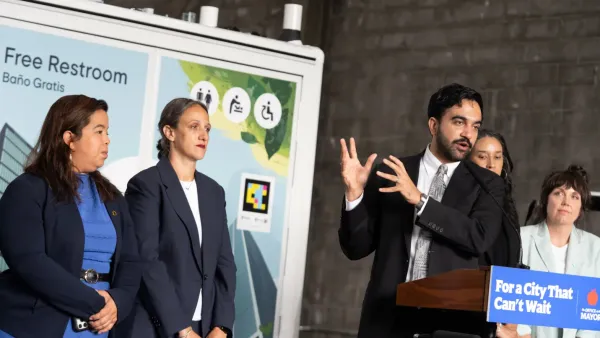
NYC releases high-tech public restrooms — with a 10 minute time limit
The $4 million pilot program aims to make it easier for people to find public restrooms in New York City.

Community feedback ushers in changes to NYC’s Park Avenue redesign
New aspects of the design include a two-way bike lane and separate paths for cyclists and pedestrians.

Amtrak, CN end decades-long dispute with eight-year agreement
The new operating agreement establishes an updated framework for the companies to work together, including processes to resolve disputes.

Judges permit Denver to divert 77,000 acre feet from the Colorado River for reservoir expansion
Overuse and climate change have caused the Colorado River’s water levels to plummet.
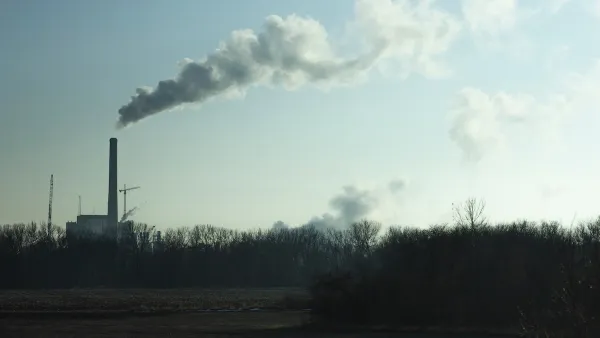
Nation's most wind-powered state turns to coal as data centers increase energy demand
For the first time in decades, Iowa has increased its generation of coal power.

Boston has spent millions making the Green Line more accessible — and there’s no end in sight
While the city has invested millions into expanding and adding platforms to the Green Line to make it more accessible, new train cars set to arrive next year will be too tall for disabled passengers to board without raising the current platforms.

Idaho may see an 18% drop in federal surface transit funding — the largest estimated cut in the US
Transit systems in rural communities are much more reliant on federal funding to provide their services.

How ‘post-disaster gentrification’ alters neighborhoods after natural calamities
After hurricanes, fires or other calamities, the original residents of a community are often replaced by younger, wealthier residents.

FREE Course: Walkable City 1: Why Walkability?
After describing his path towards focusing on walkability as the essence of good planning, Jeff Speck marches through his five principal reasons for making more walkable places.
Reinventing Malls: Planning Alchemy—Turning Gray Fields Into Gold
The course focuses on the opportunities and imperatives that shape reinvention of mall sites.

City of Wisconsin Rapids
Harvard University Graduate School of Design
KFH Group Inc.
The Architects Foundation
University of Cincinnati Online
The Pocatello Development Authority
The Urban Renewal Agency of the City of Pocatello