Cheaper than a cab and more appealing than waiting for a train, Citi Bike has become a popular means of late night travel for New Yorkers. The Times finds the need to point out to overly enthusiastic users that biking while drunk isn't exactly legal.


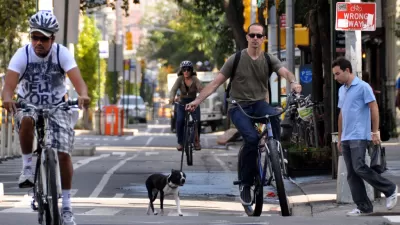
"Citi Bike, the city’s newest form of public transportation, is colliding with one of the city’s favorite pastimes: bar hopping," observes Sheila Marikar. "While ridership peaks during the day (for commuting to work, running errands and sightseeing), some New Yorkers are beginning to see it as a convenient way to explore the city’s night life, despite the obvious pitfalls of getting behind those handlebars after a drink or two."
"But is it illegal? Technically, no. While cycling under the influence is not explicitly against the law in New York City, a drunk rider can be charged with disorderly conduct or reckless endangerment, just as a pedestrian can. The program’s user agreement prohibits riding 'under the influence of any alcohol, drugs, medication or other substance,' but no one’s handing out breath testers at docking stations."
Read the full story: Riding Away From a Bar Crawl with Citi Bikes
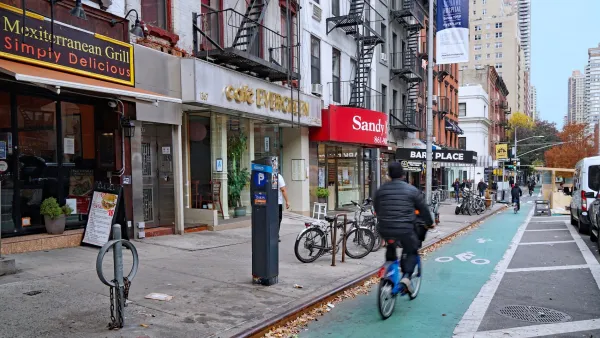
Study: Protected bike lanes increase Citi Bike rides by nearly 400 rides a month
An analysis of millions of NYC bike share rides reveals that only protected bike lanes have a 'statistically significant' increase in ridership.
Keeping NYC’s E-Bike Fleet Charged and Running
How a crew of hundreds maintains one of the world’s largest bike share systems.
Citi Bike’s New Prices Take Effect
The system plans to expand to 40,000 bikes and 2,000 stations.

Planetizen Federal Action Tracker
A weekly monitor of how Trump’s orders and actions are impacting planners and planning in America.

California plans to bury El Niño’s downpour
If the state plays its cards right, it may be able to store a billion acre-feet of El Niño’s water in aquifers.

Desperate measures: Advocates weigh draining Lake Powell to fill Colorado River
Draining the reservoir could reduce evaporation losses by a couple hundred thousand acre-feet.

Chicago voters approve permanent festival grounds, penalty for vacant property owners
Currently, major summer and fall festivals take over public parks for weeks at a time, drawing criticism from nearby residents

NYC votes to cut outdoor dining red tape, speed up permitting
New York City also voted to allow the Department of Transportation to begin work on urgent projects before notifying elected officials.

California appears to reject Prop. 45
The proposition would have expanded the projects that qualify for a streamlined environmental review, effectively paring down the California Environmental Quality Act.

FREE Course: Walkable City 1: Why Walkability?
After describing his path towards focusing on walkability as the essence of good planning, Jeff Speck marches through his five principal reasons for making more walkable places.
Reinventing Malls: Planning Alchemy—Turning Gray Fields Into Gold
The course focuses on the opportunities and imperatives that shape reinvention of mall sites.

City of Rosemead
Rutgers University, Edward J. Bloustein School of Planning and Public Policy
One Hundred Miles
Hunter College, City University of New York (CUNY)
The Architects Foundation
University of Cincinnati Online
City of Cambridge
Montrose County
The Pocatello Development Authority