Urban Development

A Menu of Proposed Housing Policy Reforms
The Mercatus Center published a list of 16 policy recommendations designed to help states clear local obstacles for housing construction.

Chicago’s Red Line Extension Environmental Review Complete
The Red Line Extension on Chicago’s South Side could be a game changer, if the city can figure out the local funding.

Development Code, Future Land Use Map Updates Coming to Dallas
The ForwardDallas initiative is attempting for the Holy Grail of planning: development certainty.

Massive Empire State Complex Gains Key Political Support
New York Governor Kathy Hochul is backing one of the largest real estate development projects in U.S. history—larger even than the nearby Hudson Yards project.
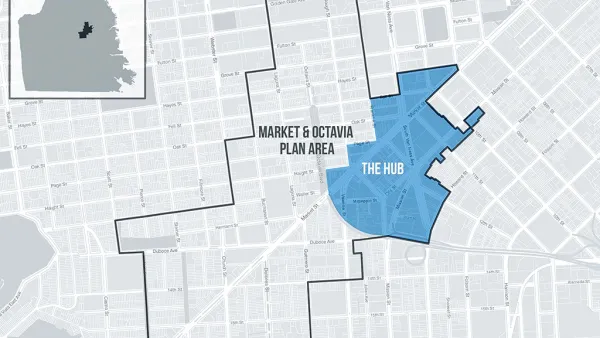
San Francisco’s Big Redevelopment Plan Was Paused for Equity Analysis That Never Happened
Checking in with The Hub, a proposed rezoning that would enable a multi-parcel redevelopment at a conspicuous intersection, two years after the city paused the rezoning for additional analysis (spoiler alert: the analysis hasn’t even started).

Unmasking the Property Owners
There’s a reason land ownership is a matter of public record—but at the moment the records we have aren’t actually doing the job.

California Makes Planning History, Resets the Housing Status Quo
The California Legislature this week approved a historic package of bills, including a bill that allows affordable housing on commercially zoned properties and another that removes parking requirements near transit.
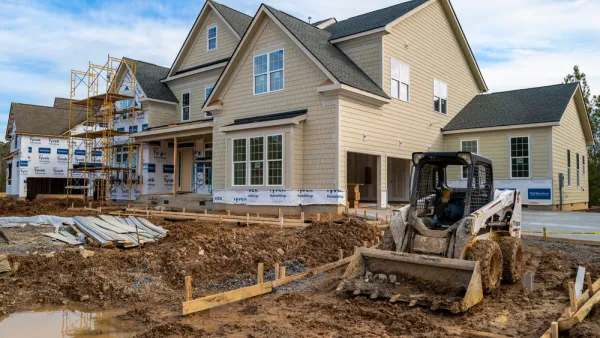
Not Just Use: More Zoning Regulations to Unlock Housing Equity
Prohibiting single-family zoning alone won’t accomplish the needed transformation of the built environment in the United States.

Cool Planning for a Hotter Future
Global warming increases the importance of designing buildings and communities that are comfortable, efficient, and safe in hot conditions.

When Landlords Hide Behind LLCs
It’s difficult to know who owns property because corporate landlords and investors tend to structure their business as limited liability companies, or LLCs.
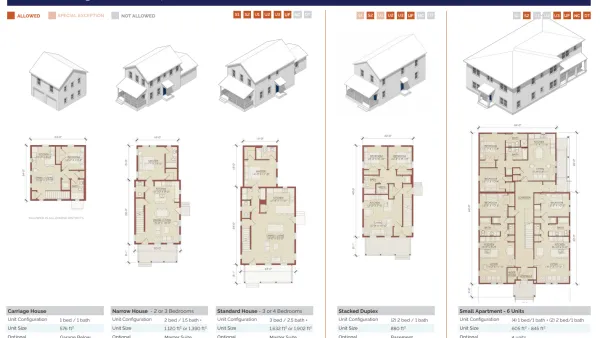
South Bend’s Infill Plans Include Pre-Approved Multi-Family Designs
South Bend commits to infill development by pre-approving a suite of residential development options.

Site Location Snafu Puts Clearwater’s RAISE Grant Funding at Risk
Wires were crossed between the city manager and the city council in Clearwater, Florida, though the city is now back on track with a plan that won $20 million in grant funding from the federal government in August.

Utah’s Daybreak Shows a Way Forward for American Suburbs
Suburban dwellers are increasingly calling for more mixed-use development, walkability, and access to transit.

San Antonio Considering Major Development Code Overhaul
Neighborhood registration and accessory dwelling units are among the hot button items included in a package of 193 proposed amendments to the San Antonio Unified Development Code.

Redondo Beach’s Housing Element Failed. Now a Developer Is Planning 2,300 Residential Units.
Anti-housing development planning now has consequences in California.

Bay Area Development Encounters the Limits of the Water Supply
A development battle pitting Contra Costa County against the East Bay Municipal Utility District illustrates the challenges of developing new housing supply in a time of drought.

Report: CEQA Lawsuits Challenge Almost Half of All Housing Development in California
A new report details the reach of California’s controversial environmental regulation, and warns of more consequences to come.
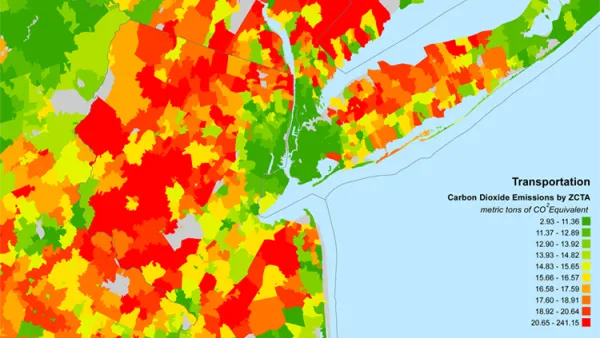
CoolClimate Policy Tools
The CoolClimate Network's Interactive Policy Tools calculate and compare the GHG reductions provided by various emission reduction policies. These tools can help households, businesses and communities identify the best emission reduction strategies.

D.C. Could Lead the Downtown Office Conversion Trend
Many urban cores around the country are faced with increasing office vacancies concurrently with a housing affordability crisis caused, at least in part, by a lack of supply. D.C. is particularly primed for a wave of adaptive reuse.

Cincinnati Ends Parking Requirements in the City’s West End
The West End neighborhood of Cincinnati is home to 6,000 residents but only one dine-in restaurant.

FREE Course: Walkable City 1: Why Walkability?
After describing his path towards focusing on walkability as the essence of good planning, Jeff Speck marches through his five principal reasons for making more walkable places.
Reinventing Malls: Planning Alchemy—Turning Gray Fields Into Gold
The course focuses on the opportunities and imperatives that shape reinvention of mall sites.

City of Rosemead
Rutgers University, Edward J. Bloustein School of Planning and Public Policy
One Hundred Miles
University of Michigan School for Environment and Sustainability (SEAS)
Hunter College, City University of New York (CUNY)
The Architects Foundation
City of Cambridge
Montrose County
The Pocatello Development Authority









