The state preemption pendulum swings again—this time in favor of state preemption of energy efficiency standards in Virginia.



A Democrat-controlled committee in the Virginia State Senate "rejected a bill that would have allowed local governments to adopt stricter energy efficiency codes than the state," reports Sarah Vogelsong for the Virginia Mercury. The reasoning behind the rejection: that new energy efficiency standards would prevent affordable housing development.
"Senate Bill 452 from Sen. Jennifer Boysko, D-Loudoun would have required the Virginia Board of Housing and Community Development to develop optional energy efficiency standards for buildings based on the latest version of the International Green Construction Code that local governments could then choose to adopt," according to the article.
"Sen. Lynwood Lewis, D-Accomack, joined with Republicans on the Senate Local Government Committee to kill the proposal 8-6. He told the Mercury his vote was due to not only concerns over housing costs but his view that Virginia is already 'on the right track' with building code improvements."
More details on the political debate and the IGCC standards are included in the source article below.
FULL STORY: Affordable housing concerns tank energy efficiency proposal

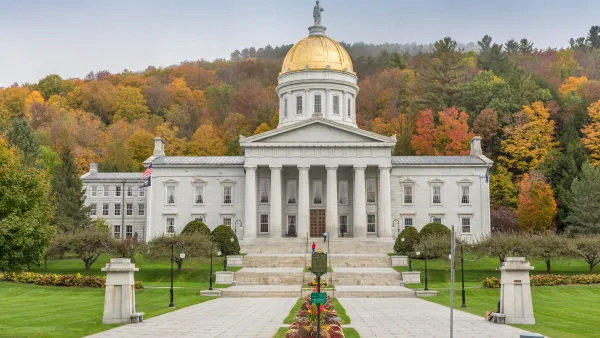
Vermont Next State in Line to End Single-Family Zoning, Ease Parking Requirements
Both houses in the Vermont Legislature have approved legislation to preempt local land use regulations by rescinding single-family zoning and easing parking requirements throughout the state.

Housing Reform Package Under Consideration by Rhode Island General Assembly
The Rhode Island House Speaker has introduced a package of 14 bills intended to ease housing construction without stepping on any toes at the local level.

Editorial: Reform, Don't Ban, Red Light Camera Programs
The Chicago Sun-Times responds to two Illinois state legislators who have recently proposed bills that would ban red light cameras statewide.

Planetizen Federal Action Tracker
A weekly monitor of how Trump’s orders and actions are impacting planners and planning in America.

The state-sanctioned urbicide of Austin
People don’t kill cities. Freeways do.

US to reduce Colorado River water deliveries to Mexico
A new Colorado Treaty amendment reduces Mexico’s Colorado River water allocation by 250,000 acre feet.

5 New England states march closer to 800 megawatt wind energy project
Securing federal approval for the project may be complicated under the Trump administration, which has historically been hostile towards domestic wind power.

Baltimore to break ground on $50 million Transit Priority Project
The project will bring faster bus trips, safer streets and better bike connections to Baltimore.

Airbnb launches $250 million 'last-dollar financing' housing accelerator, makes first investment in Austin
The company will put $6.4 million towards affordable housing development in Texas’ capital.

FREE Course: Walkable City 1: Why Walkability?
After describing his path towards focusing on walkability as the essence of good planning, Jeff Speck marches through his five principal reasons for making more walkable places.
Reinventing Malls: Planning Alchemy—Turning Gray Fields Into Gold
The course focuses on the opportunities and imperatives that shape reinvention of mall sites.

Eagle County Government
Harvard University Graduate School of Design
Nashville Planning Department
The Architects Foundation
University of Cincinnati Online
The Pocatello Development Authority
The Urban Renewal Agency of the City of Pocatello
Journal of the American Planning Association