Transportation
Driving Continues to Decline in U.S.
Federal data released last week shows that for the eighth straight year, per capita vehicle-miles traveled (VMT) has declined in the United States.
New Study: Light Rail Fails at Discouraging Driving
Eric Jaffe reports on research that may give pause to light rail advocates who argue the mode can reduce congestion: ridership gains along new lines may come at the expense of buses, rather than cars.
Are Vending Machines Coming to Cabs in Your City?
This is easily the best idea we've seen all day. Eric Jaffe profiles TaxiTreats - "the latest attempt to capitalize on the captive nature of most urban travelers."
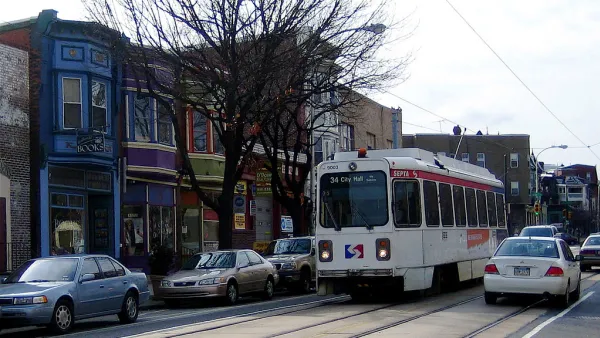
The Remarkable Story of How Philly Turned Around its Transit Agency
Over the last two decades, SEPTA has transformed itself from debt-mired subject of federal investigation to "the best damn transit agency in the U.S. of A." Dan Geringer explores how the agency's chairman has turned the ship around.
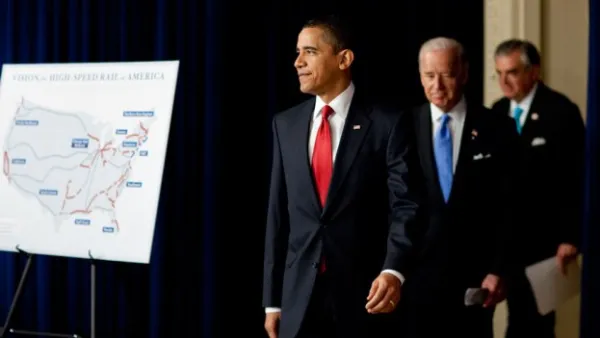
Obama's Grand Rail Plans: What Went Wrong?
Four years after a historic down payment was made on Pres. Obama's plan to connect 80 percent of Americans to fast trains, "the prospects for a national high-speed rail system seem bleak." Politics and funding challenges have derailed the plan.
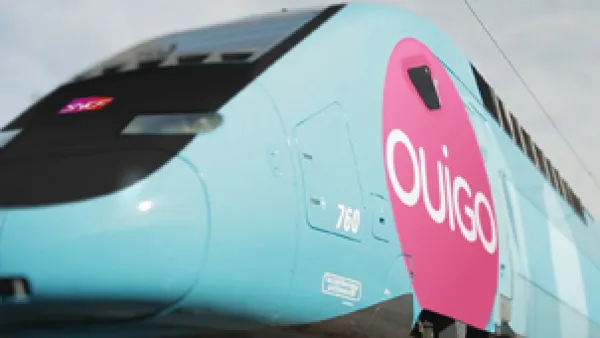
France Pioneers Low-Cost High-Speed Rail
Taking a page out of the book of budget airlines such as Ryanair, France's SNCF is introducing OuiGo - a hyper low-cost high-speed rail option that aims to convert suburban drivers into train riders.
Fuel Efficiency Standards Vs. Gas Tax Increases: No Contest for Reducing Emissions
In this op-ed, MIT climate research scientist Valerie J. Karplus contrasts raising CAFE standards with gas taxes. While the former may be more politically expedient, she shows how it is less effective in reducing emissions, oil reliance and driving.
The Most Important Urban Design Decision Vancouver Ever Made
Vancouver's ahead-of-the-curve 1997 decision to prioritize active transport, rather than balance its ways of getting around, has affected everything about how the city has been designed since then.
$850 Million Expansion Planned for Boston's South Station
Governor Deval Patrick is set to unveil a key piece of his multi-billion dollar plan for reinvigorating Massachusetts' beleaguered transportation system: an $850 million expansion of congested South Station. Martine Powers describes the project.
Virginia Passes Controversial Transportation Bill
Over the weekend, Virginia passed a controversial transportation funding plan that replaces the state's gas tax with a combination of revenue streams. Two California economists look at the flaws with the plan.
Affordability As A Transportation Planning Objective
Transportation system users rate inaffordability as a top concern, but conventional planning ignores this issue. Increasing transport affordability requires changing planning practices to favor more affordable modes and more accessible development.
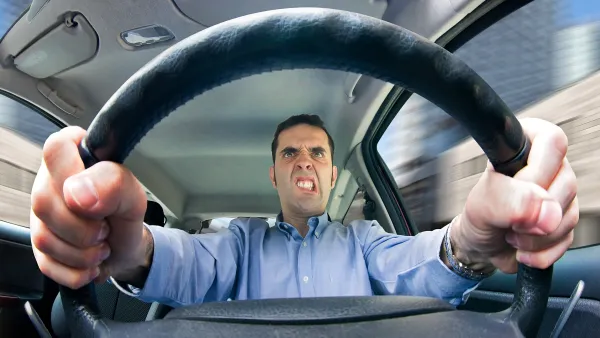
What's the Basis for Anti-Cycling Rage?
Tom Stafford opines on the reasons why cyclists enrage car drivers. He argues that "motorists hate cyclists because they think they offend the moral order."
Smart Growth Approach Urged in the UK
An alliance of organizations in the United Kingdom has agreed on a policy statement promoting smart growth alternatives to current policies.
Is Car-Share a Friend or Foe to Environmental Concerns?
The Sierra Club has opposed an ordinance passed by the San Francisco Board of Supervisors that allows developers to add spaces above parking limits if they're dedicated to car-share vehicles. Does the plan violate the city's Transit First policy?
Schools: Planning's Enduring Blindspot
Schools are a prime driver of housing choices and transportation behavior. So why are schools and children often missing from the planning process? Ruth Miller diagnoses the problem and looks at how we can change it.
Should Power Utility Customers Pay for Road Projects?
WI Gov. Scott Walker's proposal is to sell-off state assets, primarily state power plants to finance his transportation plan, thus linking rate payers with funding road projects. His transportation commission recommended raising the gas tax and fees.
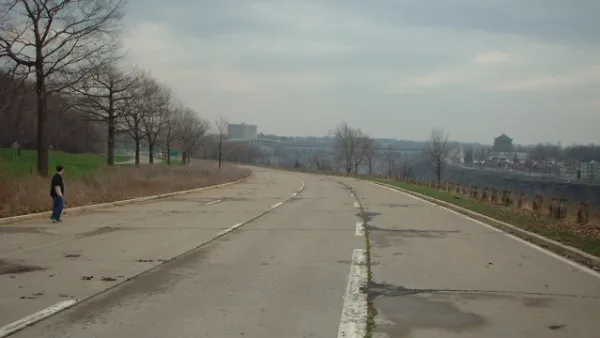
In Fitting Finale, NY Will Tear Down Robert Moses Parkway
From Niagara Falls comes news that the State of New York will rip out a two-mile stretch of the Robert Moses Parkway, which has divided city residents from the scenic Niagara Gorge for a half-century.
How Communities Are Fighting Transportation Injustice
Transportation costs disproportionately effect low-income families, while federal transportation spending biases affluent drivers over lower-income mass transit riders. Activists are utilizing civil rights legislation to challenge the status quo.
Seattle and Chicago Mayors Bicker Over Bikers
Back in December, Chicago Mayor Rahm Emanuel announced his aim of attracting Seattle's bikers and tech jobs while opening a new protected bike lane downtown. Seattle Mayor Mike McGinn isn't taking Emanuel's entreaties lightly.
Could New York be Carbon-Free by 2050?
A new report shows that New York City could be 90 percent carbon-free by 2050, "without breaking the bank," if it upgrades heating systems and transportation to renewable electricity, reports Taz Loomans.

FREE Course: Walkable City 1: Why Walkability?
After describing his path towards focusing on walkability as the essence of good planning, Jeff Speck marches through his five principal reasons for making more walkable places.
Reinventing Malls: Planning Alchemy—Turning Gray Fields Into Gold
The course focuses on the opportunities and imperatives that shape reinvention of mall sites.

City of Rosemead
Rutgers University, Edward J. Bloustein School of Planning and Public Policy
One Hundred Miles
University of Michigan School for Environment and Sustainability (SEAS)
Hunter College, City University of New York (CUNY)
The Architects Foundation
City of Cambridge
The Pocatello Development Authority
The Urban Renewal Agency of the City of Pocatello









