Transportation
Seeing Dollar Signs, Developers Cater to Cyclists
Seeing an opportunity to cut costs, attract residents, and respond to changing demands of tenants, commercial and residential developers in the Seattle area are investing in amenities for bicyclists.
Civic Groups Win Decisive Battle in Effort to Rebuild NYC's Penn Station
With two City Council committee votes this week, civic groups and New York's most prominent architecture critic appear to have won their very public battle to ultimately boot Madison Square Garden from atop Penn Station, reports Matt Chaban.
Key Decision Due Over Fate of Vancouver's Viaducts
The movement to dismantle the twin viaducts that hover over Vancouver's downtown reaches a crucial milestone today, as the City Council votes to fund the study of how to transform "the last, large, under-utilized area close to the city’s core."
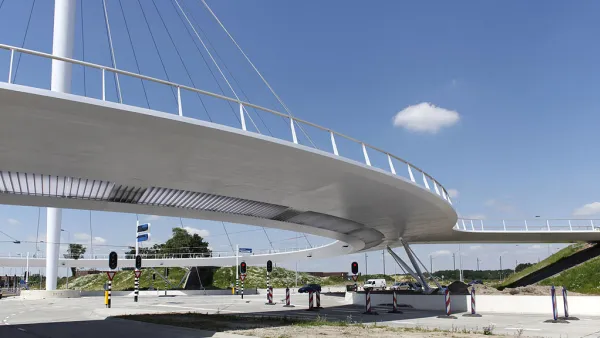
The World's Best in Progressive Bike Infrastructure
From car-shaped shelters for cargo bikes in Copenhagen to a bike path that runs through the middle of one of Amsterdam's most visited museums, Sarah Goodyear surveys some of the most innovative bicycle infrastructure projects in the world.
St. Louis Reneges on Plan to Study Highway Teardown
With great fanfare, St. Louis put out an RFP last year to study the conversion of a portion of the elevated I-70 highway separating downtown St. Louis from its historic riverfront into a boulevard. That study has been scrapped for vague reasons.
Cool Happenings in Paris’s Urban Landscape
Two events held in the same week in the historic heart of Paris show just how serious the city is about its contemporary urban landscape.
HOT Lanes Slow to Catch on With Users
High-Occupancy Toll lanes have become a popular tool to help reduce congestion and raise revenues. But recent projects in cities throughout the U.S. have failed to meet expectations. Eric Jaffe investigates the reasons why.
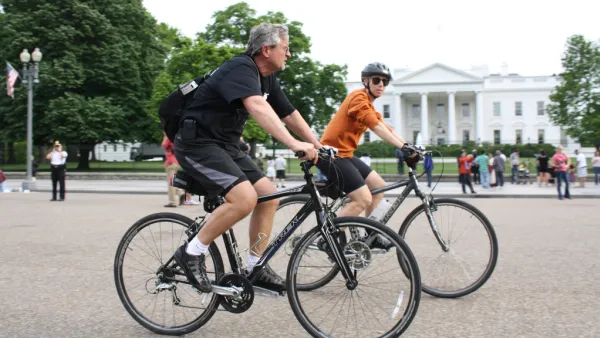
A Dutch Evaluation of American Cycling
Warning: This five-minute video may be the most critical evaluation of American cycling conditions you will ever watch. After viewing, you may understand what separates cycling in the U.S. from that in The Netherlands - it's not just infrastructure.
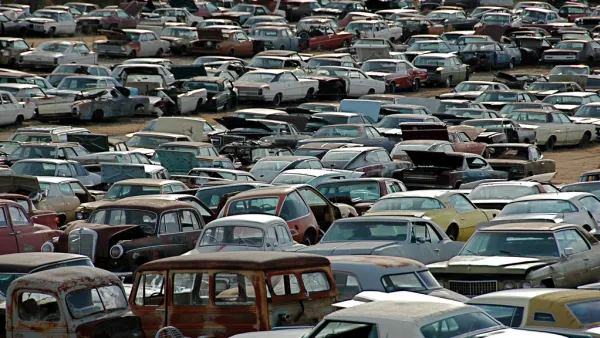
The ‘Driving Boom’ is Over: What Does That Mean for Communities and Transportation?
The trend toward less driving received national attention in May with the release of a report by US Public Interest Research Group (PIRG), and the news has profound implications for both urbanism and transportation.
Tallying San Francisco's Cyclists, Bike-by-Bike
Last month an innovative real-time bike counter debuted along San Francisco's Market Street, which is said to be the busiest bike street west of the Mississippi. Over its first 27 days, the counter tallied nearly 55,000 riders.
New Report Calls Attention to Need for Critical Bridge Funding
It may have been serendipity, but Transportation for America's new report on the sorry state of America's bridges, 11% are structurally deficient, was released the same day that a temporary replacement span opened on the Skagit River bridge in Wash.
Federal Complete Streets Mandate Gains Speed
Although nearly 500 localities around the U.S. have created complete streets policies, there is no federal mandate that they do so. That may soon change if a bipartisan bill introduced last week in the House of Representatives is passed.

Colorado Builds a Highway That Discourages Driving
Upgrades to U.S. 36, the highway that connects Denver to Boulder, feature a variety of elements intended to reduce congestion and offer alternatives to the traditional solo auto commute. The effort is being called a "21st-century mobility project."
Experimental BRT Route Debuts in Twin Cities
A $112 million BRT route is set to debut this weekend in the Twin Cities, the first route of its type in the area. Officials hope that with strong ridership, the service will become a model for statewide expansion.
America's Transportation Transformation Plays Out in Los Angeles
In the American city most synonymous with the automobile, car ownership is declining and transit use is increasing. As the country's transportation model enters a decade of profound change, L.A. may provide the 'ultimate test' of the car’s future.
How Many Bikes is Too Many?
Is it possible for a city to have too many bikes? In Amsterdam, a city known as much for its cycling culture as for its canals, the battle for street space and parking spaces has some residents pondering whether there are too many bikes.
Should Buses Be Free?
Mass demonstrations in Brazil over the past week were sparked by increases to bus fares. But what if buses were free? The Economist makes the argument that, to improve service and decrease congestion, we should study making buses and subways free.
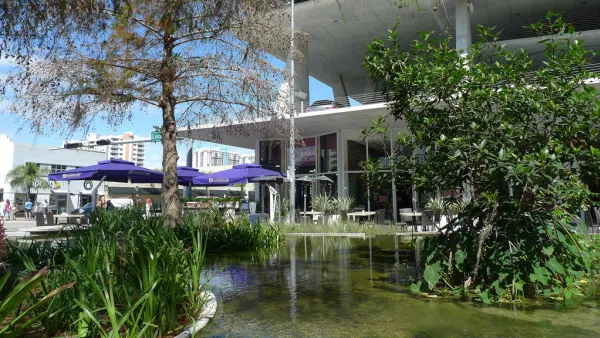
Miami Beach Makes Transportation Infrastructure Sexy
From parking garages to its bike-share program, and streetscape improvements to trails that integrate nature and city life, Miami has taken a stylish but pedestrian-friendly approach to transportation decisions, says Claudia Kousoulas.
Bring ‘em on? Planning for the Robo-cars
Now is the time for planners to engage in the public debate on vehicle-automation – leaving it to the car-makers and search-engine providers (and their legions of techies) won’t deliver the livability outcomes planners aim to achieve.
Is Spending Billions on Highway Expansions the Best Way to Support Detroit's Recovery?
The Southeast Michigan Council of Governments is considering $4 billion in highway expansion projects at a meeting today. With Detroit pursuing several alternative transportation initiatives, is this the best way to spend scarce federal dollars?

FREE Course: Walkable City 1: Why Walkability?
After describing his path towards focusing on walkability as the essence of good planning, Jeff Speck marches through his five principal reasons for making more walkable places.
Reinventing Malls: Planning Alchemy—Turning Gray Fields Into Gold
The course focuses on the opportunities and imperatives that shape reinvention of mall sites.

City of Rosemead
Rutgers University, Edward J. Bloustein School of Planning and Public Policy
One Hundred Miles
University of Michigan School for Environment and Sustainability (SEAS)
Hunter College, City University of New York (CUNY)
The Architects Foundation
City of Cambridge
The Pocatello Development Authority
The Urban Renewal Agency of the City of Pocatello









