Baltimore has ridden out the recession better than most metropolitan areas. However, in advance of a study to be released this week, Jennifer S. Vey outlines the ways in which it can better align workers' skills with economic opportunities.


In advance of a new study, "Building From Strength: Creating Opportunity in Greater Baltimore's Next Economy," to be released this week by the Brookings Institution, Vey, a fellow with the Institution's Metropolitan Policy Program, looks at the economic, educational, land use, and transportation investments that must be made to provide better employment opportunities for the area's residents, and support the city's next economy.
"As the report highlights, the Baltimore metro area has an awful lot of good things going for it, including an enviable network of colleges and universities; several world-class hospital systems; close proximity to the nation's capital; and, importantly, sophisticated firms, skilled talent and formidable research capacity."
"These assets should allow us to grow and excel in areas like manufacturing, bioscience, information technology, transportation and logistics, and the "clean" economy - all sectors that, compared to the metro economy as a whole, have a greater share of workers earning a middle-income wage or better without having completed a four-year degree."
Read the full story: Building Baltimore's next economy


‘Going backwards:’ Baltimore mayor, students rally against state's transit funding plan
Maryland's proposed six-year plan provides no funding for Baltimore’s BMORE bus program and reduces its road maintenance funding.
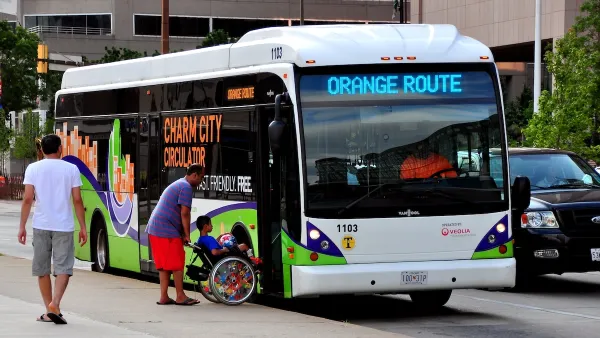
Baltimore to break ground on $50 million Transit Priority Project
The project will bring faster bus trips, safer streets and better bike connections to Baltimore.
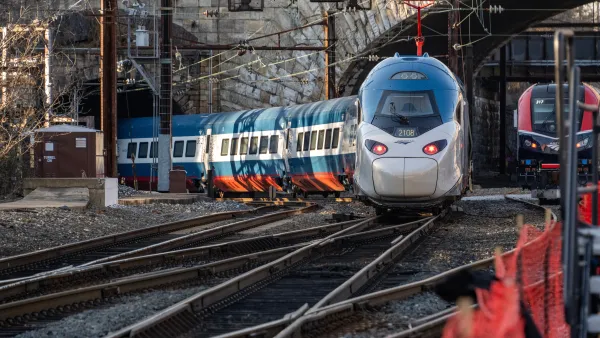
Amtrak’s $6 billion tunnel project moves closer to a faster Northeast Corridor
The Baltimore & Potomac Tunnel Replacement Program is Amtrak's largest-ever single infrastructure investment, and will pave the way for more reliable passenger rail service between Baltimore, Washington and Virginia.

Planetizen Federal Action Tracker
A weekly monitor of how Trump’s orders and actions are impacting planners and planning in America.
‘Going backwards:’ Baltimore mayor, students rally against state's transit funding plan
Maryland's proposed six-year plan provides no funding for Baltimore’s BMORE bus program and reduces its road maintenance funding.

Detroit to transform waterfront with $2.2 billion investment
Developers will convert about 18 acres of unused parking lot space into civic spaces.

$2 trillion in economic growth may hide in ‘micropolitan communities’
Small cities hold 39% of America’s population, but receive only 10% of U.S. venture capital investment.

'I can't live in this:' Mississippi town besieged by power plant noise
A plant powering Elon Musk’s xAI data centers is subjecting Southaven, Mississippi residents to ceaseless noise.

Battered from federal attacks, Louisiana's offshore wind industry refuses to give up
State Representative Joe Orgeron expressed hope that the state could revitalize its wind industry once President Trump leaves office.

FREE Course: Walkable City 1: Why Walkability?
After describing his path towards focusing on walkability as the essence of good planning, Jeff Speck marches through his five principal reasons for making more walkable places.
Reinventing Malls: Planning Alchemy—Turning Gray Fields Into Gold
The course focuses on the opportunities and imperatives that shape reinvention of mall sites.

One Hundred Miles
County of Mendocino
planning NEXT
The Architects Foundation
University of Cincinnati Online
Montrose County
Northern Illinois Transit Authority (NITA)
The Pocatello Development Authority