After decades of false starts, Downtown Oklahoma City is making room for alternative transportation with streetcars, electric vehicle charging stations, and a new bike sharing program, reports Steve Lackmeyer.


Downtown Oklahoma City was not always made for cars. But in the six and a half decades since its once-prominent streetcar system was shut down, it has come to depend on the automobile as much as any other red-blooded American city – in fact, a local produce market opening later this year "will remain the closest thing to a full-scale grocery," Lackmeyer writes.
And so the near-simultaneous introduction of three alternative transportation programs, for Lackmeyer, constitutes a "small revolution... [that] might just change the rules for decades to follow."
First, Oklahoma City is set to see the revival of the streetcar. Part of a 10-year public works program called MAPS 3, the system is backed by $129 million in funding and will connect at least five separate neighborhoods.
"Downtown also is set to get its start at 'green parking,'" Lackmeyer explains - "a system that will allow owners of electric vehicles to plug in along a curb. Two recharging stations are set to be built later this year as part of [downtown revitalization project] Project 180."
In addition, the city has approved the installation of new bicycle racks throughout the downtown. "Those racks just might get more use as 'Spokies,' a new bike-share program...is set to be inaugurated next month."
Read the full story: OKC Central: Transit alternatives begin to emerge downtown in Oklahoma City

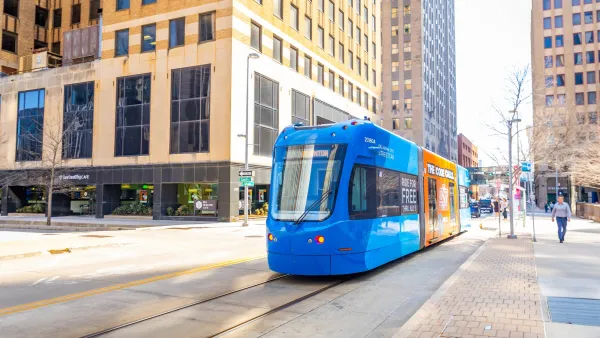
OKC streetcar will stay fare-free after ridership shot up 74%
The downtown streetcar saw a surge in ridership after it eliminated fares in January.

Oklahoma City Streetcar Goes Fare-Free in January
The system saw its highest ridership ever in the last fiscal year.
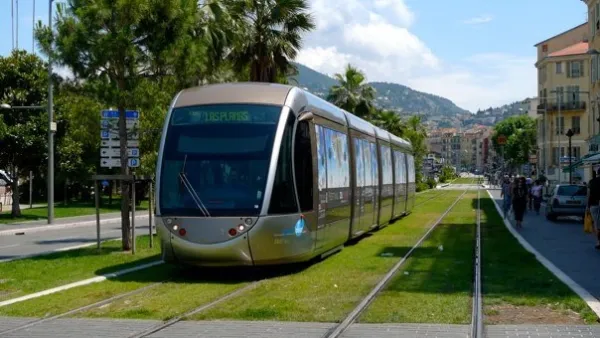
Eight Cities Rolling Out Streetcar Projects
America's urban streetcar renaissance looks to be on track with eight more projects planning to break ground by 2020. The list includes some of the nation's largest metros as well as plenty of medium-sized cities.

Planetizen Federal Action Tracker
A weekly monitor of how Trump’s orders and actions are impacting planners and planning in America.

‘Going backwards:’ Baltimore mayor, students rally against state's transit funding plan
Maryland's proposed six-year plan provides no funding for Baltimore’s BMORE bus program and reduces its road maintenance funding.

Detroit to transform waterfront with $2.2 billion investment
Developers will convert about 18 acres of unused parking lot space into civic spaces.

Data center developers are using lawsuits, cash offers to ‘overwhelm’ rural America
Newsrooms in five states worked together to uncover the tactics big tech developers use to buy land from reluctant communities.

U.S.-Iran war may have ‘devastating’ impact on cost to warm homes
Vermont and Maine residents may see a 76% increase in the cost of warming their homes this winter.

Senate bill would ‘overhaul’ environmental permitting laws
Under the proposed act, government agencies would also not be able to suspend or rescind permits after granting them.

FREE Course: Walkable City 1: Why Walkability?
After describing his path towards focusing on walkability as the essence of good planning, Jeff Speck marches through his five principal reasons for making more walkable places.
Reinventing Malls: Planning Alchemy—Turning Gray Fields Into Gold
The course focuses on the opportunities and imperatives that shape reinvention of mall sites.

One Hundred Miles
County of Mendocino
planning NEXT
The Architects Foundation
University of Cincinnati Online
Montrose County
Northern Illinois Transit Authority (NITA)
The Pocatello Development Authority