Transportation
Bicycle-Friendly Intersection Proposed to Attract Riders
A Portland urban planner proposes a new street intersection design to make cycling more safe and to attract cyclists.
Post Office Spared from House Republican's Highway Plan
The House Republican plan to gut Saturday postal delivery to pay for six months of highway spending was dropped on June 18. It appears it was a casualty of Majority Leader Eric Cantor's primary loss in his Virginia congressional district.
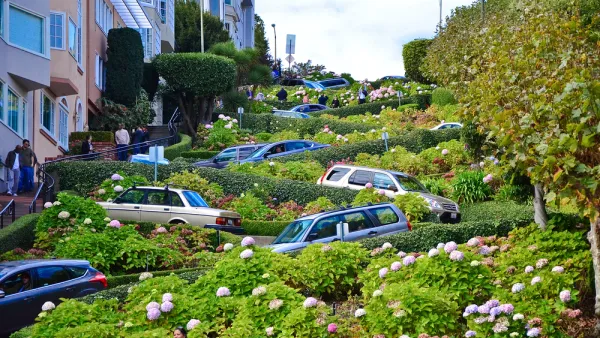
Ranking the 'Worst Cities for Car Drivers'
A finance website called nerdwallet took it upon itself to rank the "worst" cities to drive a car.
Texas High Speed Rail Proposal Gaining Momentum
An article by Amy Crawford details the prospects of a plan to build a private rail connection between Houston and Dallas—the Texas Central Railway—that would be modeled on lines in Japan, and funded by Japanese interests.
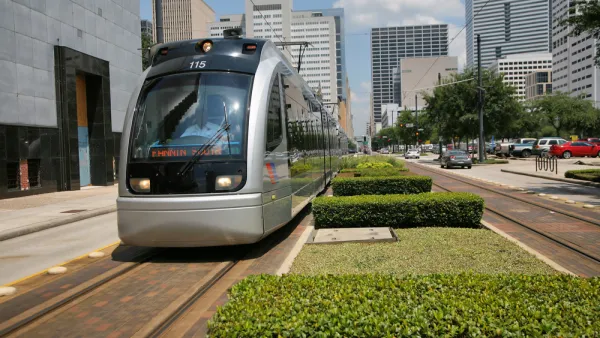
Light Rail Success Story for Houston's Red Line
With two new rail lines, serving east and southeast Houston, due to open later this year, early returns have been positive for the "North Line" extension of the city's Red Line.
Bipartisan Plan to Increase Fuel Taxes Surfaces
A surprising and unexpected bipartisan plan to increase gas and diesel taxes by 12 cents each emerged June 18 from Sens. Bob Corker (R-Tenn.) and Chris Murphy (D-Conn.). Taxes would increase six cents a gallon annually for two years.
Highway Trust Fund Ticker Updates Path Toward Insolvency
For those who haven't been following the Trust Fund's ticker, it's a bit like the deficit clock except that it runs in the opposite direction, going towards zero or insolvency. The ticker measures the balance in both the highway and transit accounts.
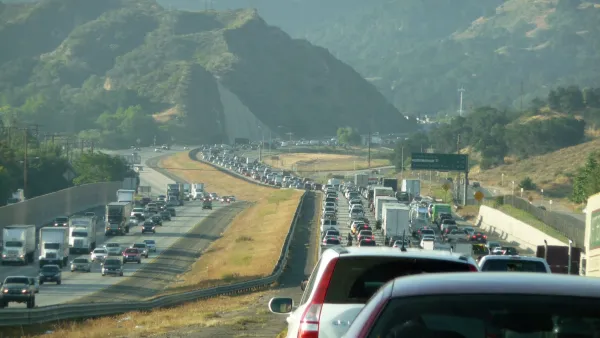
Induced Demand Explained (or Why We Can't Build Our Way Out of Congestion)
In case you need an easy link to reference when encountering arguments in favor of widening roads and freeways as a solution for traffic, Adam Mann provides an accessible and clear explainer article that sums up the limitations of such strategies.
Oil Shale (not Shale Oil) and Oil Sands Projects Underway in Utah
A major challenge facing oil companies in the Uinta Basin is how to transport the crude to market. Alignments have been winnowed and the mode appears to be selected - rail. Total cost: $2 billion to extract $30 billion worth of oil and gas reserves.
Great Streets? How about Healthy, Safe Streets?
Advocates and citizens in Boyle Heights, a historic and predominantly Latino neighborhood on the Eastside of Los Angeles, are hoping for more than economic development from the city's Great Streets initiative.
Three Transit Stations At-Risk in Cleveland's Opportunity Corridor Planning
Stations on the Cleveland Regional Transit Authority's Red Line are hanging in the balance due to funding shortfalls on the $331 million "Opportunity Corridor" that would build a five-lane, 3.5-mile boulevard between University Circle and I-490.
Multi-Modal Trip Planning in Chicago? There Ought to Be an App for That
Samuel Baron makes the case that Divvy, Chicago's "newest transportation system," should be better integrated with the city's other public transport systems.
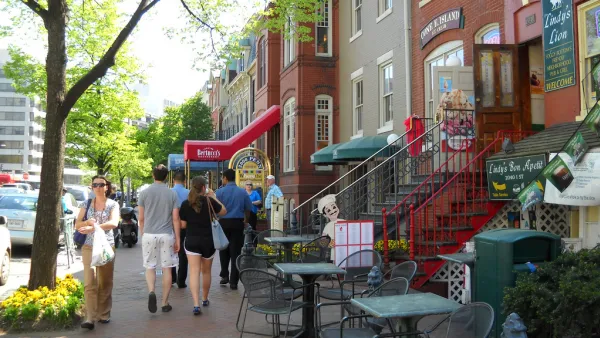
Report Ranks Walkable Urbanism in America's Largest Metropolitan Areas
A new report authored by Chris Leinberger and Patrick Lynch, called "Foot Traffic Ahead," ranks walkable urban places (or "WalkUPs") around the country.
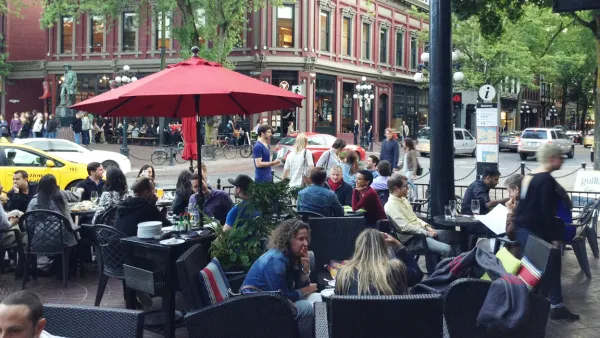
Let's Make Sticky Streets for People!
As cities work hard to evolve their perspective on the role of streets as public places in smarter city-making, remember this: Good cities know that streets move people, not just cars. Great cities know that streets are places to linger and enjoy.
No Little Plans for Private Passenger Rail Service Between Miami and Orlando
The last private passenger rail in the United States closed in 1983, but a private company is working on a 240-mile service between Orlando and Florida. CityLab recently detailed how a relic of the past could transform the Florida of the future.
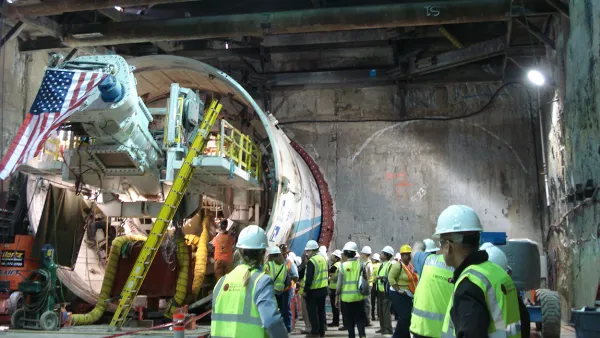
Seattle's Envy? San Francisco's Big Alma Outperforms Big Bertha
Big Alma is one of two boring machines used to tunnel under the streets of San Francisco to construct the new Central Subway to Chinatown. Big Bertha, Seattle's infamous tunnel borer, has been stalled since December. Big Alma emerged on June 11.
Twin Cities' Green Line Emphasizes Community Integration
Funding from a nonprofit initiative provides concrete measures to prevent displacement due to the construction of the Green Line in the Twin Cities.
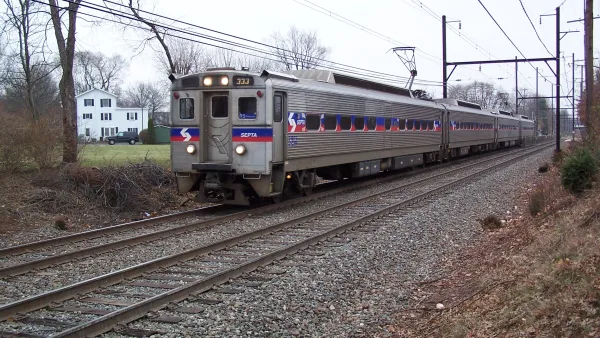
Obama Intervenes On Philly Rail Strike
President Obama signs executive order to end SEPTA transit strike, establishes emergency labor mediation board in response to Governor Corbett's request.
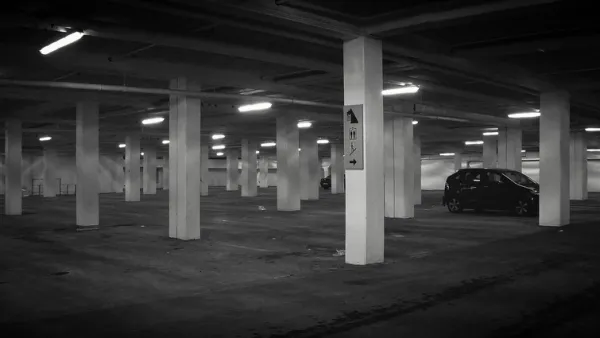
A Parking Paradox
Minimum parking requirements affect developer behavior most where they are most controversial: in downtown neighborhoods. In suburbs where they may just mimic the market, the arguments for such rules are paradoxically even weaker.
Who Should Pay for Highways: Motorists or Oil Companies?
A new transportation funding option proposed by Rep. Peter DeFazio (D-Ore.) would repeal the 18.4-cent gas tax, unchanged since 1993, with a "small" tax levied against oil companies on each barrel of oil used to make gasoline.

FREE Course: Walkable City 1: Why Walkability?
After describing his path towards focusing on walkability as the essence of good planning, Jeff Speck marches through his five principal reasons for making more walkable places.
Reinventing Malls: Planning Alchemy—Turning Gray Fields Into Gold
The course focuses on the opportunities and imperatives that shape reinvention of mall sites.

City of Rosemead
Rutgers University, Edward J. Bloustein School of Planning and Public Policy
One Hundred Miles
University of Michigan School for Environment and Sustainability (SEAS)
Hunter College, City University of New York (CUNY)
The Architects Foundation
City of Cambridge
The Pocatello Development Authority
The Urban Renewal Agency of the City of Pocatello









