While outgoing Mayor Villaraigosa has made great strides in building L.A.'s public transit and bicycle culture, there's still room for improvement, argues Harris Silver. He suggests 6 ways to further reduce Angelenos reliance on the automobile.


"Residents move around Los Angeles in a transportation mono-culture that is environmentally unsustainable and puts a friction on the economy by wasting billions on congestion every year," says Harris. "Although LA has an extensive bus system and a more limited rail system that is still under construction, 97% of all trips are in automobiles and 90% of those trips are single occupancy."
Harris details six ideas for making the city more livable, and less reliant on the automobile:
- Improve the walking environment.
- Encourage people to try Mass transit.
- Encourage People to ride bikes instead of taking cars to the beach.
- Introduce variable pricing models at large events based on vehicle occupancy.
- Bring [Electric] Bike Sharing to LA.
- Commit to LA being the first City in the world with an all electric Taxi Fleet.
Read the full story: Six Transportation Ideas For LA's Mayor Elect Eric Garcetti

Op-Ed: Los Angeles Walkability Needs More Crosswalks
Although Los Angeles isn't famous for its walking culture, many neighborhoods are actually quite suited for it. That is, if streets could be made friendlier to the pedestrians they currently repel.
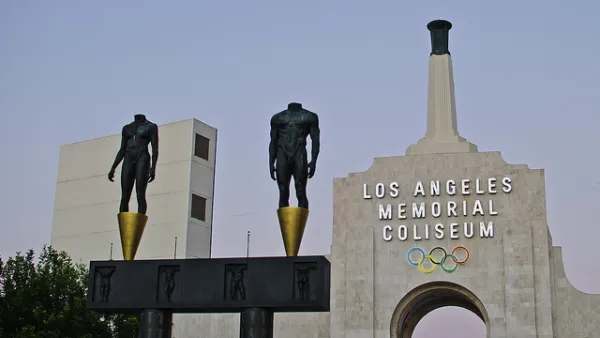
L.A. Seeking Funding for New Transit Projects Prior to the 2028 Summer Olympics
Los Angeles officials have been working for years to deliver a suite of transit projects in time for the 2028 Olympics. Planners now hope federal infrastructure funding could reinvigorate the effort.
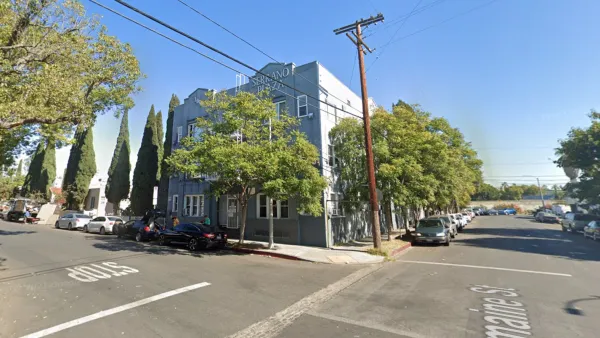
DIY Crosswalks Appear in Hollywood
A group claiming the city of Los Angeles fails to protect pedestrians is taking action on their own, painting a set of crosswalks at a busy residential intersection.

California plans to bury El Niño’s downpour
If the state plays its cards right, it may be able to store a billion acre-feet of El Niño’s water in aquifers.

Desperate measures: Advocates weigh draining Lake Powell to fill Colorado River
Draining the reservoir could reduce evaporation losses by a couple hundred thousand acre-feet.

Eastern Nebraska is running out of electricity
Data centers and electrification are straining eastern Nebraska’s grid, throttling economic development.

SpaceXAI may be fined $6 million for data center lacking water permits
A Mississippi agency also responds after a federal judge criticized the state’s Clean Air Act enforcement.

Housing is the top priority of Seattle’s sole new councilmember
Jenks campaigned on building 1,000 new units of affordable housing.

New tax cuts may slash $1.5 billion in funding for Miami transit, public parks
Amendment 3 will save Miami-Dade homeowners $2,700 in 2028.

FREE Course: Walkable City 1: Why Walkability?
After describing his path towards focusing on walkability as the essence of good planning, Jeff Speck marches through his five principal reasons for making more walkable places.
Reinventing Malls: Planning Alchemy—Turning Gray Fields Into Gold
The course focuses on the opportunities and imperatives that shape reinvention of mall sites.

City of Rosemead
Rutgers University, Edward J. Bloustein School of Planning and Public Policy
One Hundred Miles
University of Michigan School for Environment and Sustainability (SEAS)
Hunter College, City University of New York (CUNY)
The Architects Foundation
City of Cambridge
Montrose County
The Pocatello Development Authority