A multi-billion dollar project to expand high-speed rail service between Amsterdam and Brussels has been derailed by malfunctioning trains, costing the head of the Dutch national rail company his job and threatening an international imbroglio.


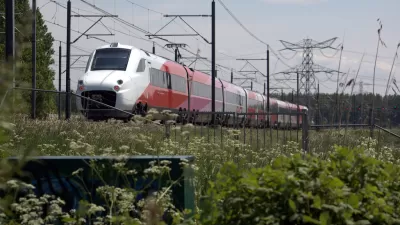
Only a month after it began operations late last year, the Netherlands had to suspend its Fyra high-speed service due to a raft of technical problems with V250 trains bought from an Italian company - AnsaldoBreda. Now, after months of trying to fix the problematic trains, the Dutch have ditched them, and are asking for their money back.
"The failure of the Fyra high-speed line has led to threats of legal action between the railway company and the manufacturer, and the dispute could drag in the Dutch, Belgian and Italian governments," report Matt Steinglass and Giulia Segreti in The Financial Times. "The cancellation of the Fyra order calls into question what the Dutch plan to do with their HSL-Zuid high-speed line, built by the state from 2000-09 at a cost of €6.4bn," they add.
While finding another manufacturer to provide new trains is one option, it could take years to complete the process.
Thanks to Daniel Lippman
Read the full story: Dutch high-speed train dream runs off the rails

Terror On-Board European High-Speed Train
Massacre on a Paris-bound train was averted in France on Friday due to the courageous actions of three Americans, one in the Air Force another in the Oregon National Guard, who rushed and subdued a Moroccan man armed with an AK-47 and a handgun.
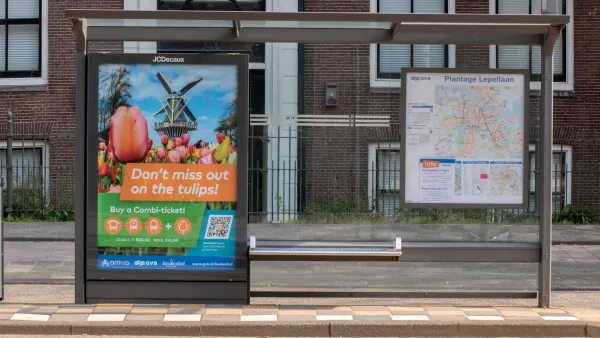
Amsterdam is First World Capital to Ban Ads for Fossil Fuels on Public Infrastructure
Several other Dutch cities have banned advertising for harmful or polluting industries on city-owned properties.
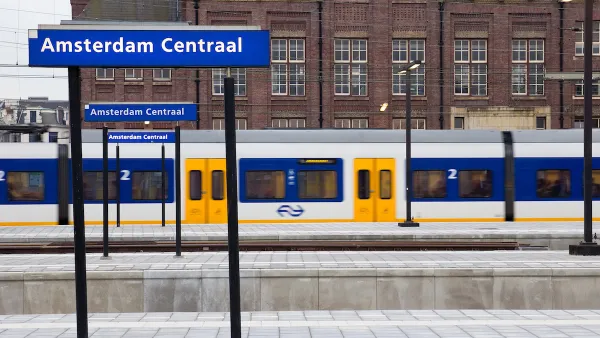
Eurostar Temporarily Closing Two High-Speed Rail Routes
Eurostar is temporarily closing routes from London to Disneyland Paris and London to Amsterdam.

Planetizen Federal Action Tracker
A weekly monitor of how Trump’s orders and actions are impacting planners and planning in America.

Amtrak, CN end decades-long dispute with eight-year agreement
The new operating agreement establishes an updated framework for the companies to work together, including processes to resolve disputes.

Northwest rail fans eager for Sept. 30 debut of Amtrak’s Airo fleet
Get ready for that new train smell and more seats. But they won’t go faster or run more frequently on the Cascades route in Washington and Oregon.

St. Louis Metro to test if single-car trains can reduce operating costs, maintain rider satisfaction
The pilot program will run from October to spring 2027, and begin with one single-car train operating on Metrolink’s Red and Blue lines.

Pennsylvania is building data centers in abandoned mines
Housing data centers in mines provides an alternative to destroying local forests and may spare residents from data centers’ noise and air pollution.

If Corpus Christi can’t revive desalination plant project, it may owe Texas $235 million
Earlier this month, city officials declined to pursue developing the plant for the second time in a year.

FREE Course: Walkable City 1: Why Walkability?
After describing his path towards focusing on walkability as the essence of good planning, Jeff Speck marches through his five principal reasons for making more walkable places.
Reinventing Malls: Planning Alchemy—Turning Gray Fields Into Gold
The course focuses on the opportunities and imperatives that shape reinvention of mall sites.

City of Thousand Oaks
City of Wisconsin Rapids
Harvard University Graduate School of Design
The Architects Foundation
University of Cincinnati Online
The Pocatello Development Authority
The Urban Renewal Agency of the City of Pocatello