Terra Nova author Eric W. Sanderson builds a refreshingly wonky case for a modern streetcar revival.


In an excerpt from his new book Terra Nova published on Places, ecologist Eric W. Sanderson investigates the physics of human transport.
He compares the energy consumption of walking, biking, roller skating, NEVs, various automobile classes, diesel and electric buses, streetcars, light rail, heavy rail, commuter rail, jet planes, and ferries, and comes to the conclusion that streetcars are the best way to travel.
After looking at the reasons historical streetcars systems failed, Sanderson lays out his plan for a modern streetcar revival, supported by municipal investment in urban rail and short-term concession agreements.
Read the full story: Roads to Rails
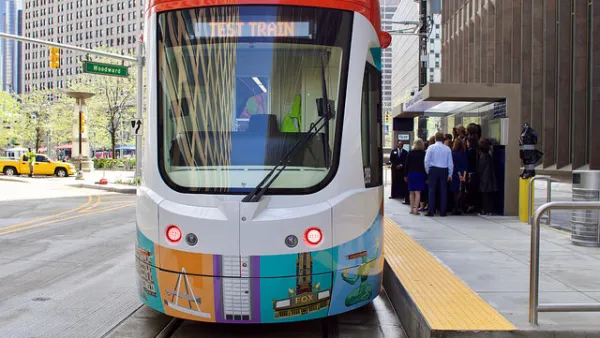
Op-Ed: Detroit's QLINE Is 'At Times an Embarrassment'
Randy Essex details why it is that "rely" isn't a word that comes to mind for many Detroiters when they think about downtown's QLINE streetcar system.
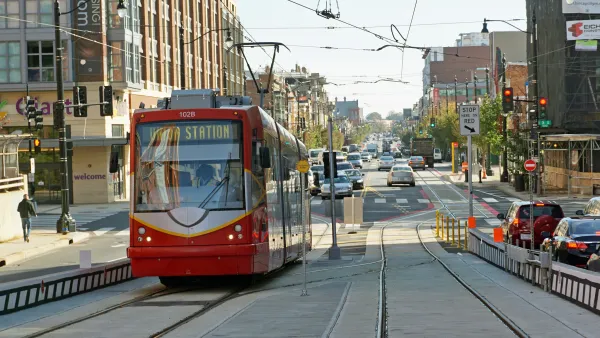
Study Casts Doubt on Streetcars' Ability to Spur Development
Examining Portland and Seattle's much-talked-about systems, the authors highlight the importance of treating streetcars as a viable transport option, rather than just a means to stimulate development.
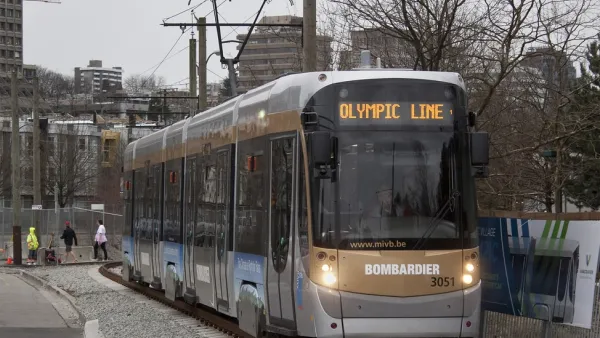
Calls to Bring the Olympic Streetcar Back to Vancouver
Vancouver's mile-long street car was built for the Olympics and ran for only 60 days, but some of the city's residents want that service back.

Planetizen Federal Action Tracker
A weekly monitor of how Trump’s orders and actions are impacting planners and planning in America.

California plans to bury El Niño’s downpour
If the state plays its cards right, it may be able to store a billion acre-feet of El Niño’s water in aquifers.

Desperate measures: Advocates weigh draining Lake Powell to fill Colorado River
Draining the reservoir could reduce evaporation losses by a couple hundred thousand acre-feet.

In Texas, data centers are swallowing promised parkland
Residents who moved to Taylor, Texas for a rural community now have to contend with three data centers in their backyard.

How a Chicago-sized wind farm beat the odds and powered on
The project spanned five presidential administrations and a standoff with a U.S. military base.

MTA gives itself 30 days to transform pit into basketball court
The site has been under construction since 2022; the city originally estimated it would finish the court in 2024.

FREE Course: Walkable City 1: Why Walkability?
After describing his path towards focusing on walkability as the essence of good planning, Jeff Speck marches through his five principal reasons for making more walkable places.
Reinventing Malls: Planning Alchemy—Turning Gray Fields Into Gold
The course focuses on the opportunities and imperatives that shape reinvention of mall sites.

City of Rosemead
Rutgers University, Edward J. Bloustein School of Planning and Public Policy
One Hundred Miles
Hunter College, City University of New York (CUNY)
The Architects Foundation
University of Cincinnati Online
City of Cambridge
Montrose County
The Pocatello Development Authority