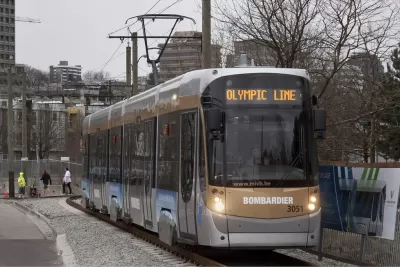
Vancouver's mile-long street car was built for the Olympics and ran for only 60 days, but some of the city's residents want that service back.


Some of the prestige of hosting the Olympics has been lost in the storm of scandals that follow the games. Aside from doping and corruption, many look at what is built for cities that host the games and see waste.
In Vancouver, one Olympic feature that was taken out of service after the games is the streetcar. "Specifically, it’s the 1.8-km (1.1-mile) Downtown Historic Railway, also known as the Olympic Demonstration Line," Sandy Smith writes for Next City. The streetcar cost about $6.5 million to build and only ran for 60 days, Smith reports and, while there are transit services that might seem redundant, including a city bus, some feel it’s wasteful to let the streetcar sit unused.
Read the full story: Some Vancouverites Want Their Olympic Streetcar Back
Olympic Boost to Vancouver Transit Ridership, Then a Drop
Transit ridership boomed during the 2010 Winter Olympics in Vancouver, but the numbers have since fallen.
Looking Back at the Olympic Experiment
During the 17 days of the Winter Olympics, Vancouver significantly beefed up its transit offerings and reduced lanes for automobiles. Did the experiment work, and what would happen if these temporary changes were made permanent?
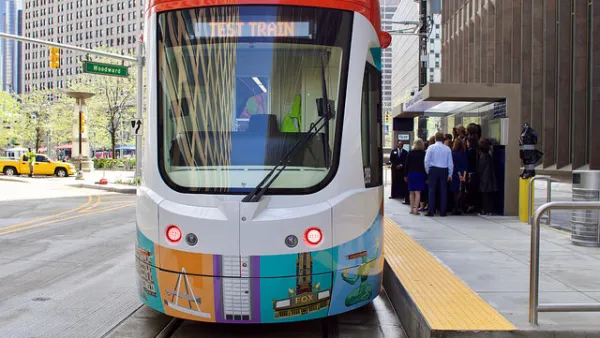
Op-Ed: Detroit's QLINE Is 'At Times an Embarrassment'
Randy Essex details why it is that "rely" isn't a word that comes to mind for many Detroiters when they think about downtown's QLINE streetcar system.

Planetizen Federal Action Tracker
A weekly monitor of how Trump’s orders and actions are impacting planners and planning in America.

California plans to bury El Niño’s downpour
If the state plays its cards right, it may be able to store a billion acre-feet of El Niño’s water in aquifers.

Desperate measures: Advocates weigh draining Lake Powell to fill Colorado River
Draining the reservoir could reduce evaporation losses by a couple hundred thousand acre-feet.

In Texas, data centers are swallowing promised parkland
Residents who moved to Taylor, Texas for a rural community now have to contend with three data centers in their backyard.

How a Chicago-sized wind farm beat the odds and powered on
The project spanned five presidential administrations and a standoff with a U.S. military base.

MTA gives itself 30 days to transform pit into basketball court
The site has been under construction since 2022; the city originally estimated it would finish the court in 2024.

FREE Course: Walkable City 1: Why Walkability?
After describing his path towards focusing on walkability as the essence of good planning, Jeff Speck marches through his five principal reasons for making more walkable places.
Reinventing Malls: Planning Alchemy—Turning Gray Fields Into Gold
The course focuses on the opportunities and imperatives that shape reinvention of mall sites.


City of Rosemead
Rutgers University, Edward J. Bloustein School of Planning and Public Policy
One Hundred Miles
Hunter College, City University of New York (CUNY)
The Architects Foundation
University of Cincinnati Online
City of Cambridge
Montrose County
The Pocatello Development Authority