During the 17 days of the Winter Olympics, Vancouver significantly beefed up its transit offerings and reduced lanes for automobiles. Did the experiment work, and what would happen if these temporary changes were made permanent?


During the Games, road capacity was cut in half downtown and 20% throughout the city.
John Calimente writes, "Remarkably, with an average daily ridership of 1.6 million over the 17-day event, Vancouver temporarily had the third-highest transit usage in North America behind only New York and Mexico City. While this is an amazing accomplishment, it is also staggering to think that much, much larger cities in U.S. have such low transit ridership."
Read the full story: Vancouver Becomes a Transit City for 17 Days
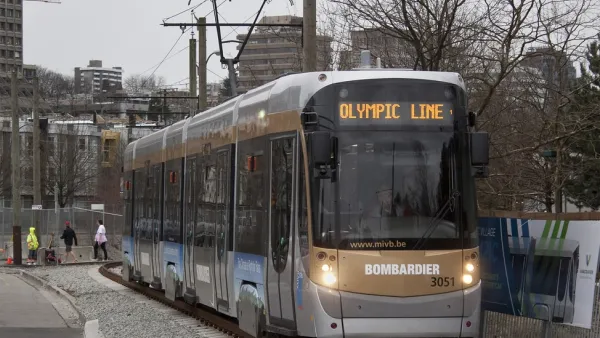
Calls to Bring the Olympic Streetcar Back to Vancouver
Vancouver's mile-long street car was built for the Olympics and ran for only 60 days, but some of the city's residents want that service back.
Olympic Boost to Vancouver Transit Ridership, Then a Drop
Transit ridership boomed during the 2010 Winter Olympics in Vancouver, but the numbers have since fallen.

Vancouver's Ride-Hail-Free Mobility Landscape
While ride-hailing is on the horizon for the Canadian city, the experience so far without the mode provides useful insight into its effects on regional mobility.

Planetizen Federal Action Tracker
A weekly monitor of how Trump’s orders and actions are impacting planners and planning in America.

Eastern Nebraska is running out of electricity
Data centers and electrification are straining eastern Nebraska’s grid, throttling economic development.

Move over, LA: St. Louis gears up for Olympics, invests millions in downtown redevelopment
The Missouri city will host the 2028 Olympic soccer group stage and knockout matches.

Dallas releases zoning code overhaul to officials
The drafted overhaul is over 400 pages long.

NYC renovations for dangerous, ‘mercilessly crammed’ street delayed until 2027
Construction was supposed to begin this fall.

San Diego’s Midway Rising project gets greenlight from city council
The project looks to become the largest affordable housing development in California's history.

FREE Course: Walkable City 1: Why Walkability?
After describing his path towards focusing on walkability as the essence of good planning, Jeff Speck marches through his five principal reasons for making more walkable places.
Reinventing Malls: Planning Alchemy—Turning Gray Fields Into Gold
The course focuses on the opportunities and imperatives that shape reinvention of mall sites.

City of Rosemead
Rutgers University, Edward J. Bloustein School of Planning and Public Policy
One Hundred Miles
University of Michigan School for Environment and Sustainability (SEAS)
Hunter College, City University of New York (CUNY)
The Architects Foundation
City of Cambridge
The Pocatello Development Authority
The Urban Renewal Agency of the City of Pocatello