Public Space
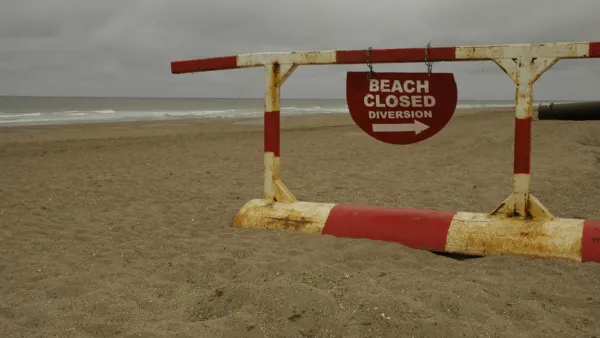
Enclosing the Commons: Tech Billionaire Buys Beloved Beach
San Mateo residents sue a Silicon Valley tycoon for buying and closing off a public beach in violation of California Coastal Act.
New App Would Auction Public Parking Spaces
The MonkeyParking app works similarly to sharing economy stars Airbnb or Uber, except for sale is an inside line on parking spaces. That means that private users would be auctioning the use of public space. That can't be legal, can it?
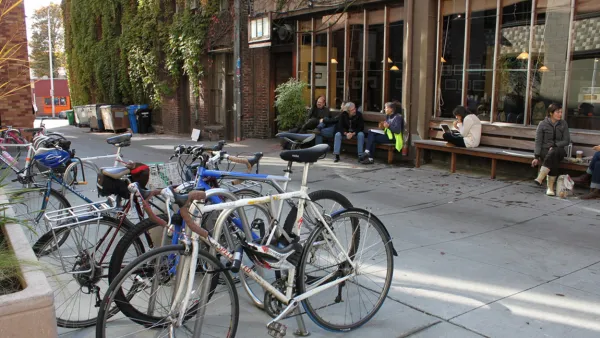
Alleyways as Pathways to Urban Revitalization
From D.C. to Seattle, alleys are being reinvented as people-friendly spaces. Often perceived as dirty and dangerous, alleys are moving beyond garbage and garages to become havens for pedestrians, public art, and small business.
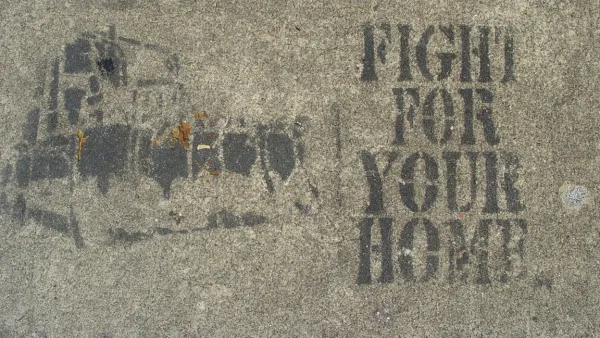
A Call to Flâner, for Spatial Justice
The concept of the flâneur was created in the 19th century in response to the encroaching speed and efficiency of the Industrial Age. Can the flâneur now fashion a political response to the Age of the Automobile?
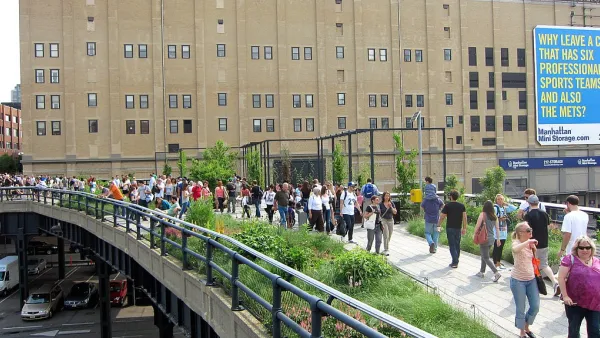
Amanda Burden Gives TED Pitch for Public Space
Amanda Burden amassed quite a track record during her tenure as planning commissioner for New York City, like rezoning 40 percent of the city. In a recent Ted talk, however, Burden concentrated on the details that make for successful public spaces.
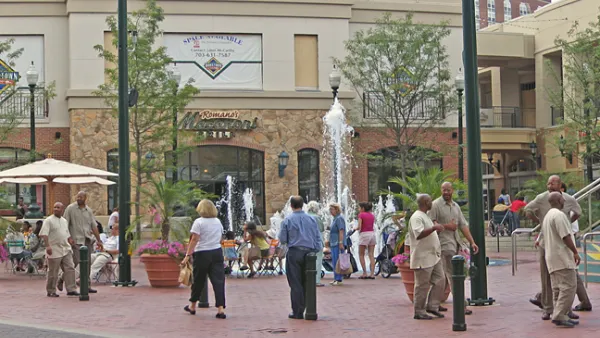
A Small City’s Quest for A Walkable Downtown
The city of Yakima, Washington, is exploring ideas to convert two large surface parking lots occupying valuable land in the city’s downtown core into a pedestrian friendly district.
Comparing Public Space in New York City and Paris
A recent article examines the ways New York City and Paris support large-scale pedestrian use and support the shared use of public space.
How Public Space Enables, or Prohibits, Protest
With the provocative title “A Dictator’s Guide to Urban Design,” a recent article in The Atlantic examines the revolutionary capacity of public squares like Ukraine’s Independence Square.
U.K. Could Soon Control Activities in Public Spaces
Although it’s already been dealt one parliamentary setback, the “Anti-Social Behaviour, Crime and Policing Bill” is still under consideration in the U.K. Critics are concerned that, if the law passes, there will be no true public space left.
L.A. Addresses its Growing Homeless Population by Making it Harder for Them to Eat
Forced onto the street by decreased public spending, a poor economy and congested prisons, L.A.'s homeless population surged by 27 percent last year. Tensions are growing between those trying to help and those uncomfortable with the inundation.
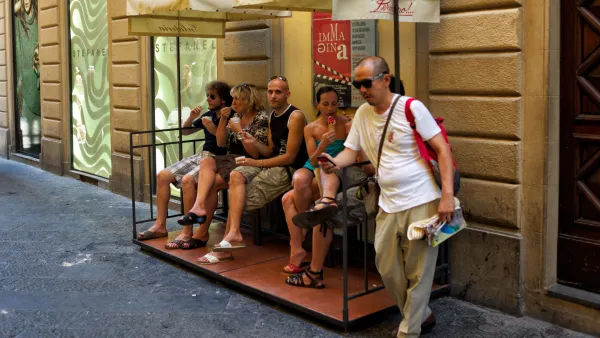
The Next Big Thing: "Sit-able Cities"
Supported by imagery of human urban conduct, Chuck Wolfe argues that walkable is good, but sit-able is better—and that "it’s time for the next big focal point and the next big idea, the 'Sit-able City'."
Great Streets Initiative is L.A. Mayor's First Executive Directive
In a keynote speech at the Urban Land Institute’s “Transit Oriented Los Angeles” conference, Mayor Eric Garcetti announced the launch of a "Great Streets" program to coordinate work on, and investment in, "the City’s largest public space asset."
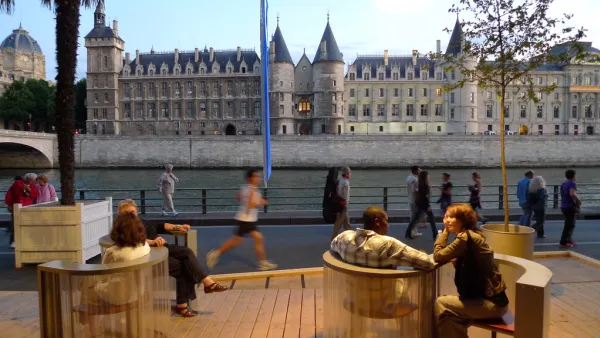
Paris Tests a New Approach to Urban Space
Any visitor from America would think that Paris had found the solution to creating great public spaces and taming the automobile. But the city's new approach to urban space suggests city leaders and residents feel otherwise.
Death By Auto: Are They Always Accidents?
Sarah Goodyear describes the greater implications of the carnage caused by a motorist intent on mowing down as many pedestrians as possible on the Venice boardwalk in L.A. on August 03. It wasn't the first time a car caused mayhem in a public space.
Upending Trickle-Down Techniques for Creating Public Space
Michael Kimmelman looks at the wave of 'cheap, quick, temporary and D.I.Y.-style approaches' that are introducing a more successful means of creating public space than traditional trickle-down techniques.
Dutch Designer Makes Street Furnishings Fun
John Metcalfe spotlights the work of Dutch designer Thor ter Kulve, whose creative approach to designing street furniture blends utility and playfulness with the aim of liberating public space.
Will Google Maps Destroy Public Space?
With the latest redesign of Maps, Google is personalizing the mapping experience to reflect the places we, and our friends, frequent. In doing so, will the technology giant eliminate serendipitous "entanglements" from the urban experience?
My LA2050 Winners Will Transform Abandoned Places into Usable Spaces
One theme unites the winners of the My LA2050 competition: a desire to reinvigorate Los Angeles’s vacant and underused spaces.
Reimagining Public Space for Increasingly Crowded Cities
David Gensler, Co-CEO of the design mega-firm, describes the speculative work produced by Gensler's global offices for unearthing and re-imagining "unexpected open space" in "our increasingly built-up and built-out urban environments."
Public Space Vulnerable in Marathon Bombing Aftermath
Monday’s Boston Marathon bombing was “an attack on public space,” writes architecture critic Christopher Hawthorne. But that doesn’t mean we should respond by closing off the sidewalks and streets the bombers targeted.

FREE Course: Walkable City 1: Why Walkability?
After describing his path towards focusing on walkability as the essence of good planning, Jeff Speck marches through his five principal reasons for making more walkable places.
Reinventing Malls: Planning Alchemy—Turning Gray Fields Into Gold
The course focuses on the opportunities and imperatives that shape reinvention of mall sites.

City of Rosemead
Rutgers University, Edward J. Bloustein School of Planning and Public Policy
One Hundred Miles
Hunter College, City University of New York (CUNY)
The Architects Foundation
University of Cincinnati Online
City of Cambridge
Montrose County
The Pocatello Development Authority









