David Gensler, Co-CEO of the design mega-firm, describes the speculative work produced by Gensler's global offices for unearthing and re-imagining "unexpected open space" in "our increasingly built-up and built-out urban environments."


As Gensler explains, the next several decades will see increasing urbanization around the world. "According to data from the United Nations, by 2050 nearly 70% of the world’s population—some 6.29 billion people—will live in cities."
"Where will all those urbanites find places to breathe, to pause, to share ideas, to gather and be productive as social animals, which is why cities came to be 9,000 years ago?" he asks. "How do we avoid replicating the urban planning and development problems that we have in our modern cities, and in particular, our penchant for not placing enough value on the “people factor”? How do we avoid transporting those problems to the fast developing cities of the world?
"We need to create, reclaim, and just plain squeeze it out of our existing cities and then turn that essential space into spectacular places designed for the promotion of our humanity," he argues. Speculative projects produced by Gensler's offices in New York, Las Vegas, Bangalore, London, and Washington D.C. for the firm's Town Square Initiative offer some compelling concepts for accomplishing that goal.
Read the full story: Designing A New Town Square For Our Crowded Urban Future
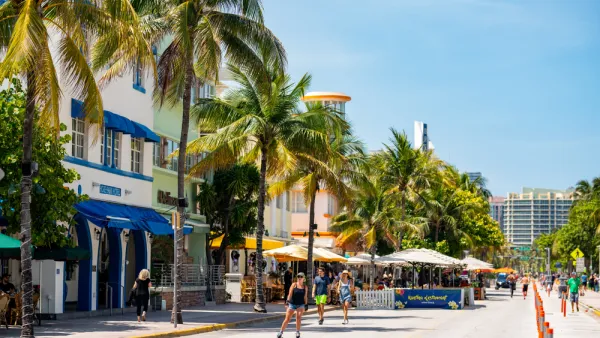
Miami Beach to Reopen Ocean Drive to Cars
The famous cruising strip was off-limits to cars during the pandemic. Now, the city is letting vehicles return with some pedestrian-oriented compromises.

Serpentine Maze: Pop-Up Parks in the Pandemic
If the combined effects of winter's cold and the pandemic has you bummed, check out this community-building exercise in the frozen North.
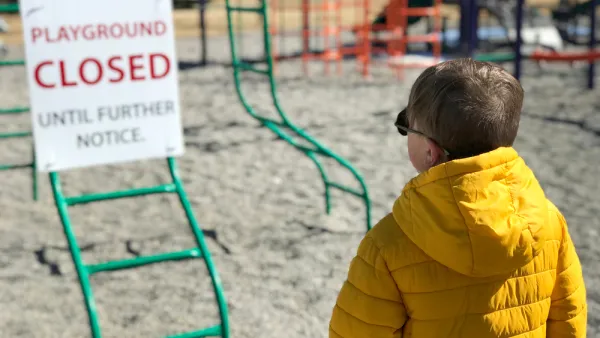
Why Playgrounds Need to Stay Open
California has reversed its decision to close playgrounds as part of the state's stay-at-home order after some legislators and parents complained and argued that children need outdoor play for their health and well-being.

Planetizen Federal Action Tracker
A weekly monitor of how Trump’s orders and actions are impacting planners and planning in America.

California plans to bury El Niño’s downpour
If the state plays its cards right, it may be able to store a billion acre-feet of El Niño’s water in aquifers.

Desperate measures: Advocates weigh draining Lake Powell to fill Colorado River
Draining the reservoir could reduce evaporation losses by a couple hundred thousand acre-feet.

In Texas, data centers are swallowing promised parkland
Residents who moved to Taylor, Texas for a rural community now have to contend with three data centers in their backyard.

How a Chicago-sized wind farm beat the odds and powered on
The project spanned five presidential administrations and a standoff with a U.S. military base.

MTA gives itself 30 days to transform pit into basketball court
The site has been under construction since 2022; the city originally estimated it would finish the court in 2024.

FREE Course: Walkable City 1: Why Walkability?
After describing his path towards focusing on walkability as the essence of good planning, Jeff Speck marches through his five principal reasons for making more walkable places.
Reinventing Malls: Planning Alchemy—Turning Gray Fields Into Gold
The course focuses on the opportunities and imperatives that shape reinvention of mall sites.

City of Rosemead
Rutgers University, Edward J. Bloustein School of Planning and Public Policy
One Hundred Miles
Hunter College, City University of New York (CUNY)
The Architects Foundation
University of Cincinnati Online
City of Cambridge
Montrose County
The Pocatello Development Authority