With the provocative title “A Dictator’s Guide to Urban Design,” a recent article in The Atlantic examines the revolutionary capacity of public squares like Ukraine’s Independence Square.


Matt Ford explores “the public square as an epicenter of democratic expression and protest.” On the other side of the public protest equation is the lack of public space, “or the deliberate manipulation of such a space—as a way for autocrats to squash dissent through urban design.”
Ford goes on to examine case studies where public space enabled protests, like Kiev's Independence Square, Georgia’s Tahrir Square in Egypt, and Manana’s Pearl Roundabout, as well as cities where public space is apportioned to prevent social uprisings, like in Baron Haussmann's renovations of Paris and the sprawl of Naypyidaw in Burma.
Read the full story: A Dictator's Guide to Urban Design
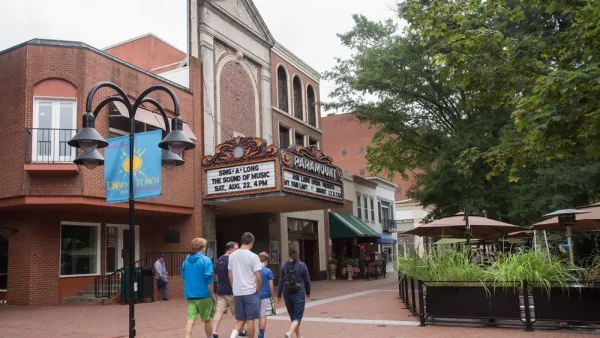
Charlottesville and the 'War Against Public Space'
A think-piece published by CityLab argues that public space, and the ideals it embodies, are under threat from the racist groups that gathered in Charlottesville, Virginia last weekend.

Six States Considered Laws to Make it Legal to Run Over Protestors This Year
A day of reckoning has come for state lawmakers who proposed protections for motorists who attack protestors from behind the wheels of their car. A tragedy at protests in Charlotte has cast new light on the dangerous potential of such laws.
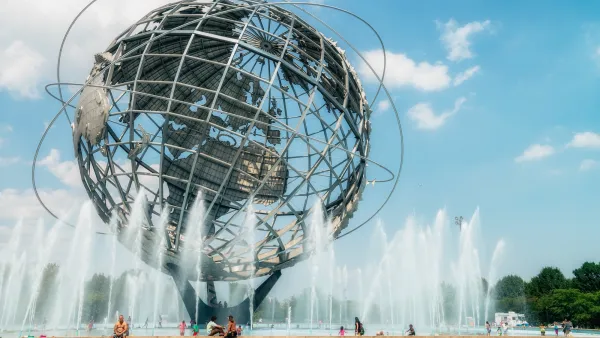
Historic Queens park is getting a $120M upgrade
The borough's largest park will undergo significant upgrades for accessibility, flood mitigation and historic preservation.

Desperate measures: Advocates weigh draining Lake Powell to fill Colorado River
Draining the reservoir could reduce evaporation losses by a couple hundred thousand acre-feet.

Eastern Nebraska is running out of electricity
Data centers and electrification are straining eastern Nebraska’s grid, throttling economic development.

Malls are becoming the midtowns of the future
Mall and office park redevelopments are a generational opportunity to create new nodes of urbanity.

NYC breaks ground on anti-flooding infrastructure project
New York City's new system will reduce stormwater flows to local sewers by 90%.

One Kentucky town’s secret to affordable housing
The Smoketown Community Land Trust has already built seven affordable homes for community members.

Houston gains petal-shaped cooling infrastructure to make streets more ‘delightful’
The city has installed the pavilions along 15 blocks in Houston.

FREE Course: Walkable City 1: Why Walkability?
After describing his path towards focusing on walkability as the essence of good planning, Jeff Speck marches through his five principal reasons for making more walkable places.
Reinventing Malls: Planning Alchemy—Turning Gray Fields Into Gold
The course focuses on the opportunities and imperatives that shape reinvention of mall sites.

City of Rosemead
Rutgers University, Edward J. Bloustein School of Planning and Public Policy
One Hundred Miles
University of Michigan School for Environment and Sustainability (SEAS)
Hunter College, City University of New York (CUNY)
The Architects Foundation
City of Cambridge
Montrose County
The Pocatello Development Authority