Police
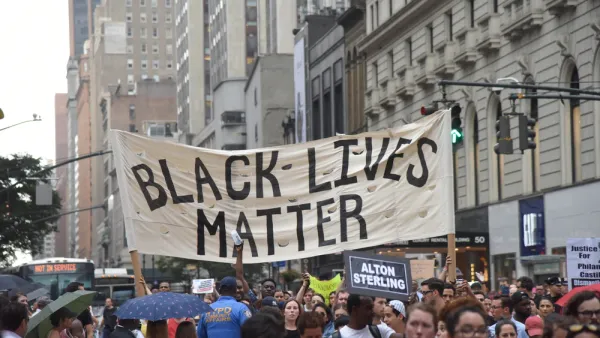
Watch: Responding to Anti-Black Racism in Planning and Urbanism
A must-watch conversation between BIPOC researchers and advocates working in the realm of planning and urbanism is available to watch on YouTube.
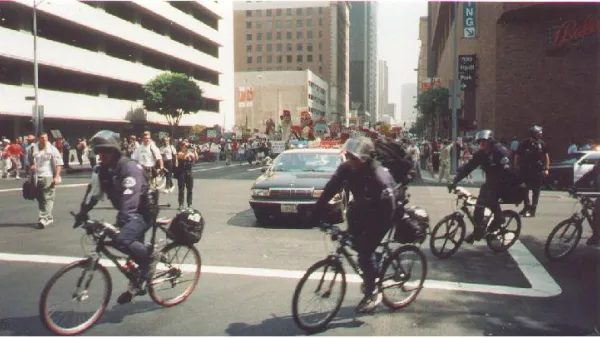
Vision Zero...Without the Enforcement
As a leading bicycle advocacy organization withdraws support for police enforcement of Vision Zero plans, the discretionary practices of traffic enforcement come under rejuvenated scrutiny.

Debating the Future of Cities After the Coronavirus, Volume 3
The third installment of an ongoing, curated list of a particularly contemporary genre of urbanism punditry.
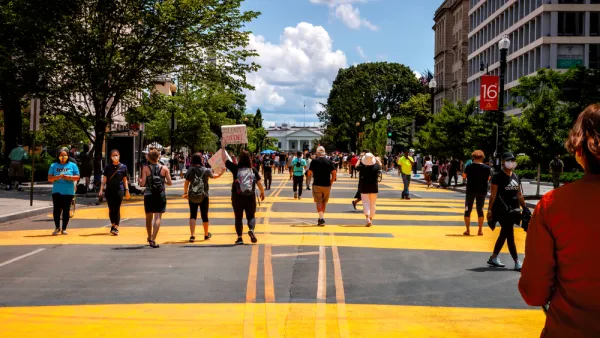
How Emergency Street Redesign Projects Fell Short of the Black Lives Matter Cause
A leading advocate for a new, equity centering approach explains how plans to redesign streets for the needs of the coronavirus pandemic left behind racial justice as a secondary concern.
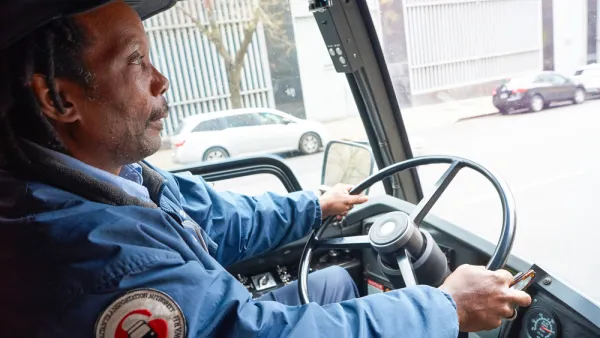
The Onion Skewers Police Use of Public Transit During Protests
It's possible that bus public transit could some day again be a powerful tool for economic and social mobility.
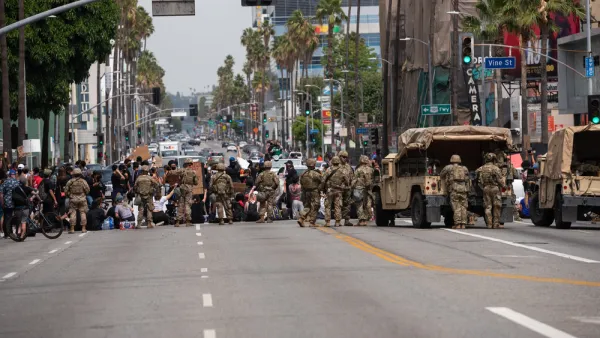
Opposing the Militarization of Police in Urban Areas
An impassioned plea for police not to escalate the violent and angry scenes that have punctuated the peaceful protests of the past week, as desired by key figures in the Trump administration as well as the president himself.
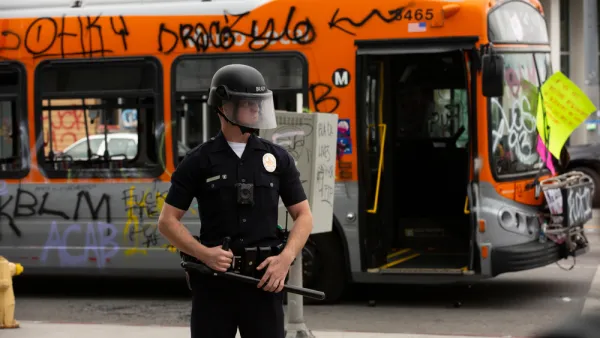
Advocates Respond to the Role of Public Transit in Protests and Arrests
The commandeering of buses for police to transport arrested protestors is raising questions about the allegiances of transit agencies in the United States.
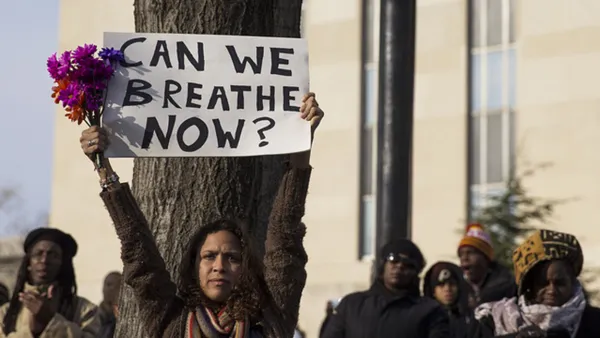
Connecting the Dots Between Planning and Policing
The newest issue the Journal of Planning and Education Research responds to a clear need of the time: the need to address social justice in the public realm while reforming planning practices in the United States.
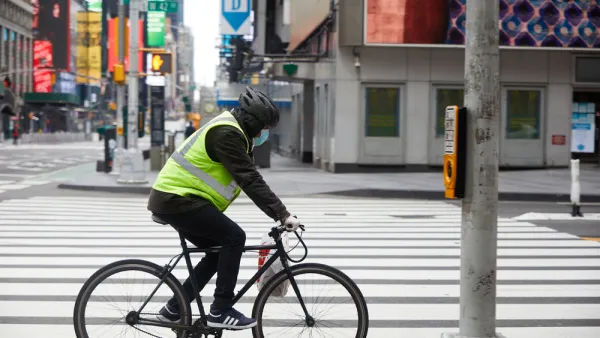
Making Space for the 'Invisible Cyclists' in Post-Pandemic Transportation Planning
As biking gains popularity as a transportation mode during the pandemic, planners are called on to elevate the role of "invisible cyclists"—people of color on bikes—in the process of redesigning and re-engineering streets.
Commandeered Buses, System Shutdowns—Transit on the Frontlines of Protests
The optics of public transit suffered over the weekend, as a few transit agencies have been commandeered by police and even shut down entirely with little or no notice, stranding protesters and essential workers alike.
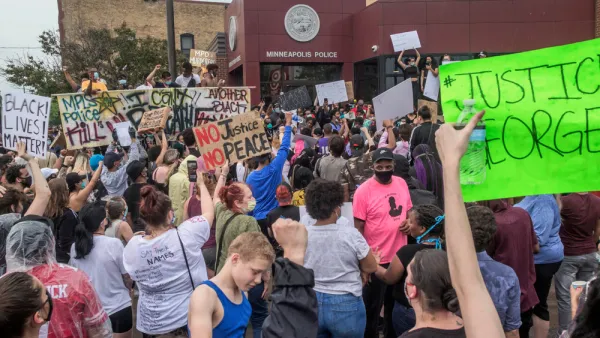
Violence Against Black Americans a Moment of Reckoning for the Planning Profession
After a wave violence against Black men in the United States, it is the duty of the planning profession to consider its role in perpetuating institutional racism.
Nextdoor Getting Cozy With Local Officials
CityLab investigates the practices of company officials at Nextdoor to cultivate relationships with police and local officials.
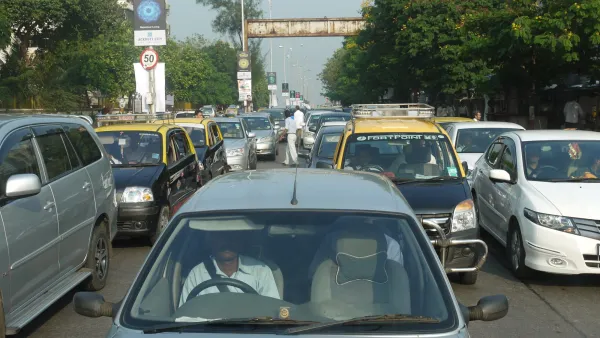
To Curb the Honking, Mumbai’s 'Punishing Signal'
Incessant honking just adds to the chaos on city streets, so Mumbai police put up a clever device to remind drivers that making noise will not ease traffic woes.
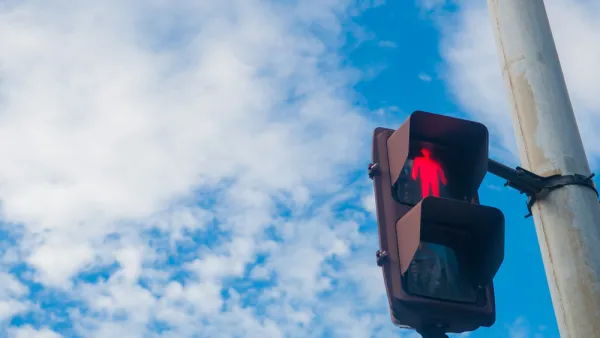
Where Enforcement of Jaywalking Equals Criminalization of Homelessness
Records in Salt Lake City show that police in Salt Lake City concentrate jaywalking enforcement in the corner of the city that houses most of the city's homeless services.
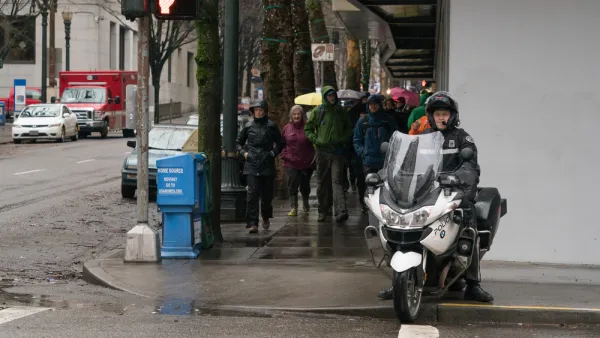
Google Maps for iPhone Now Reports DUI Checkpoints, Speed Traps
Navigation app Waze has long allowed users the ability to report various "inconveniences" on the road, like speed traps, checkpoints, and crashes. Now Google Maps users on iPhone can do the same.
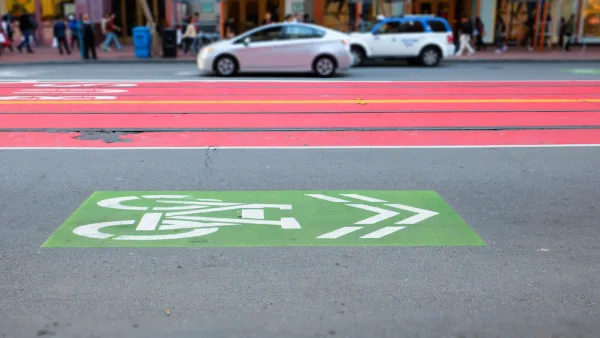
Lack of Traffic Safety Enforcement Blamed for Vision Zero Failures
Education, engineering, and enforcement are the three "e's" of Vision Zero in San Francisco. A lack of on of those "e's"—enforcement—might explain why more people are dying on the city's streets this year that any year since the city adopted Vision Z
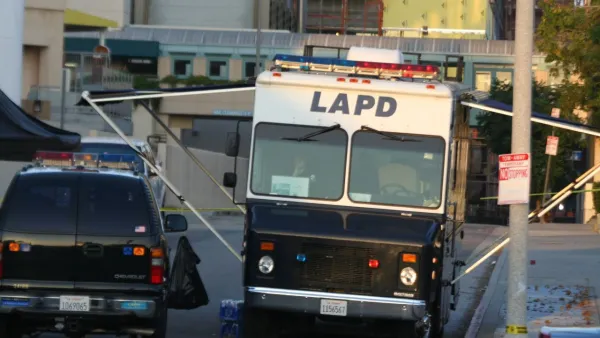
LAPD is Looking for 5,000 Volunteers to Help Police Neighborhoods
The Los Angeles Police Department is looking to recruit 5,000 volunteers to run stake outs and "undercover surveillance," along with other police activities.
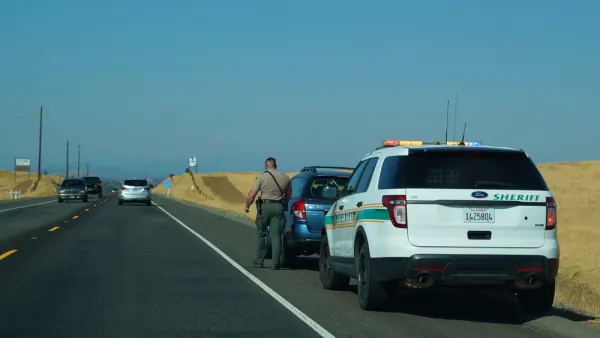
The Car-Centric World and the Ongoing Expansion of Police Powers
While cars are still equated with freedom of mobility and personal liberty, they've also offered courts the chance to expand police powers in the public realm, time and time again.
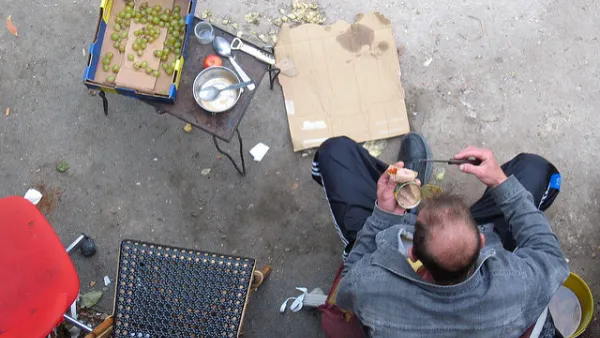
Will Appeal of Landmark Appeals Court Ruling Allow for Clearing of Tent Cities?
If the Supreme Court hears an appeal of a landmark U.S. Ninth Circuit Court case settled in April, the ruling would have widespread implications for dealing with homeless encampments throughout the West, perhaps nowhere more so than Los Angeles.
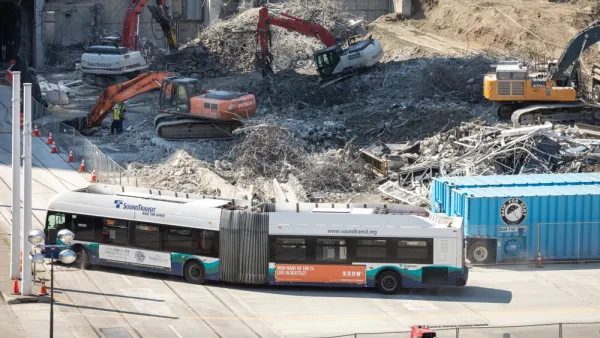
Editorial Calls for Automated Enforcement for Bus Lanes
The Seattle Times Editorial Board argues that automated enforcement would remove scofflaws from blocking bus commuters.

FREE Course: Walkable City 1: Why Walkability?
After describing his path towards focusing on walkability as the essence of good planning, Jeff Speck marches through his five principal reasons for making more walkable places.
Reinventing Malls: Planning Alchemy—Turning Gray Fields Into Gold
The course focuses on the opportunities and imperatives that shape reinvention of mall sites.

City of Rosemead
Rutgers University, Edward J. Bloustein School of Planning and Public Policy
One Hundred Miles
Hunter College, City University of New York (CUNY)
The Architects Foundation
University of Cincinnati Online
City of Cambridge
Montrose County
The Pocatello Development Authority









