CityLab investigates the practices of company officials at Nextdoor to cultivate relationships with police and local officials.


Sarah Holder reports on the efforts of Nextdoor, the neighborhood-focused social media app, to promote its network of online communities to government agencies. According to Holder, Nextdoor's cultivation of police and public officials, "reflects a trend that’s worrying to civil rights and government accountability experts: that local law enforcement and other types of government officials are closely collaborating with private companies whose interests don’t always align with the public’s."
Nextdoor's engagement with public officials includes the creation of the Public Agencies Advisory Council, which exists to give public officials a chance to advise the app. Holder documents an expensive junket hosted by Nextdoor for the council.
Holder explains a lot more about how Nextdoor works, and what differentiates the app from other social media platforms. According to Holder, users of the app have increased posting threefold during the pandemic, but the platform has a history of "racist profiling and tattling."
FULL STORY: How Nextdoor Courts Police and Public Officials

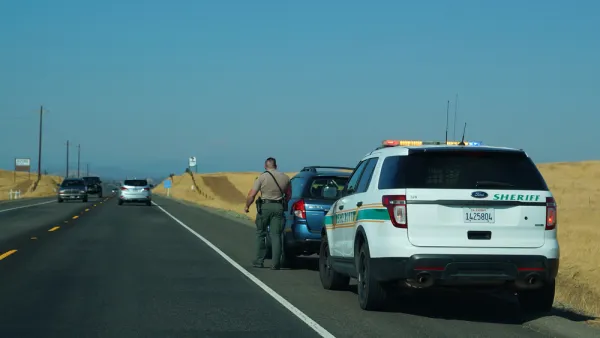
The Car-Centric World and the Ongoing Expansion of Police Powers
While cars are still equated with freedom of mobility and personal liberty, they've also offered courts the chance to expand police powers in the public realm, time and time again.
Neighborhood-Based Apps and the Socialized Fear of Crime
Violent crime is at the lowest rate in decades, but don't tell that to the people who use neighborhood-based apps like Nextdoor, Citizen, and Neighbors.
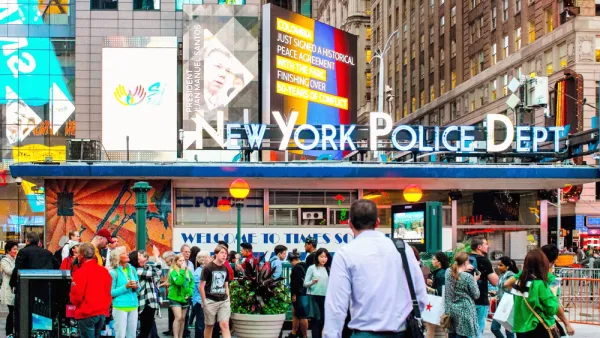
Beacon / Bunker
Kris Graves photographs all 77 NYPD precincts from Tottenville to Edenwald, looking to these buildings—sometimes humble, sometimes imposing—for the face and footprint of law and order in the neighborhood.

Planetizen Federal Action Tracker
A weekly monitor of how Trump’s orders and actions are impacting planners and planning in America.

The state-sanctioned urbicide of Austin
People don’t kill cities. Freeways do.

US to reduce Colorado River water deliveries to Mexico
A new Colorado Treaty amendment reduces Mexico’s Colorado River water allocation by 250,000 acre feet.

Baltimore to break ground on $50 million Transit Priority Project
The project will bring faster bus trips, safer streets and better bike connections to Baltimore.

Airbnb launches $250 million 'last-dollar financing' housing accelerator, makes first investment in Austin
The company will put $6.4 million towards affordable housing development in Texas’ capital.

Guerilla urbanists are building DIY bus stop benches in Chicago
A before-and-after of one of the bus stops with a new bench. The new benches are not officially sanctioned or permitted, but the residents who placed them hope they will be the start of a network of DIY benches across the city.

FREE Course: Walkable City 1: Why Walkability?
After describing his path towards focusing on walkability as the essence of good planning, Jeff Speck marches through his five principal reasons for making more walkable places.
Reinventing Malls: Planning Alchemy—Turning Gray Fields Into Gold
The course focuses on the opportunities and imperatives that shape reinvention of mall sites.

Eagle County Government
Harvard University Graduate School of Design
Nashville Planning Department
The Architects Foundation
University of Cincinnati Online
The Pocatello Development Authority
The Urban Renewal Agency of the City of Pocatello
Journal of the American Planning Association