To combat a rash of incivility and outright criminal acts, three Business Improvement Area directors argue that Seattle needs to commit more law enforcement resources to business districts.


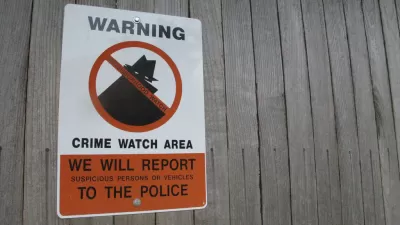
Following a public safety forum hosted by several Seattle Business Improvement Areas (BIAs), Erin Goodman, Lisa Howard, and Michael Stewart say the street crime situation in Seattle business districts is getting worse. They point to employees and customers who've encountered "aggressive and threatening behavior from people suffering from mental health and addiction, property damage, theft, human waste, discarded needles and drug dealing."
"We believe the city of Seattle has confused 'decriminalizing homelessness' with tolerating criminal acts," they write. "Whether [perpetrators] are homeless is not the issue. People are committing criminal acts, and because the city will not arrest or prosecute, there are no consequences and the problem is growing worse."
The BIA directors suggest placing more beat cops on the streets of business districts, removing illegal encampments, increasing the availability of mental health and addiction services, and focusing on crime to "arrest and prosecute those people engaging in criminal activities regardless of their housing status."
FULL STORY: City of Seattle’s inertia on street crime is intolerable

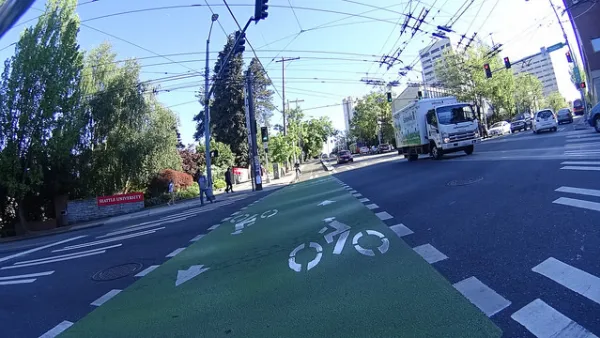
Seattle's Homeless Bearing the Brunt of Helmet Citations
Almost half of bike helmet citations in the city are issued to people experiencing homelessness.
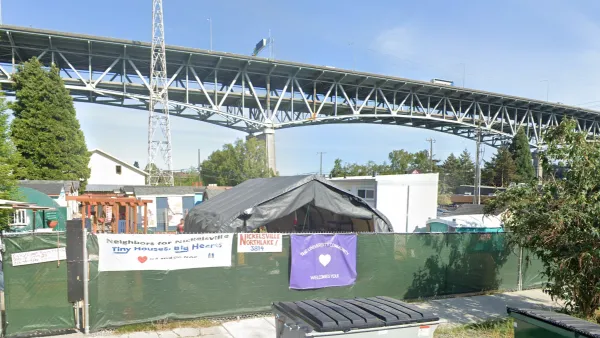
Tiny Home Village to Close Amid Controversy in Seattle
The situation at the tiny home village in the Seattle neighborhood of Northlake has been deteriorating since April.
Will Appeal of Landmark Appeals Court Ruling Allow for Clearing of Tent Cities?
If the Supreme Court hears an appeal of a landmark U.S. Ninth Circuit Court case settled in April, the ruling would have widespread implications for dealing with homeless encampments throughout the West, perhaps nowhere more so than Los Angeles.

Planetizen Federal Action Tracker
A weekly monitor of how Trump’s orders and actions are impacting planners and planning in America.

The state-sanctioned urbicide of Austin
People don’t kill cities. Freeways do.

US to reduce Colorado River water deliveries to Mexico
A new Colorado Treaty amendment reduces Mexico’s Colorado River water allocation by 250,000 acre feet.

5 New England states march closer to 800 megawatt wind energy project
Securing federal approval for the project may be complicated under the Trump administration, which has historically been hostile towards domestic wind power.

Baltimore to break ground on $50 million Transit Priority Project
The project will bring faster bus trips, safer streets and better bike connections to Baltimore.

Airbnb launches $250 million 'last-dollar financing' housing accelerator, makes first investment in Austin
The company will put $6.4 million towards affordable housing development in Texas’ capital.

FREE Course: Walkable City 1: Why Walkability?
After describing his path towards focusing on walkability as the essence of good planning, Jeff Speck marches through his five principal reasons for making more walkable places.
Reinventing Malls: Planning Alchemy—Turning Gray Fields Into Gold
The course focuses on the opportunities and imperatives that shape reinvention of mall sites.

Eagle County Government
Harvard University Graduate School of Design
Nashville Planning Department
The Architects Foundation
University of Cincinnati Online
The Pocatello Development Authority
The Urban Renewal Agency of the City of Pocatello
Journal of the American Planning Association