State attorneys general and green groups are gearing up to fight the emissions rule rollback. Mayors would have a greater climate impact by helping their constituents drive less, argues Alissa Walker.


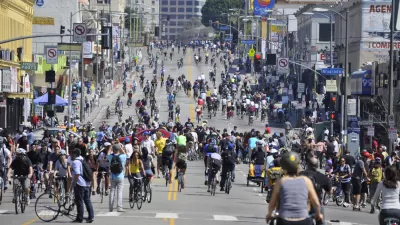
"Today, the group of 407 mayors formed to protest the U.S.’s exit from the Paris climate accord joined a growing chorus of politicians and environmentalists in denouncing the Trump administration’s plan to roll back vehicle emissions standards..." writes Alissa Walker on Aug. 2.
Walker, like anyone who "wants clean air and healthy communities," wants to see the stricter standards approved under the Obama administration kept in place, but recognizes that cleaner cars alone won't reduce greenhouse gas emissions from transportation, now the largest source in the U.S. for the second consecutive year.
California will lead a coalition of 19 state attorneys generals to oppose Trump's SAFE Rule. A lawsuit was filed on May 1 by California Attorney General Xavier Becerra and 17 other AGs in anticipation of the rollback.
Cities have an equally important role – not in regulating emissions, but in reducing how much they need to be driven. And the problem is that of the over 400 mayors who signed the Mayors National Climate Action Agenda, known as Climate Mayors, most are not doing it, observes Walker.
Her point was amplified by Streetsblog USA's Angie Schmitt in May, pointing to four specific transportation and land use strategies not being implemented.
Transportation emissions have been increasing in California
Despite California's Advanced Clean Cars program, which requires manufacturers to produce an increasing number of zero-emission vehicles (meaning battery electric and fuel cell electric vehicles), emissions from transportation have been increasing in the state's last two greenhouse gas inventory reports: 2018 and 2017, even though total greenhouse gas emissions have been falling. The California Air Resources Board (CARB) attributed the increase to "increased fuel consumption."
Do Climate Mayors (and other leaders) recognize the need to drive less as a necessary strategy to fight climate change?
Melanie Curry of Streetsblog California reported on a historic meeting between the California Transportation Commision and CARB on June 27 that showed a steep divide between the two organizations. CARB staff indicated that it would be necessary to "reduce per capita vehicle mile traveled 25% from 2005 levels - 1.6 miles/person/day," to achieve California's Vision 2030 [pdf].
"As the California Air Resources Board tightens its [SB 375] standards for greenhouse-gas emissions from regional transportation sectors, many local authorities have started arguing that adoption of electric vehicles will make it unnecessary to reign in so-called vehicle miles traveled, or VMT," wrote Joshua Emerson Smith, environment reporter for the San Diego Union-Tribune, who also covered the meeting.
“Technology, like zero-emission vehicles, will carry us far, but it will not be enough to get us where we need to go,” said the board's chair, Mary Nichols.
California is not an aberration. Vehicle miles traveled (VMT) in the U.S. has been on the rise since 2013, and accelerated after gas prices began falling in July 2014, with 2015 breaking the so-called "peak car" record set in 2007. [See Planetizen blog post, "So Much for Peak VMT," by Steve Polzin, March 8, 2016]. But that record didn't last long as the upward trend continues.
If city leaders truly want to fight climate change, they need to invest in efforts to reduce vehicle miles traveled and let the state attorneys general battle the Trump administration over their misguided environmental regulatory policies.
From Planetizen archives: Alissa Walker asks, "Why the Disconnect on Climate Change and Urban Density?" October 17, 2016.
FULL STORY: Mayors are fighting the EPA’s fuel-efficiency rollback. What cities need are fewer cars

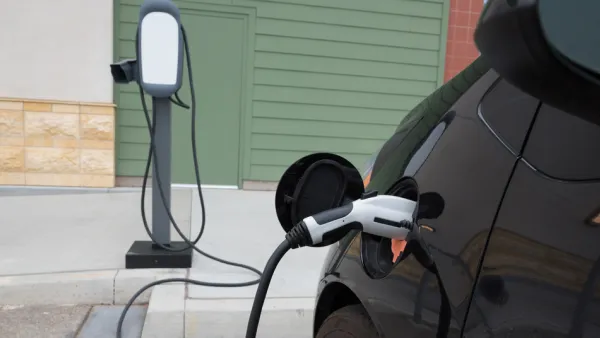
Did the Outlook for Electric Vehicle Sales in U.S. Just Nosedive?
With the formal announcement by the EPA and the U.S. DOT on Thursday that the "One National Standard" rule has been issued, California's zero-emission standard, which applies to ten other states, is essentially on hold.

As EV Sales Soar, Transportation Emissions Continue to Increase
California has embraced electric vehicles like no other state, with success reflected in increased sales and registration data, yet transportation emissions have increased for the last four years, primarily from light-duty vehicles.
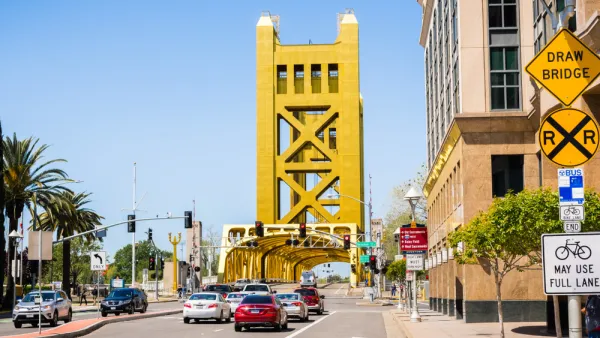
Sacramento Hopes to Lead Transportation Emission Reductions by Example
As California tries to stem its increasing greenhouse gas emissions from the transportation sector, its capital, Sacramento, may prove to be a model for other cities as it embraces electric vehicles and strategies to reduce driving.

Planetizen Federal Action Tracker
A weekly monitor of how Trump’s orders and actions are impacting planners and planning in America.

The state-sanctioned urbicide of Austin
People don’t kill cities. Freeways do.

US to reduce Colorado River water deliveries to Mexico
A new Colorado Treaty amendment reduces Mexico’s Colorado River water allocation by 250,000 acre feet.

5 New England states march closer to 800 megawatt wind energy project
Securing federal approval for the project may be complicated under the Trump administration, which has historically been hostile towards domestic wind power.

Baltimore to break ground on $50 million Transit Priority Project
The project will bring faster bus trips, safer streets and better bike connections to Baltimore.

Airbnb launches $250 million 'last-dollar financing' housing accelerator, makes first investment in Austin
The company will put $6.4 million towards affordable housing development in Texas’ capital.

FREE Course: Walkable City 1: Why Walkability?
After describing his path towards focusing on walkability as the essence of good planning, Jeff Speck marches through his five principal reasons for making more walkable places.
Reinventing Malls: Planning Alchemy—Turning Gray Fields Into Gold
The course focuses on the opportunities and imperatives that shape reinvention of mall sites.

Eagle County Government
Harvard University Graduate School of Design
Nashville Planning Department
The Architects Foundation
University of Cincinnati Online
The Pocatello Development Authority
The Urban Renewal Agency of the City of Pocatello
Journal of the American Planning Association