There are solutions to slow, unreliable bus service. These local buses don't have any of those solutions going for them.


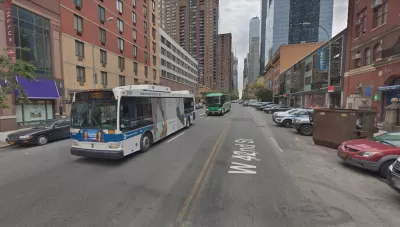
Will Bredderman spreads the ignominy for a chosen few bus routes in New York City.
Transit advocacy groups Straphangers Campaign and TransitCenter released a report detailing the slowest buses in the city. The slowest bus in the entire city is awarded the "Pokey." The winner of the 2018 Pokey is M42, which the report finds averaging a speed of 3.2 miles per hour. For comparison, a press release announcing the award [pdf] notes that a chicken can run 9 miles per hour.
The report also announces the "Schleppie," awarded to the bus route observed bunching (defined here as two or more buses arrive at a stop at the same time) as a proxy for being unreliable. The 2018 Schleppie Award goes to the B12, observed with a 21.4 percent bunching rate.
Bredderman also notes the measures transit advocates would implement to improve both slow speeds and unreliability.
Read the full story: Worst bus lines are in Midtown and central Brooklyn, report finds
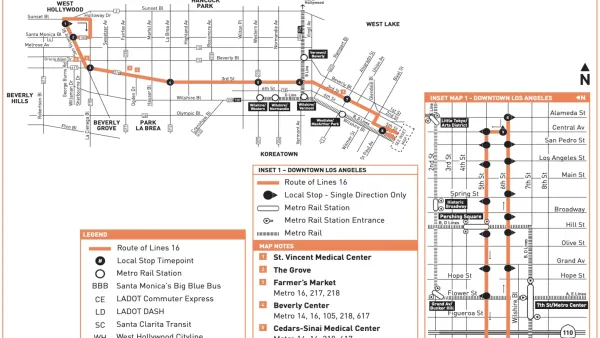
Popular L.A. Bus Line to Replace Schedule With ‘Headway-Based Operations’
Los Angeles’ 16 bus, which cuts across the city on Third Street through some of the city’s densest neighborhoods, will experiment with a new approach to service design.
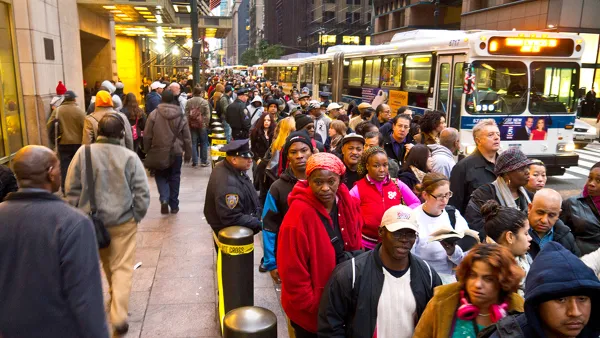
New York MTA Committed to Improving Bus Bunching
The New York MTA is on a mission to mitigate bus bunching, the telltale sign of unreliable service.
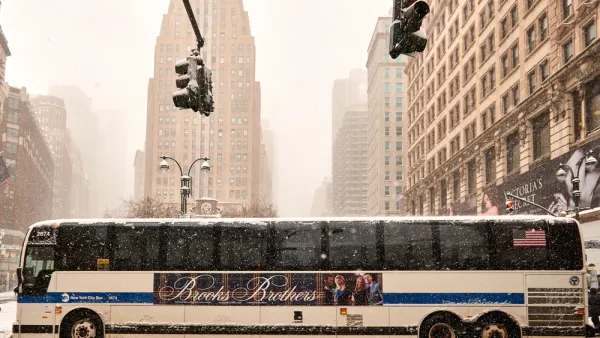
In New York: No Bus Ridership Without Congestion Relief
Bus ridership has dropped for many years in New York City, but much of the bleeding is concentrated in Manhattan and Brooklyn. Could the congestion problems of the central city be the reason for the declining use of bus transit?

Planetizen Federal Action Tracker
A weekly monitor of how Trump’s orders and actions are impacting planners and planning in America.

California plans to bury El Niño’s downpour
If the state plays its cards right, it may be able to store a billion acre-feet of El Niño’s water in aquifers.

Desperate measures: Advocates weigh draining Lake Powell to fill Colorado River
Draining the reservoir could reduce evaporation losses by a couple hundred thousand acre-feet.

Los Angeles just elected an urban planner as its mayor
Transportation analysts are optimistic that Raman will be more aggressive in addressing transit issues than Bass.

Mamdani’s pied-à-terre tax survives legal challenge
A panel of judges found that the plaintiffs failed to demonstrate injury as a result of New York City's implementation of the tax.

Eastern Nebraska is running out of electricity
Data centers and electrification are straining eastern Nebraska’s grid, throttling economic development.

FREE Course: Walkable City 1: Why Walkability?
After describing his path towards focusing on walkability as the essence of good planning, Jeff Speck marches through his five principal reasons for making more walkable places.
Reinventing Malls: Planning Alchemy—Turning Gray Fields Into Gold
The course focuses on the opportunities and imperatives that shape reinvention of mall sites.

City of Rosemead
Rutgers University, Edward J. Bloustein School of Planning and Public Policy
One Hundred Miles
University of Michigan School for Environment and Sustainability (SEAS)
Hunter College, City University of New York (CUNY)
The Architects Foundation
City of Cambridge
Montrose County
The Pocatello Development Authority