New York is the first city in the world to report to the U.N. on SDGs in the arenas of clean water and sanitation, affordable and clean energy, sustainable cities and communities, responsible consumption and production, and land conservation.


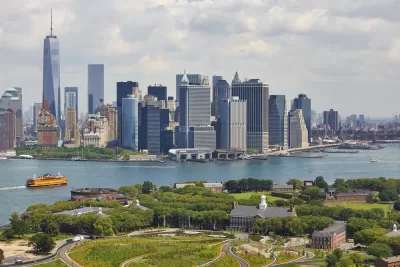
"New York City became the first city in the world to report to the United Nations on its progress toward the UN Sustainable Development Goals (SDGs)," reports Nicole Javorsky. "The move is part of a larger trend of U.S. cities pursuing environmental progress amid inaction from the federal government, and of New York, in particular, taking an ambitious course on climate policy."
According to Javorsky, New York City has set a goal to reduce its carbon emissions by 80 percent by 2050. Mayor Bill de Blasio has also signed the city on to the Paris Climate Agreement.
The report, written by the Mayor's Office for International Affairs, is available online. "The report describes several initiatives to protect the metropolis from the effects of climate change and reduce the city’s contributions to climate change," according top Javorsky. "One is a $1.5 billion program started in 2015 through the Department of Environmental Protection (DEP) to construct sewers and reduce flooding in particularly vulnerable areas in the borough of Queens."
Read the full story: Why New York City Is Reporting Its Sustainability Progress to the UN

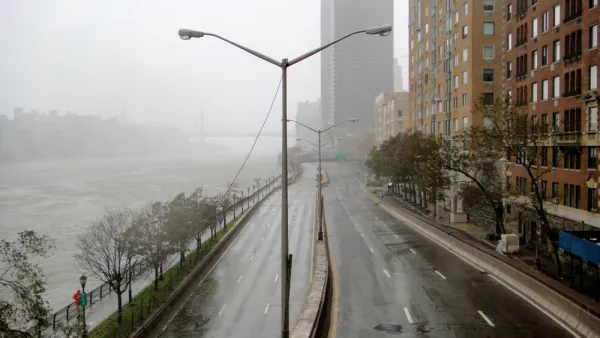
Flood Barrier Approved for Manhattan's East Side
A plan to build a flood barrier between Manhattan and the East River overcame some last minute controversy on its way to approval this month.
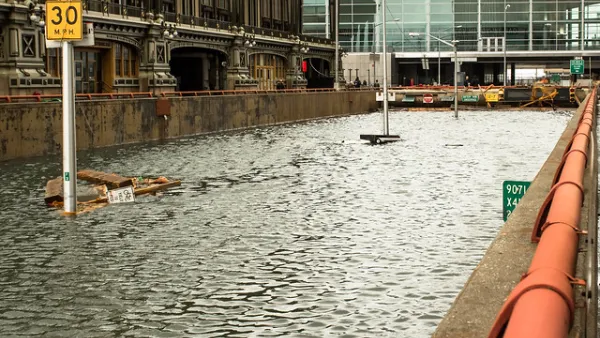
Satirizing Mayors Who Campaign for President During a Flood
The Onion took some shots at presidential hopeful and New York City Mayor Bill de Blasio after summer rain showers flooded streets and sent water cascading into the city's subway system.
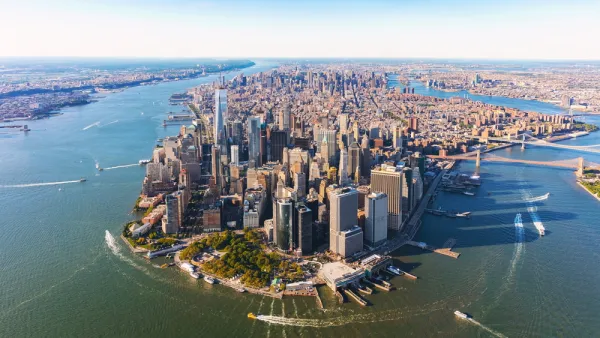
Climate Resilience Plan Would Extend Manhattan
A plan to literally change the shape of Manhattan.

Planetizen Federal Action Tracker
A weekly monitor of how Trump’s orders and actions are impacting planners and planning in America.

The state-sanctioned urbicide of Austin
People don’t kill cities. Freeways do.

US to reduce Colorado River water deliveries to Mexico
A new Colorado Treaty amendment reduces Mexico’s Colorado River water allocation by 250,000 acre feet.

Nation's most wind-powered state turns to coal as data centers increase energy demand
For the first time in decades, Iowa has increased its generation of coal power.

NYC cools commuters with city's first rain garden above a bus stop
New York City officials say the plants in the rain garden can absorb 16 gallons of rainwater during heavy storms.

Brightline West’s future may rely on $6 billion federal loan
The company has until Nov. 2 to make a $400 million equity investment into its proposed high-speed rail line.

FREE Course: Walkable City 1: Why Walkability?
After describing his path towards focusing on walkability as the essence of good planning, Jeff Speck marches through his five principal reasons for making more walkable places.
Reinventing Malls: Planning Alchemy—Turning Gray Fields Into Gold
The course focuses on the opportunities and imperatives that shape reinvention of mall sites.

Greater Baltimore Committee
Eagle County Government
Harvard University Graduate School of Design
The Architects Foundation
University of Cincinnati Online
The Pocatello Development Authority
The Urban Renewal Agency of the City of Pocatello
Journal of the American Planning Association