A grassroots plan seeks to cultivate a sustainable, affordable center of Black culture in the neighborhood of Albina.



As the city of Portland launches new housing and investment programs, a coalition of community organizers, urban planners, and design professionals has proposed its own vision for inclusive economic development in the Albina neighborhood. The Right 2 Root plan fuses housing affordability, environmental sustainability, and the preservation of Black history and culture, Patrick Sisson reports in Curbed, calling the initiative "a framework for community-led urbanism."
The proposal would establish an ecodistrict—the city's sixth—where new community assets would foster health and wellness. It calls for walkable corridors connecting needed facilities like a food market, a community education center, and a daycare. "Other ideas include tiny home communities built around a shared garden plot, and the introduction of small accessory dwelling units (ADUs) to provide extra space for larger families and multigenerational living," Sisson writes.
Over the decades, planning policy has driven out Albina's historically Black population through a variety of means, Sisson explains. The neighborhood was targeted for urban renewal in the post-war era, paving the way for redevelopment at the end of the century. Today, revitalization programs are raising housing costs and fueling displacement.
Later this year, the collective plans to release a blueprint aimed at connecting Albina with its displaced Black residents throughout Portland.
Read the full story: In Portland, a neighborhood designs its own solution to displacement

A Response to the Loss of Black Communities in Portland
A five-minute video funded by the James F. and Marion L. Miller Foundation tells the story of black communities struggling to preserve their traditions in what's been called the whitest city in the United States.
Is Urban Revitalization Possible Without Displacement and Gentrification?
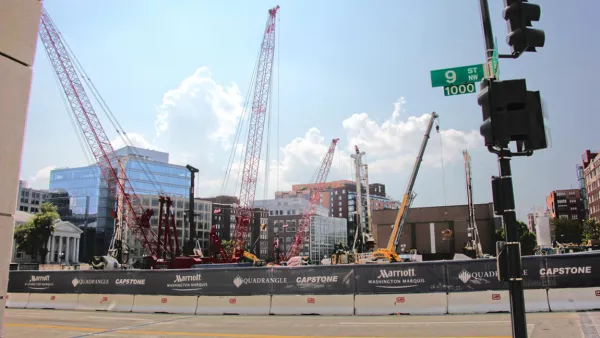
Jared Green asks the billion dollar question for economic developers and planning agencies throughout the United States: is urban revitalization of neighborhoods possible without the subsequent gentrification and displacement of current residents?
Black Residents Leaving Cincinnati's Fast Growing Urban Area
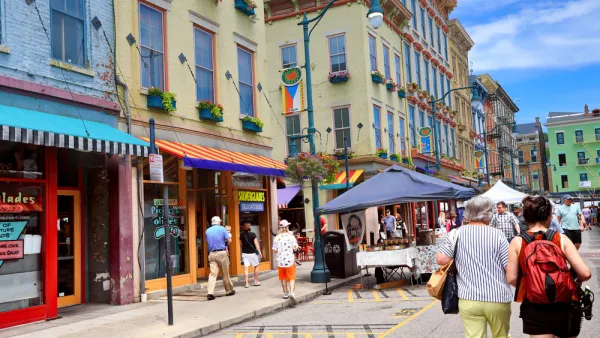
The housing market in the neighborhood of Over-the-Rhine is a 'segregation machine.'

Planetizen Federal Action Tracker
A weekly monitor of how Trump’s orders and actions are impacting planners and planning in America.

California plans to bury El Niño’s downpour
If the state plays its cards right, it may be able to store a billion acre-feet of El Niño’s water in aquifers.

Desperate measures: Advocates weigh draining Lake Powell to fill Colorado River
Draining the reservoir could reduce evaporation losses by a couple hundred thousand acre-feet.

Chicago voters approve permanent festival grounds, penalty for vacant property owners
Currently, major summer and fall festivals take over public parks for weeks at a time, drawing criticism from nearby residents

NYC votes to cut outdoor dining red tape, speed up permitting
New York City also voted to allow the Department of Transportation to begin work on urgent projects before notifying elected officials.

California appears to reject Prop. 45
The proposition would have expanded the projects that qualify for a streamlined environmental review, effectively paring down the California Environmental Quality Act.

FREE Course: Walkable City 1: Why Walkability?
After describing his path towards focusing on walkability as the essence of good planning, Jeff Speck marches through his five principal reasons for making more walkable places.
Reinventing Malls: Planning Alchemy—Turning Gray Fields Into Gold
The course focuses on the opportunities and imperatives that shape reinvention of mall sites.

City of Rosemead
Rutgers University, Edward J. Bloustein School of Planning and Public Policy
One Hundred Miles
Hunter College, City University of New York (CUNY)
The Architects Foundation
University of Cincinnati Online
City of Cambridge
Montrose County
The Pocatello Development Authority