Development fees can add some $15,000 to the cost of building a home in Portland. Residents adding an accessory dwelling unit to their property won't need to worry about those expenses, as long as they don't use the limit for short-term rentals.


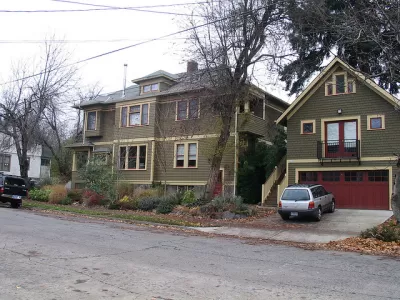
"The Portland City Council has moved aggressively to boost construction of more 'granny flats' or accessory dwelling units, by permanently eliminating costly development fees for those who build them," reports Steve Law.
The fee waiver has been in place since 2010, but the City Council vote makes the waiver permanent. The waivers are part of an incentive system that has spurred the growth of accessory dwelling units (ADUs) from 50 new units a year to 500, according to Law.
Law notes that the City Council set up the fee waiver to address a growing backlash against ADUs as some homeowners convert their ADUs into short-term rental unit. "The resolution adopted by the council…requires ADU builders to attest that they won't rent the units as short-term rentals for 10 years. If homeowners do rent them out via Airbnb or similar platforms during the ensuing decade, the SDC fees must be paid, along with a 50 percent penalty."
FULL STORY: City council agrees to end costly development fees for accessory dwelling units

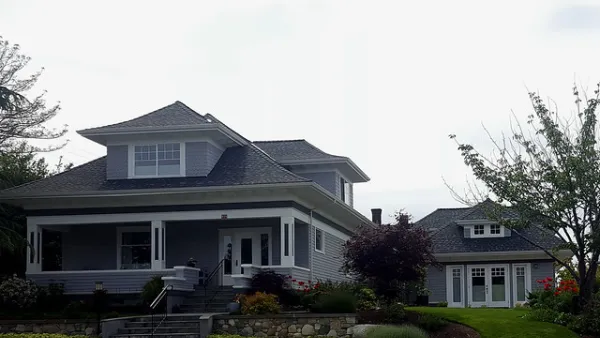
How Cities Can Support ADU Production
Although state-level laws are making it easier for homeowners to build accessory dwelling units, high impact and development fees remain a major barrier for many prospective ADU builders.
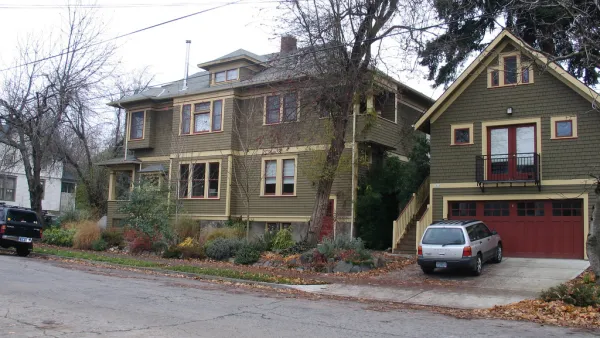
Op-Ed: Seattle Merely 'Inching Forward' on ADUs
They're a good start. But compared to similar policies in cities like Portland and Vancouver, Seattle's new policies around accessory dwelling units may be lackluster.
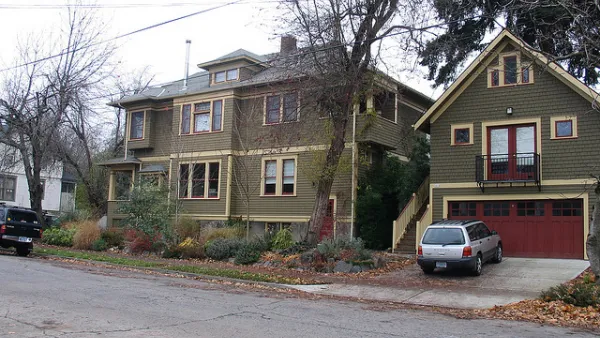
A Portland-Brand Building Boom: Accessory Dwelling Units
It's possible that construction permits for accessory dwelling units, also known as granny flats or mother-in-law units, could surpass permits for regular homes.

The state-sanctioned urbicide of Austin
People don’t kill cities. Freeways do.

US to reduce Colorado River water deliveries to Mexico
A new Colorado Treaty amendment reduces Mexico’s Colorado River water allocation by 250,000 acre feet.

New Jersey’s second-largest city bans standalone data centers
Jersey City will continue to allow co-location facilities, such as those meant for research institutions that store their own data.

Amtrak not solely to blame for New Jersey commuter rail's unreliability, report finds
A new study from the Garden State Initiative found that NJ Transit’s budget grew 20% across a 4 year period, but reliability declined significantly over the same period.

EPA erases limits on planet-warming pollution from power plants
Under Monday’s plan, power plants would still have some limits on how much mercury, arsenic and other contaminants they can emit.

Phoenix announces new on-demand transit service, more frequent RAPID buses
Both new services will launch in October, and are part of Phoenix's Project Effective Access Solutions for Easing Congestion.

FREE Course: Walkable City 1: Why Walkability?
After describing his path towards focusing on walkability as the essence of good planning, Jeff Speck marches through his five principal reasons for making more walkable places.
Reinventing Malls: Planning Alchemy—Turning Gray Fields Into Gold
The course focuses on the opportunities and imperatives that shape reinvention of mall sites.

Eagle County Government
Harvard University Graduate School of Design
Nashville Planning Department
The Architects Foundation
University of Cincinnati Online
The Pocatello Development Authority
The Urban Renewal Agency of the City of Pocatello
Journal of the American Planning Association