A coalition of researchers have identified one area near the 101 and other near I-15 that would help keep the big cats alive and healthy.


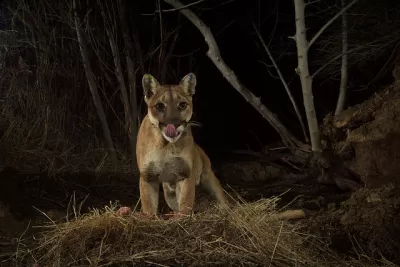
The plight of the Los Angeles mountain lion—living in a tangle of freeways—has, in recent years, been a topic of conversation often enough that a single crossing of the 101 makes the papers.
It’s also earned the attention of enough researchers that the National Park Service can now draw elaborate family trees—recently reproduced in the L.A. Times—that demonstrate how often they are hit by cars, and how the divided population has turned to inbreeding.
Fundraising was already underway, but a recent report from UC Davis, the National Park Service and the Nature Conservancy has identified two places for wildlife bridges that would accommodate the lions without drawing them too close to populated areas: one in Agoura Hills and another in Temecula. (It’s worth noting that mountain lions actively avoid humans whenever possible.)
The threat to biodiversity posed by urban sprawl has become a more frequent topic of conversation in the last decade, and there are now wildlife crossings around the world for everything from koalas to red crabs to salamanders.
FULL STORY: Mountain lions are being killed on freeways and weakened by inbreeding. Researchers have a solution

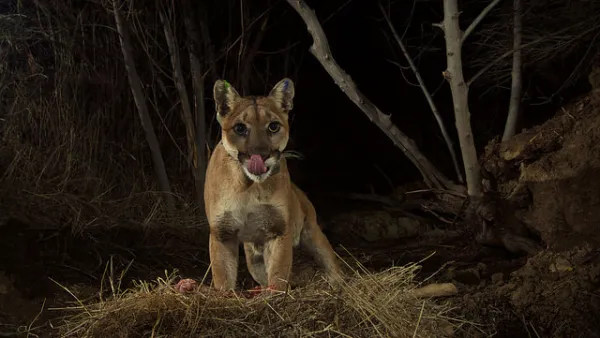
L.A. Wildlife Crossing To Break Ground This Spring
The planned wildlife bridge spanning an eight-lane freeway will be the world's largest and most ambitious project of its kind.
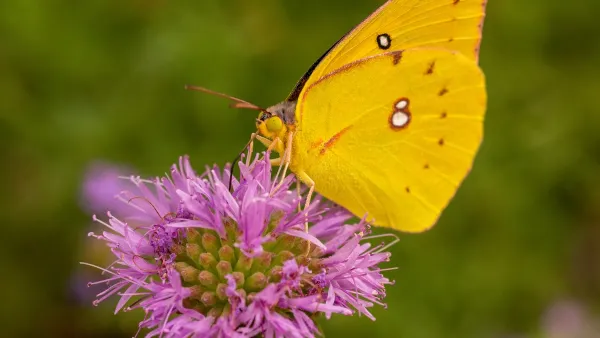
Study Reveals Los Angeles a Hotspot for Insect Diversity
A study reveals that L.A. is a surprising hotspot for insect and spider biodiversity, with diversity driven more by proximity to mountains and stable temperatures than by land value.
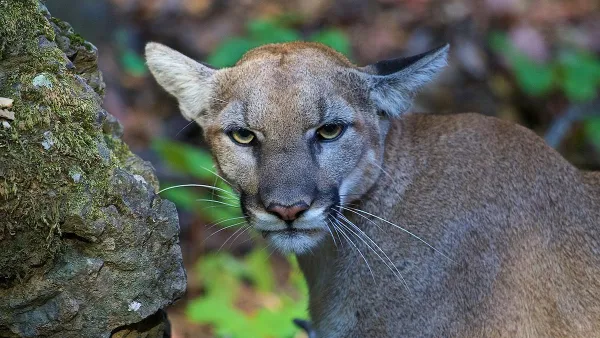
Cougar Death Highlights Urgent Need for Wildlife Crossing
A mountain lion was found dead on the 101 Freeway, less than half a mile from the steel and concrete endoskeleton of the Wallis Annenberg Wildlife Crossing.

Planetizen Federal Action Tracker
A weekly monitor of how Trump’s orders and actions are impacting planners and planning in America.

The state-sanctioned urbicide of Austin
People don’t kill cities. Freeways do.

US to reduce Colorado River water deliveries to Mexico
A new Colorado Treaty amendment reduces Mexico’s Colorado River water allocation by 250,000 acre feet.

5 New England states march closer to 800 megawatt wind energy project
Securing federal approval for the project may be complicated under the Trump administration, which has historically been hostile towards domestic wind power.

Baltimore to break ground on $50 million Transit Priority Project
The project will bring faster bus trips, safer streets and better bike connections to Baltimore.

Airbnb launches $250 million 'last-dollar financing' housing accelerator, makes first investment in Austin
The company will put $6.4 million towards affordable housing development in Texas’ capital.

FREE Course: Walkable City 1: Why Walkability?
After describing his path towards focusing on walkability as the essence of good planning, Jeff Speck marches through his five principal reasons for making more walkable places.
Reinventing Malls: Planning Alchemy—Turning Gray Fields Into Gold
The course focuses on the opportunities and imperatives that shape reinvention of mall sites.

Eagle County Government
Harvard University Graduate School of Design
Nashville Planning Department
The Architects Foundation
University of Cincinnati Online
The Pocatello Development Authority
The Urban Renewal Agency of the City of Pocatello
Journal of the American Planning Association