As urban sprawl continues to encroach on what was once expansive habitat for mountain lions, the large predators have been involved in more encounters with humans in urban settings.


Ever-expanding urban boundaries in California metropolitan areas are bringing some new neighbors to town: mountain lions. Recent tracking efforts show that the large carnivores are showing up in urban areas more than ever, but are also amazingly skilled at avoiding human detection in manmade environments.
As The San Francisco Chronicle reports:
"Mountain lion sightings are still rare - escaping notice is this stalking predator's stock in trade - but we're making it harder for them to avoid us. California has some of the best lion habitat in the nation, but it's rapidly giving way to rampant urbanization. Between 1984 and 2006, urban sprawl claimed nearly 970,000 acres, and now more than 5 million houses border the last wild places."
Read the full story: Mountain lions straying into more urban areas

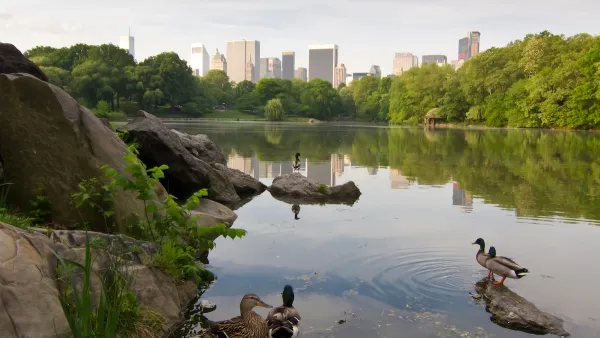
The Resiliency of Urban Wildlife
A wide-ranging research study highlights the various qualities that make animal species living in urban environments thrive—and how biodiversity improves the health of our cities.
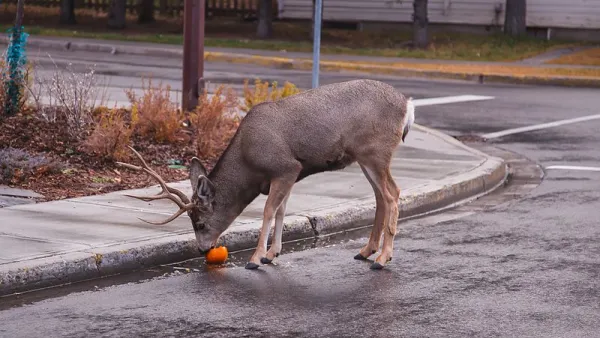
Returning to a Wilder World
The pandemic induced an accidental 'rewilding' in many places as animals took over cities and streets devoid of humans. As we emerge from our isolation, can we co-exist peacefully?

Colorado creates wildlife crossings fund
Residents will have the option to add $5 to their car registration to fund infrastructure that prevents wildlife-vehicle collisions.

Planetizen Federal Action Tracker
A weekly monitor of how Trump’s orders and actions are impacting planners and planning in America.

Amtrak, CN end decades-long dispute with eight-year agreement
The new operating agreement establishes an updated framework for the companies to work together, including processes to resolve disputes.

Judges permit Denver to divert 77,000 acre feet from the Colorado River for reservoir expansion
Overuse and climate change have caused the Colorado River’s water levels to plummet.

NYC DOT wants faster, more permanent street upgrades
The city is examining ways to build more concrete infrastructure without getting entangled in 'decades-long' projects.

'Something we’ve never seen before:' rising utility rates could strain city finances nationwide
Data centers, climate change and other factors have caused utility rates in the United States to increase by 38% since 2020.

Trump to overrule local leaders, lease millions of acres of America’s Pacific Island territories’ seafloors to mining companies
International law says that the Indigenous people of America’s territories have a right to prior and informed consent regarding projects that impact their countries.

FREE Course: Walkable City 1: Why Walkability?
After describing his path towards focusing on walkability as the essence of good planning, Jeff Speck marches through his five principal reasons for making more walkable places.
Reinventing Malls: Planning Alchemy—Turning Gray Fields Into Gold
The course focuses on the opportunities and imperatives that shape reinvention of mall sites.

Harvard University Graduate School of Design
KFH Group Inc.
Greater Baltimore Committee
The Architects Foundation
University of Cincinnati Online
The Pocatello Development Authority
The Urban Renewal Agency of the City of Pocatello