The city of New York wants more capacity to store energy, so it's making the process of permitting energy storage projects easier to understand and follows.


New York City released a comprehensive set of guidelines [pdf] designed to make it easier to permit and construct energy storage projects. The new guidelines will help the city meet its target of 100 megawatts of energy storage by 2020.
Peter Maloney shares news of the new guidelines, approved at the end of April 2018, which focus on lithium ion batteries, constructed in outdoor settings, such as root tops. The report creates three classifications of project, based on the amount of energy storage, with standards for each.
"The guidelines were the result of a collaboration among the City University of New York (CUNY) Smart Distributed Generation Hub, the Fire Department of New York (FDNY), the NYC Department of Buildings (DOB), Consolidated Edison and the New York State Energy Research and Development Authority (NYSERDA)," reports Maloney.
Read the full story: NYC moves to streamline energy storage permitting


NYC to vote on supporting outdoor dining, streamlining bus and bike lane creation
The city has five proposed amendments to its municipal constitution on the ballot this November.
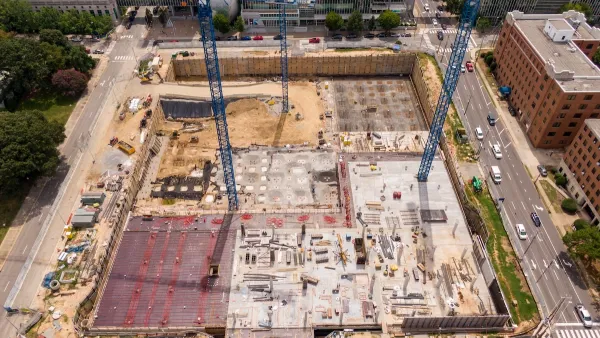
Novel study finds extreme state-by-state disparity in housing construction timelines
The first comprehensive working paper on U.S. construction timelines also found that the permitting process for multi-family projects has slowed nationwide.

NYC Council Passes ‘Proactive’ Building Safety Bill
In the wake of multiple building collapses in recent years, the bill seeks to identify dangerous building conditions before they escalate.

Planetizen Federal Action Tracker
A weekly monitor of how Trump’s orders and actions are impacting planners and planning in America.

California plans to bury El Niño’s downpour
If the state plays its cards right, it may be able to store a billion acre-feet of El Niño’s water in aquifers.

Desperate measures: Advocates weigh draining Lake Powell to fill Colorado River
Draining the reservoir could reduce evaporation losses by a couple hundred thousand acre-feet.

How a Chicago-sized wind farm beat the odds and powered on
The project spanned five presidential administrations and a standoff with a U.S. military base.

MTA gives itself 30 days to transform pit into basketball court
The site has been under construction since 2022; the city originally estimated it would finish the court in 2024.

Non-stop party: Chicago voters weigh permanent festival grounds
A stable place for bleachers, stages and drainage may streamline the setup and teardown of large events.

FREE Course: Walkable City 1: Why Walkability?
After describing his path towards focusing on walkability as the essence of good planning, Jeff Speck marches through his five principal reasons for making more walkable places.
Reinventing Malls: Planning Alchemy—Turning Gray Fields Into Gold
The course focuses on the opportunities and imperatives that shape reinvention of mall sites.

City of Rosemead
Rutgers University, Edward J. Bloustein School of Planning and Public Policy
One Hundred Miles
Hunter College, City University of New York (CUNY)
The Architects Foundation
University of Cincinnati Online
City of Cambridge
Montrose County
The Pocatello Development Authority