A public appearance by Uber CEO Dara Khosrowshahi reveals the motivations behind some of Uber's recent businesses moves.


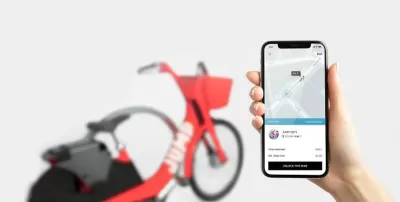
"Uber CEO Dara Khosrowshahi is in Washington, DC today to make a wide-ranging announcement on Uber’s plans to integrate a variety of new transportation options to its app, including bikes, car-sharing vehicles, and public transportation like buses and trains," reports Andrew J Hawkins.
"Uber will also share more of its data on traffic patterns and curbside usage with cities in an effort to become 'true partners to cities for the long term,'" according to Hawkins.
Hawkins calls the new ventures "a bold expansion into new modes of transportation."
A separate article by Laura J. Bliss on the same subject describes the change of business strategy as a pivot to "on-demand everything" or an "'everything company' for transportation." The article by Bliss includes a lot of detail about Uber's recent moves as well as a description of what this all means for the Uber business model and user experience.
Another article by Megan Rose Dickey provides an additional overview of Uber's new mobility plans.
For those keeping track at home:
To recap, Uber is partnering with:
Jump on bike sharing
Masabi on public transit
Getaround on car sharing
Shared Streets on curbside data
Also expanding Uber Movement, which collates traffic data, to 12 new cities.— Chris Teale (@chris_teale) April 11, 2018
Additionally, an article by Courtney Linder focuses on the expansion of Uber Movement, the company's data sharing app, and another article by Alison Griswold focuses on Uber's partnership with Getaround, which will enable the new Uber Rent platform. Uber Rent "will make cars from Getaround’s network available to users of the Uber app," according to Griswold.
Read the full story: Coming soon to the Uber app: bikes, rental cars, and public transportation
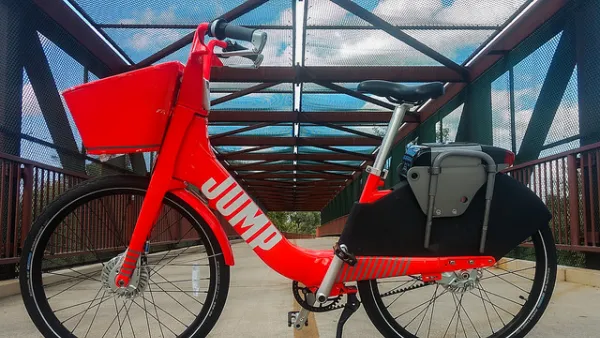
Uber Launches Jump Electric Bike Share in Austin
Austin is one of the first cities where users can use Uber's new bike share system, after the transportation network company branched out earlier this year.
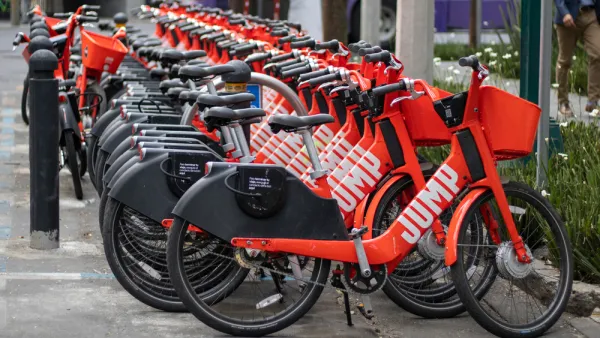
The Fall of JUMP Bikes
An exposé of the dramatic rise and fall of JUMP bikes under the ownership of Uber, in partnership with cities all over the United States.
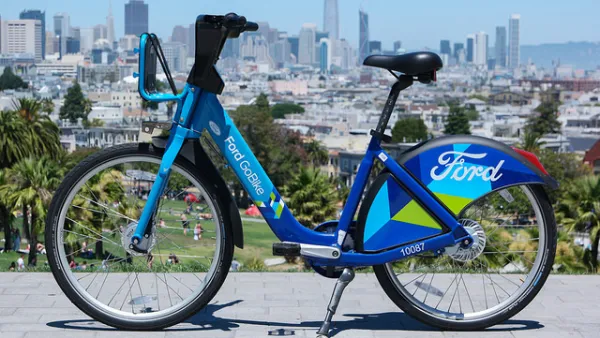
A Bikeshare Showdown Between Uber and Lyft
Lyft may soon not be the sole bikeshare operation in San Francisco as the city looks to expand the system and open the market up to other companies.

Desperate measures: Advocates weigh draining Lake Powell to fill Colorado River
Draining the reservoir could reduce evaporation losses by a couple hundred thousand acre-feet.

Eastern Nebraska is running out of electricity
Data centers and electrification are straining eastern Nebraska’s grid, throttling economic development.

Malls are becoming the midtowns of the future
Mall and office park redevelopments are a generational opportunity to create new nodes of urbanity.

NYC breaks ground on anti-flooding infrastructure project
New York City's new system will reduce stormwater flows to local sewers by 90%.

One Kentucky town’s secret to affordable housing
The Smoketown Community Land Trust has already built seven affordable homes for community members.

Houston gains petal-shaped cooling infrastructure to make streets more ‘delightful’
The city has installed the pavilions along 15 blocks in Houston.

FREE Course: Walkable City 1: Why Walkability?
After describing his path towards focusing on walkability as the essence of good planning, Jeff Speck marches through his five principal reasons for making more walkable places.
Reinventing Malls: Planning Alchemy—Turning Gray Fields Into Gold
The course focuses on the opportunities and imperatives that shape reinvention of mall sites.

City of Rosemead
Rutgers University, Edward J. Bloustein School of Planning and Public Policy
One Hundred Miles
University of Michigan School for Environment and Sustainability (SEAS)
Hunter College, City University of New York (CUNY)
The Architects Foundation
City of Cambridge
Montrose County
The Pocatello Development Authority