The hottest trend in commercial real estate, letting storefronts in Manhattan sit empty while waiting for top dollar, is robbing the city's streets of the benefits of a bustling economy.


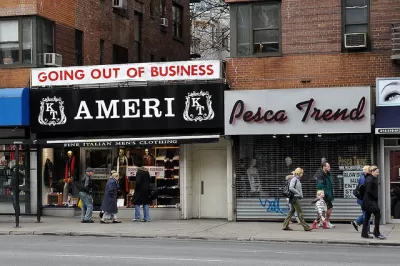
As a growing number of vacant storefronts dot the city, Mayor Bill de Blasio [last week] said he wants to penalize landlords who leave the shopfronts sitting empty," report Rich Calder, Elizabeth Rosner, and Ruth Brown.
Mayor de Blasio made the comments during an interview on The Brian Lehrer Show on WNYC.
The idea is still highly speculative, but from Mayor de Blasio's comments on the show, two salient details of his proposal emerged: that the tax would apply to storefronts and that the legislation could get "done through Albany," a reference to the State Legislature.
As for the problem the vacancy tax would tackle, "[a] number of recent studies have found retail corridors in prosperous Manhattan neighborhoods are struggling with double-digit vacancy rates, from 27 percent on Amsterdam Avenue on the Upper West Side to 20 percent on a stretch of Broadway in Soho. Five percent or less is generally considered 'healthy.'"
FULL STORY: De Blasio eyes vacancy tax for greedy landlords seeking top-dollar

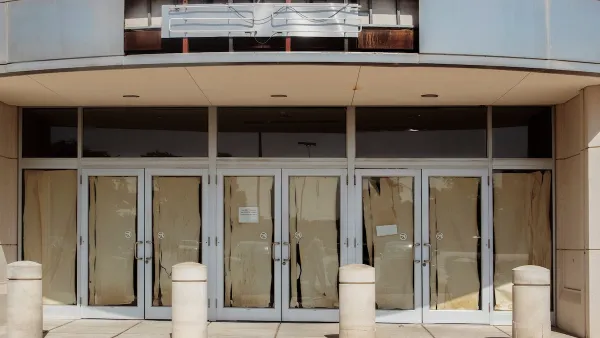
How to Repurpose Vacant Storefronts
Loosening restrictions on clean light manufacturing can revive dormant storefronts and revitalize communities.
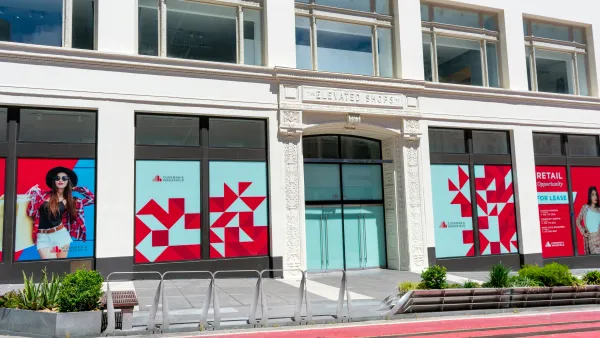
Few Landlords Pay San Francisco Vacancy Tax
Less than 3 percent of properties potentially subject to a new vacancy tax were filed as vacant in the last year, but empty storefronts in the city persist.
Planning Department Study Documents Storefront Vacancy in NYC Neighborhoods
A new report from the New York Department of City Planning has found that storefront vacancy may not be a one-answer citywide problem. Vacancies were found to be concentrated in certain neighborhoods, and the reasons appear to be varied.

Planetizen Federal Action Tracker
A weekly monitor of how Trump’s orders and actions are impacting planners and planning in America.

The state-sanctioned urbicide of Austin
People don’t kill cities. Freeways do.

US to reduce Colorado River water deliveries to Mexico
A new Colorado Treaty amendment reduces Mexico’s Colorado River water allocation by 250,000 acre feet.

5 New England states march closer to 800 megawatt wind energy project
Securing federal approval for the project may be complicated under the Trump administration, which has historically been hostile towards domestic wind power.

Baltimore to break ground on $50 million Transit Priority Project
The project will bring faster bus trips, safer streets and better bike connections to Baltimore.

Airbnb launches $250 million 'last-dollar financing' housing accelerator, makes first investment in Austin
The company will put $6.4 million towards affordable housing development in Texas’ capital.

FREE Course: Walkable City 1: Why Walkability?
After describing his path towards focusing on walkability as the essence of good planning, Jeff Speck marches through his five principal reasons for making more walkable places.
Reinventing Malls: Planning Alchemy—Turning Gray Fields Into Gold
The course focuses on the opportunities and imperatives that shape reinvention of mall sites.

Eagle County Government
Harvard University Graduate School of Design
Nashville Planning Department
The Architects Foundation
University of Cincinnati Online
The Pocatello Development Authority
The Urban Renewal Agency of the City of Pocatello
Journal of the American Planning Association