Less than 3 percent of properties potentially subject to a new vacancy tax were filed as vacant in the last year, but empty storefronts in the city persist.


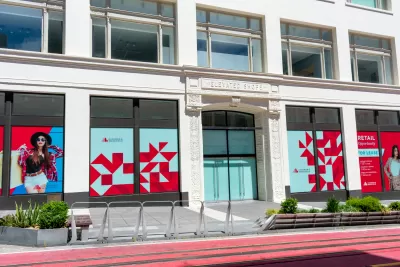
According to a San Francisco Chronicle article by Roland Li and Susie Neilson, a vacancy tax meant to encourage commercial landlords to rent out empty storefronts is yielding little revenue in its first year, with “only 2.6% of around 2,800 property parcels that were potentially subject to the tax … listed as vacant by tax filers for more than 182 days in the year.”
Amanda Fried, chief of policy and communications at the Office of the Treasure and Tax Collector, told the Chronicle, “This is not the audited information. This is not how many vacancies exist.”
The tax, passed in 2020 but put on pause until 2022 due to the Covid-19 pandemic, “is $250 per foot of a property’s outdoor street frontage for the first year, rising to $500 per foot in the second year of vacancy and $1,000 per foot in the third year.”
Supervisor Aaron Peskin, who sponsored the measure, “previously said the goal of the tax was to change landlord behavior and make them more willing to rent out spaces, rather than raise money.”
More recently, the city also passed a vacancy tax on residential properties, which real estate groups have sued to block.
FULL STORY: S.F. started taxing vacant storefronts. Here’s why only 74 owners and tenants have paid so far

Bay Area Pop-Ups Aim To Activate Vacant Storefronts
As commercial storefronts experience high vacancy rates, cities like Oakland and San Francisco are making concerted efforts to support temporary tenants, public art installations, and small entrepreneurs that can revitalize abandoned spaces.
A Vacancy Tax for San Francisco? Voters Might Have a Say.
A San Francisco politician is pushing for a vacant home tax to appear on the November ballot.
Mayor de Blasio Wants a Vacancy Tax to Combat Empty Storefronts
The hottest trend in commercial real estate, letting storefronts in Manhattan sit empty while waiting for top dollar, is robbing the city's streets of the benefits of a bustling economy.

Planetizen Federal Action Tracker
A weekly monitor of how Trump’s orders and actions are impacting planners and planning in America.

The state-sanctioned urbicide of Austin
People don’t kill cities. Freeways do.

US to reduce Colorado River water deliveries to Mexico
A new Colorado Treaty amendment reduces Mexico’s Colorado River water allocation by 250,000 acre feet.

5 New England states march closer to 800 megawatt wind energy project
Securing federal approval for the project may be complicated under the Trump administration, which has historically been hostile towards domestic wind power.

Baltimore to break ground on $50 million Transit Priority Project
The project will bring faster bus trips, safer streets and better bike connections to Baltimore.

Airbnb launches $250 million 'last-dollar financing' housing accelerator, makes first investment in Austin
The company will put $6.4 million towards affordable housing development in Texas’ capital.

FREE Course: Walkable City 1: Why Walkability?
After describing his path towards focusing on walkability as the essence of good planning, Jeff Speck marches through his five principal reasons for making more walkable places.
Reinventing Malls: Planning Alchemy—Turning Gray Fields Into Gold
The course focuses on the opportunities and imperatives that shape reinvention of mall sites.

Eagle County Government
Harvard University Graduate School of Design
Nashville Planning Department
The Architects Foundation
University of Cincinnati Online
The Pocatello Development Authority
The Urban Renewal Agency of the City of Pocatello
Journal of the American Planning Association