Calling attention to progress in the Bay Area, two leaders at employee- and women-owned firms argue that more female leadership will help projects better serve the entire population.



Darlene K. Gee and Charissa Frank point out that "Women comprise half of the U.S. population, yet hold only 1 in 5 architecture and 1 in 7 engineering roles," arguing that "our transportation system touches everyone in our diverse population, so it's critical to gain input, perspectives and talent from all parts of our community."
They praise the Bay Area for leading the way in that regard. "BART, Santa Clara Valley Transportation Authority, San Francisco County Transportation Authority and several other Bay Area agencies are led by women."
While most of the work on major projects "has traditionally been done by a handful of large, well-known companies," Gee and Frank believe that "better representation in the leadership ranks will help ensure major infrastructure projects are designed and built to meet the wide-ranging needs of our entire community." That means awarding contracts to and partnering with a more diverse range of firms.
FULL STORY: Opinion: More women leaders needed for transportation projects

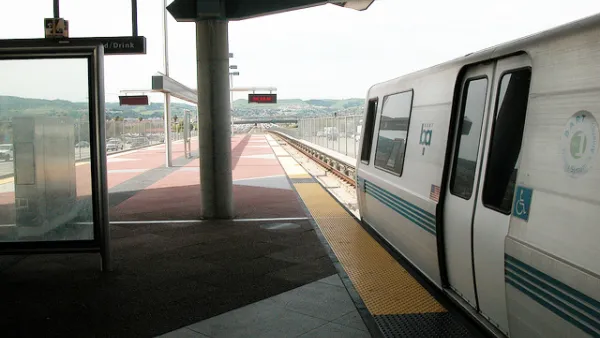
Where BART's New Extension to the Fringe Went Wrong
This story begins and ends with a freeway.

Is the built environment partly to blame for population decline?
The way communities are designed could be contributing to lower birth rates.

BART approves 2027 budget with no cuts, banking on November ballot measure for new funding
The Bay Area transit agency hopes to move forward without service cuts or fare increases.

The state-sanctioned urbicide of Austin
People don’t kill cities. Freeways do.

US to reduce Colorado River water deliveries to Mexico
A new Colorado Treaty amendment reduces Mexico’s Colorado River water allocation by 250,000 acre feet.

New Jersey’s second-largest city bans standalone data centers
Jersey City will continue to allow co-location facilities, such as those meant for research institutions that store their own data.

Amtrak not solely to blame for New Jersey commuter rail's unreliability, report finds
A new study from the Garden State Initiative found that NJ Transit’s budget grew 20% across a 4 year period, but reliability declined significantly over the same period.

EPA erases limits on planet-warming pollution from power plants
Under Monday’s plan, power plants would still have some limits on how much mercury, arsenic and other contaminants they can emit.

Phoenix announces new on-demand transit service, more frequent RAPID buses
Both new services will launch in October, and are part of Phoenix's Project Effective Access Solutions for Easing Congestion.

FREE Course: Walkable City 1: Why Walkability?
After describing his path towards focusing on walkability as the essence of good planning, Jeff Speck marches through his five principal reasons for making more walkable places.
Reinventing Malls: Planning Alchemy—Turning Gray Fields Into Gold
The course focuses on the opportunities and imperatives that shape reinvention of mall sites.

Eagle County Government
Harvard University Graduate School of Design
Nashville Planning Department
The Architects Foundation
University of Cincinnati Online
The Pocatello Development Authority
The Urban Renewal Agency of the City of Pocatello
Journal of the American Planning Association