Coming off a year of historically catastrophic extreme weather, the Federal Emergency Management Agency has decided to avoid using the "double C word."


Umair Irfan reports that the Federal Emergency Management Agency's strategic plan for the years 2018 to 2022 does not include any reference to climate change.
The strategic plan instead uses tortured semantics while projecting more frequent and more expensive disasters in the coning years. "Disaster costs are expected to continue to increase due to rising natural hazard risk, decaying critical infrastructure, and economic pressures that limit investments in risk resilience,” according to the document."
Irfan places the decision to elide climate change from FEMA's strategic plan in the context of the megadisasters of 2017. Irfain says hurricanes, heat waves, wildfires, and tornadoe cost "at least" $306 billion in 2017.
The move is the latest Trump Administration controversy to follow from perhaps troubling choices of words. The FEMA strategic plan news follows shortly after news that the Department of Housing and Urban Development was planning to remove references to discrimination in its mission statement.
Read the full story: FEMA is preparing for the future. “Climate change” isn’t part of it.

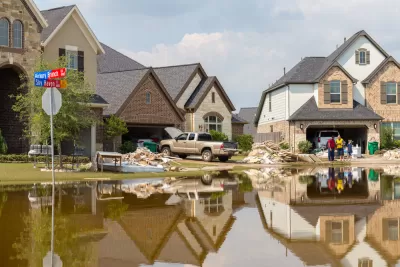
FEMA Resilience Program Cuts Grant Funding
The Building Resilient Infrastructure and Communities program funded projects from flood prevention to power station upgrades.
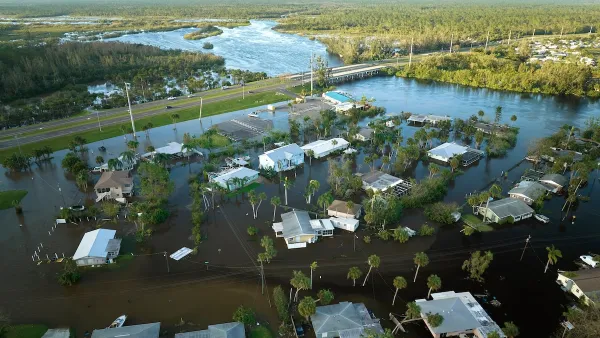
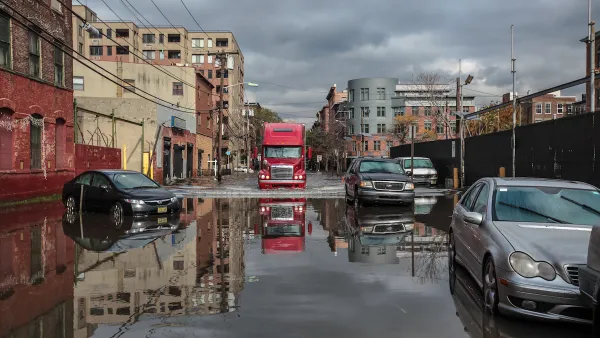
Research Shows White Communities Gain Affluence After Climate Disasters
People of color and lower-income residents tend to lose wealth despite the stated goals of federal assistance programs to restore communities impacted by disasters.
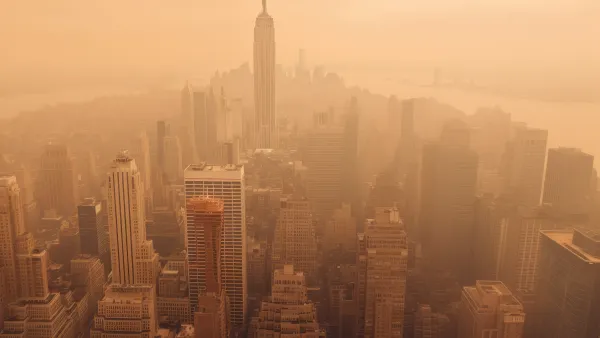
State AGs Call for FEMA to Classify Extreme Heat, Smoke as ‘Major Disasters’
State and local officials say explicitly naming heat and wildfire smoke would give local agencies more certainty in developing their mitigation strategies.

Planetizen Federal Action Tracker
A weekly monitor of how Trump’s orders and actions are impacting planners and planning in America.

The state-sanctioned urbicide of Austin
People don’t kill cities. Freeways do.

US to reduce Colorado River water deliveries to Mexico
A new Colorado Treaty amendment reduces Mexico’s Colorado River water allocation by 250,000 acre feet.

Nation's most wind-powered state turns to coal as data centers increase energy demand
For the first time in decades, Iowa has increased its generation of coal power.

NYC cools commuters with city's first rain garden above a bus stop
New York City officials say the plants in the rain garden can absorb 16 gallons of rainwater during heavy storms.

Brightline West’s future may rely on $6 billion federal loan
The company has until Nov. 2 to make a $400 million equity investment into its proposed high-speed rail line.

FREE Course: Walkable City 1: Why Walkability?
After describing his path towards focusing on walkability as the essence of good planning, Jeff Speck marches through his five principal reasons for making more walkable places.
Reinventing Malls: Planning Alchemy—Turning Gray Fields Into Gold
The course focuses on the opportunities and imperatives that shape reinvention of mall sites.

Greater Baltimore Committee
Eagle County Government
Harvard University Graduate School of Design
The Architects Foundation
University of Cincinnati Online
The Pocatello Development Authority
The Urban Renewal Agency of the City of Pocatello
Journal of the American Planning Association