The state's widespread practice of supplying unlimited untreated water to homes may be part of the reason it has to spend billions on a new pipeline and dam.


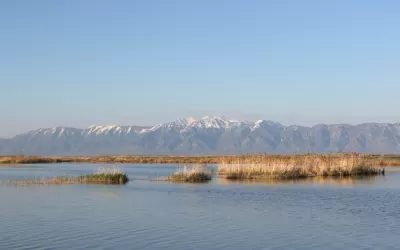
Compared to other states, Utah is among the driest, among the thirstiest, and among the fastest-growing; it's also the only state that provides, to a significant number of residential properties, "untreated agricultural water from canals, sold at an unmetered flat rate, to irrigate their lawns, gardens and landscaping."
It's called "secondary water," writes Matt Weiser at Water Deeply, and the practice stems from the unusual way that water rights in Utah developed as agricultural land gave way to residential construction.
"In nearly every other community in the nation, when farms were converted to housing the irrigation water was usually sold to other farms or allowed to remain in-stream. And new homes used treated drinking water for outdoor irrigation as well as in their kitchens and baths – all measured and billed according to a single meter at the curb."
But in Utah, 61 percent of urban water suppliers allow unlimited secondary water use, usually for $10 to $15 dollar per month.
Without meters, it's more or less impossible to obtain definitive statistics on water use in Utah, but one study did show residents of Salt Lake County—which does not supply secondary water—used 78 percent less water than residents of two neighboring counties.
Recently, the unbridled use of secondary water has been the target of criticism as Utah debates two enormous, expensive water projects. The first is a dam on the Bear River, which is the most significant tributary to the shrinking Great Salt Lake; the other is a pipeline from Lake Powell, a reservoir that has challenges of its own.
Some conservationists and fiscal conservatives would rather see the state try to reduce water use first, but both groups expect resistance. Weiser speaks to the state senator who recently introduced a bill to require meters on secondary water supplies across the entire state; the politician succinctly comments, “I can tell you right now, the cities are not going to like that.
FULL STORY: Utah, America’s Thirstiest State, Wrestles With Unmetered Water Use

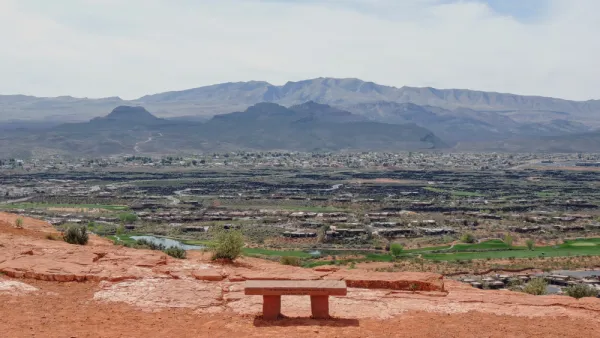
The Nation’s Fastest Growing Town Needs More Water
Cheap water flows freely to the golf courses of St. George, Utah, but all the new residents mean it’s going to have to increase supply or reduce demand—or both.
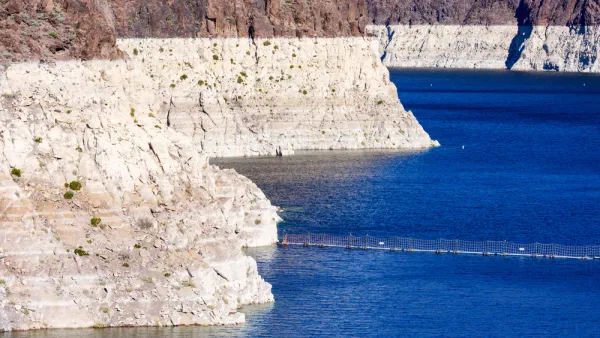
Colorado River Water Crisis Deepens
The states that rely on the Colorado’s water must make drastic cuts in water usage to maintain use of the West’s most important—and most threatened—water source.
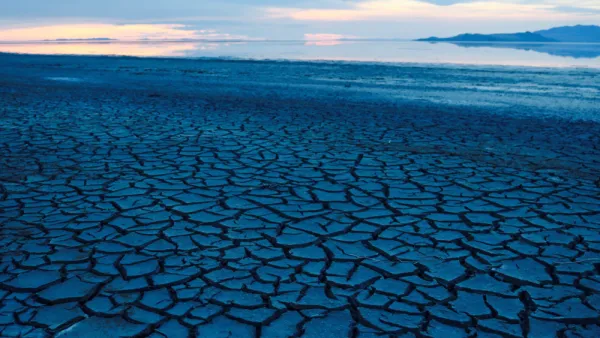
Shrinking Great Salt Lake Is a Ticking Time Bomb
Climate change and population growth are shrinking the Great Salt Lake. The environmental consequences are dire.

The state-sanctioned urbicide of Austin
People don’t kill cities. Freeways do.

US to reduce Colorado River water deliveries to Mexico
A new Colorado Treaty amendment reduces Mexico’s Colorado River water allocation by 250,000 acre feet.

New Jersey’s second-largest city bans standalone data centers
Jersey City will continue to allow co-location facilities, such as those meant for research institutions that store their own data.

Amtrak not solely to blame for New Jersey commuter rail's unreliability, report finds
A new study from the Garden State Initiative found that NJ Transit’s budget grew 20% across a 4 year period, but reliability declined significantly over the same period.

EPA erases limits on planet-warming pollution from power plants
Under Monday’s plan, power plants would still have some limits on how much mercury, arsenic and other contaminants they can emit.

Phoenix announces new on-demand transit service, more frequent RAPID buses
Both new services will launch in October, and are part of Phoenix's Project Effective Access Solutions for Easing Congestion.

FREE Course: Walkable City 1: Why Walkability?
After describing his path towards focusing on walkability as the essence of good planning, Jeff Speck marches through his five principal reasons for making more walkable places.
Reinventing Malls: Planning Alchemy—Turning Gray Fields Into Gold
The course focuses on the opportunities and imperatives that shape reinvention of mall sites.

Eagle County Government
Harvard University Graduate School of Design
Nashville Planning Department
The Architects Foundation
University of Cincinnati Online
The Pocatello Development Authority
The Urban Renewal Agency of the City of Pocatello
Journal of the American Planning Association