The results of a parking pilot project are in.


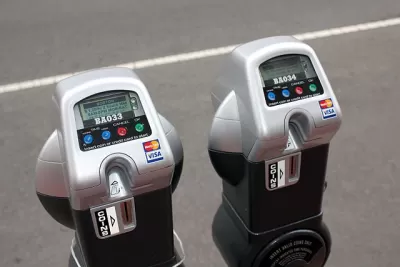
Boston officials have analyzed the results of a yearlong pilot project to test new schemes for pricing of parking in areas around the Back and Bay and Seaport District.
"City officials announced [last week] that the pilot program, which began on Jan. 3, 2017, showed increases in available metered parking spaces in both areas, as well as decreases in double-parked vehicles and resident-only parking violations," reports Lisa Creamer.
According to Creamer, the pilot project deployed two separate models for parking prices. "On some often-congested arteries in the Back Bay, officials upped the price of metered parking by $2.50 to $3.75 per hour," explains Creamer. "In the Seaport District, the city used what's called 'dynamic pricing,' using sensors in meters to determine the cost of metered parking rates based on the availability of spaces."
The city faced criticism from Mayor Martin J. Walsh in September, when he argued that the program hadn't helped congestion as much as hoped.
Still, the results show a change in parking availability: "Boston saw an 11 percent increase in open metered spots in the Back Bay, while the Seaport saw a modest 1 percent increase in available spaces," according to the analysis released last week.
Read the full story: Increase In Metered Parking Costs Led To More Spaces, Say Boston Officials


A New Era of On-Street Parking Policies
The influence of Donald Shoup's classic book, "The High Cost of Free Parking," is becoming more and more apparent in more and more cities around the country.
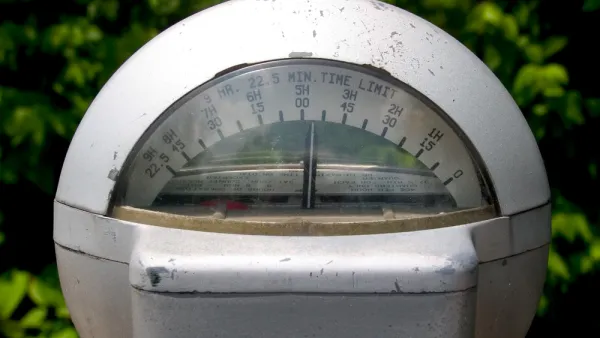
Demand-Based Pricing for On-Street Parking Pilot Finds Success in D.C.
It's rare to see a policy so effective in achieving its goals.
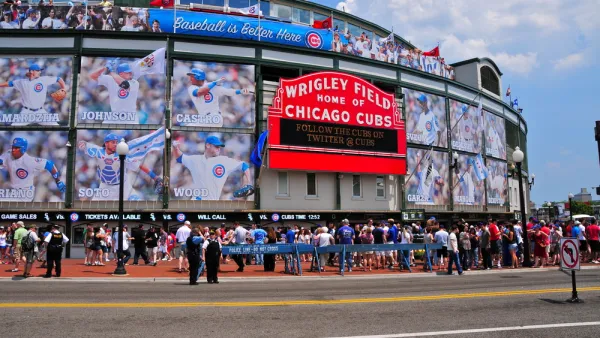
Dynamic Parking Prices Lack Political Will, Local Support Near Wrigley Field
Setting the example for the rest of city was too tough a pill to swallow for businesses located near Wrigley Field.

Planetizen Federal Action Tracker
A weekly monitor of how Trump’s orders and actions are impacting planners and planning in America.

Amtrak, CN end decades-long dispute with eight-year agreement
The new operating agreement establishes an updated framework for the companies to work together, including processes to resolve disputes.

Judges permit Denver to divert 77,000 acre feet from the Colorado River for reservoir expansion
Overuse and climate change have caused the Colorado River’s water levels to plummet.

NYC DOT wants faster, more permanent street upgrades
The city is examining ways to build more concrete infrastructure without getting entangled in 'decades-long' projects.

'Something we’ve never seen before:' rising utility rates could strain city finances nationwide
Data centers, climate change and other factors have caused utility rates in the United States to increase by 38% since 2020.

Trump to overrule local leaders, lease millions of acres of America’s Pacific Island territories’ seafloors to mining companies
International law says that the Indigenous people of America’s territories have a right to prior and informed consent regarding projects that impact their countries.

FREE Course: Walkable City 1: Why Walkability?
After describing his path towards focusing on walkability as the essence of good planning, Jeff Speck marches through his five principal reasons for making more walkable places.
Reinventing Malls: Planning Alchemy—Turning Gray Fields Into Gold
The course focuses on the opportunities and imperatives that shape reinvention of mall sites.

.jpg)
Harvard University Graduate School of Design
KFH Group Inc.
Greater Baltimore Committee
The Architects Foundation
University of Cincinnati Online
The Pocatello Development Authority
The Urban Renewal Agency of the City of Pocatello