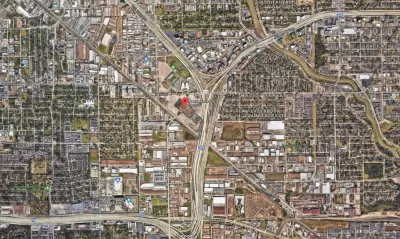
A Texas mall that opened in 1968 and largely closed ten months ago has been picked by Texas Central Partners as the Houston terminal of the Dallas-to-Houston high-speed rail. The site is far from downtown and distant from public transit.


The Texas Bullet Train appears to forgo one of the great advantages of high-speed rail: easy access from downtown to train terminals, on both ends of the line as well as the one intermediate stop.
The 45-acre site of Houston's Northwest Mall, which operated for almost half a century before largely closing last March, may see new life with the announcement Monday by Texas Central Partners (TCP) and Houston-area elected officials that it has been selected "as its preferred site for the southern terminal" of the 240-mile Dallas-to-Houston high-speed rail line, reports Dug Begley for the Houston Chronicle. Three renderings of the station are available in the article.
The announcement was timed to coincide with a public hearing Monday night in Cypress [unincorporated community in Harris County, pop. 123,000] on the high-speed rail line, where critics lined up to lament the plan, which calls for trains on elevated tracks.
The site, about eight miles northwest from downtown Houston, was one of three that TCP was considering, though the other two were near the aging mall, reports Brandon Formby for The Texas Tribune.
The chosen location is about 1.5 miles from Northwest Transit Center, a major bus hub and the closest public transportation connection. Despite that distance, the company said in a prepared statement Monday that the station will provide “convenient, efficient and direct” connections to the Houston METRO transit system.
Texas Central President Tim Keith said the company chose the aging mall, which only has a few open stores left, because of its proximity to existing roads and highways.
As for the southern, Dallas station, "Texas Central said the terminal will be built on a largely vacant 60-acre plot south of the Kay Bailey Hutchison Convention Center in the revitalized Cedars neighborhood, near the Interstate 30 and Interstate 35 interchange," states the company's Jan. 29 press release [pdf].
The 90-minute ride from Dallas to Houston will have only one intermediate stop, in Brazos Valley near Texas A&M University, reports The Jewett Messenger on Jan. 29. [See map of route showing all three stations].
Texas Central said the terminal will be built on 60 acres in the Roans Prairie area of Grimes County, ideally located along Highway 30 and just west of Highway 90, about equidistant between College Station and Huntsville.
"The project, expected to cost between $15 billion and $18 billion to build, must receive federal approval to proceed, even though it is privately funded," adds Begley for the Chronicle. Construction should begin next year.
Hat tip to Lauren Gardner of POLITICO Morning Transportation.
Read the full story: Northwest Mall could gain new life as terminal for Houston-Dallas bullet train

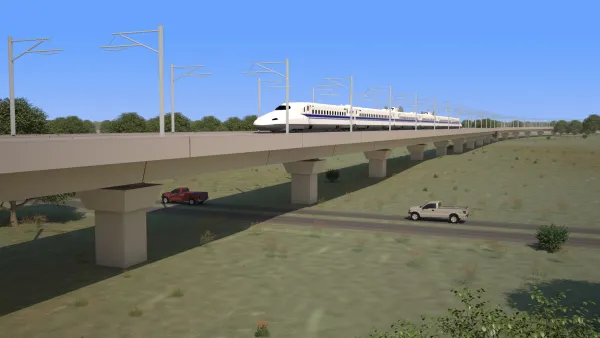
Texas Central High-Speed Rail Gets Green Light From Feds
The Federal Railroad Administration has granted two key permissions for Texas Central to operate a high-speed trail between Houston and Dallas.
Report: Texas High-Speed Rail Worth $35 Billion in Economic Benefit by 2040
A report commissioned by Texas Central Partners is the first to calculate the potential economic benefit of a proposed privately developed high-speed rail connection between Houston and Dallas.
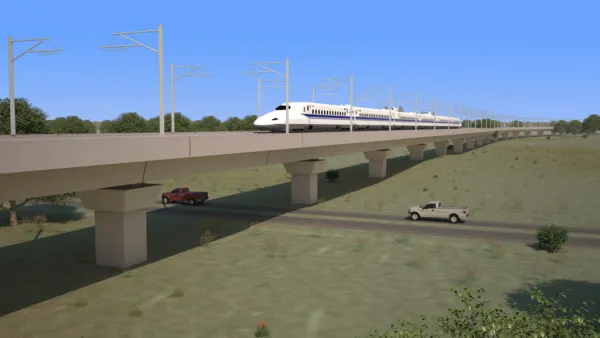
Eminent Domain Questions Still Dog Texas Central High Speed Rail Plans
The Texas Attorney General took a break from its crusade against unsubstantiated claims of voter fraud to weigh in on a controversial question of property rights.

Planetizen Federal Action Tracker
A weekly monitor of how Trump’s orders and actions are impacting planners and planning in America.

California plans to bury El Niño’s downpour
If the state plays its cards right, it may be able to store a billion acre-feet of El Niño’s water in aquifers.

Desperate measures: Advocates weigh draining Lake Powell to fill Colorado River
Draining the reservoir could reduce evaporation losses by a couple hundred thousand acre-feet.

Chicago Avenue bridge construction delays enrages city leaders
The bridge has been closed since 2025. The city originally aimed to re-open it in December, and now expects to finish construction in 2027.

NYC bus network redesign speeds up Queens buses
Rush routes have seen a 4.6% speed increase after the redesign.

California High-Speed Rail Authority picks trainset manufacturer
The California High-Speed Rail Authority aims to start servicing passengers by 2033.

FREE Course: Walkable City 1: Why Walkability?
After describing his path towards focusing on walkability as the essence of good planning, Jeff Speck marches through his five principal reasons for making more walkable places.
Reinventing Malls: Planning Alchemy—Turning Gray Fields Into Gold
The course focuses on the opportunities and imperatives that shape reinvention of mall sites.

City of Rosemead
Rutgers University, Edward J. Bloustein School of Planning and Public Policy
One Hundred Miles
Hunter College, City University of New York (CUNY)
The Architects Foundation
University of Cincinnati Online
City of Cambridge
Montrose County
The Pocatello Development Authority