Vehicle Miles Traveled (VMT) fees are a bad way to pay for roads, according to an article by Joe Cortright.


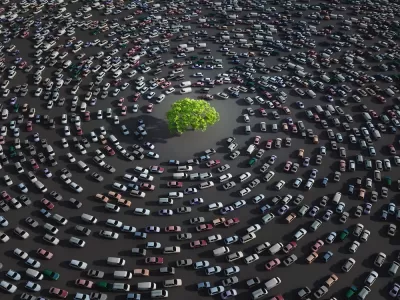
"While we desperately need a way to pay for roads that better reflects the value of the space we use, just moving to a new model isn’t enough. If we don’t get the new pricing system right, it could make many of our transportation problems worse," writes Joe Cortright.
According to Cortright, technology and consumer acceptance have advanced beyond the usefulness of the VMT fee. Instead, Cortright suggests a more holistic approach to pricing:
So as we think about how to design a road finance and pricing system to replace the gas tax (and other taxes), we ought to have a system that accounts for all the cost-drivers associated with travel: heavier vehicles that cause more road wear should pay higher fees, as should vehicles that pollute more. How much you pay to drive on a road should be related to how much that road costs to build and maintain. Use a congested urban highway at the peak hour, and you’ll pay a higher fee than if you use a rural road at 2 am.
The article critiques the VMT fee from a couple of additional angles, arguing that a VMT is unlikely to raise as much revenue as proponents of the scheme expect, and that the gas tax is already an effective carbon tax—a much more effective carbon tax than a VMT fee can be. Planetizen coverage of the first experiments with VMT fees includes stories from Oregon, Hawaii, and California. Other states could follow.
FULL STORY: An idea whose time has passed: The VMT Fee

Can State Lawmakers Make the Case for Road Charges?
More state legislatures are considering fees based on vehicle miles traveled as a replacement for declining gas tax revenues.
Survey Finds Growing Support for a Mileage Fee Over the Gas Tax
An annual survey by the Mineta Transportation Institute found new levels of support for a change in the way the federal government raises money from, and for, highway infrastructure.
Why does Maryland's gas tax change every year?
The state's annual gas tax update may still not be enough to keep up with changes in the transportation sector and rising project costs.

Planetizen Federal Action Tracker
A weekly monitor of how Trump’s orders and actions are impacting planners and planning in America.

The state-sanctioned urbicide of Austin
People don’t kill cities. Freeways do.

US to reduce Colorado River water deliveries to Mexico
A new Colorado Treaty amendment reduces Mexico’s Colorado River water allocation by 250,000 acre feet.

Mamdani overhauls NYC's Vision Zero plan with 100 new policy goals
The overhaul aims to reduce traffic deaths and make streets safer for pedestrians, cyclists and drivers through lower speed limits, new safety infrastructure and more.

Amtrak not solely to blame for New Jersey commuter rail's unreliability, report finds
A new study from the Garden State Initiative found that NJ Transit’s budget grew 20% across a 4 year period, but reliability declined significantly over the same period.

EPA erases limits on planet-warming pollution from power plants
Under Monday’s plan, power plants would still have some limits on how much mercury, arsenic and other contaminants they can emit.

FREE Course: Walkable City 1: Why Walkability?
After describing his path towards focusing on walkability as the essence of good planning, Jeff Speck marches through his five principal reasons for making more walkable places.
Reinventing Malls: Planning Alchemy—Turning Gray Fields Into Gold
The course focuses on the opportunities and imperatives that shape reinvention of mall sites.

Eagle County Government
Harvard University Graduate School of Design
Nashville Planning Department
The Architects Foundation
University of Cincinnati Online
The Pocatello Development Authority
The Urban Renewal Agency of the City of Pocatello
Journal of the American Planning Association