Oregon legislators are hard at work on two new "cap and invest" bills that would establish a "market-based, carrot-and-stick approach to reducing greenhouse gas pollution."


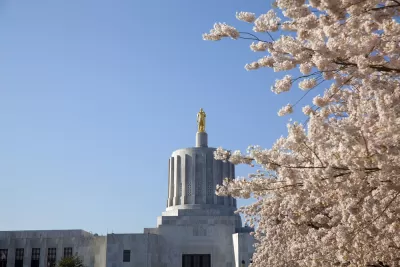
According to an article by Ted Sickinger, the state is moving forward on two bills that "will pit environmental advocates determined to see the state do more to combat climate change against business interests who believe the policy is either not ready for primetime or, worse, a job-killing energy sales tax that will deliver little benefit for the planet."
Strickland's article provides an explainer post for the concept of cap and invest—also known as cap and trade, a system already in place in Canada and California. Here's how Strickland describes the essential goal of the proposed bills: "The state would replace its current greenhouse gas reduction goals – which it’s projected to miss – with an economy-wide emissions limit that declines each year. Ultimately the target would ratchet down to meet the new emission caps: 45 percent below 1990 levels by 2035 and 80 percent below 1990 levels by 2050."
Read the full story: Understanding Oregon's 'cap and invest' climate bills

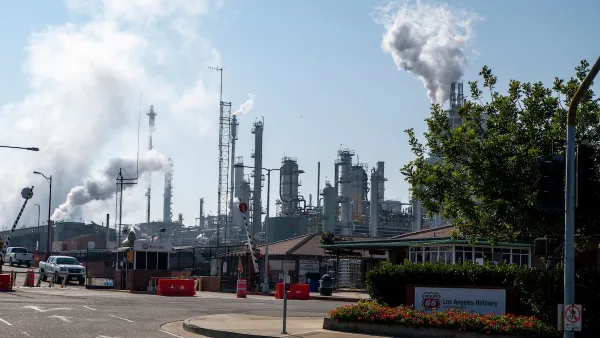
California’s Cap and Trade Program Up in the Air
The state’s carbon trading program is being attacked as ineffective from one side and overly onerous from the other.
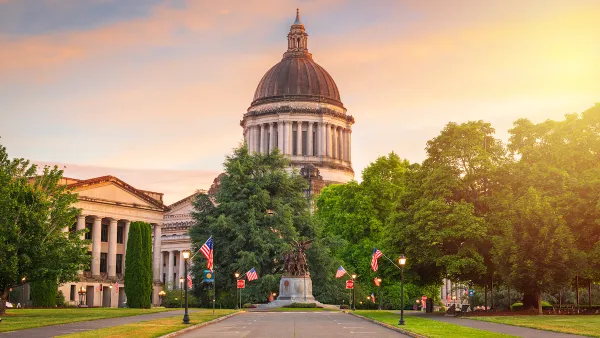
Washington Voters Keep Carbon Tax
An initiative that would have ended the state’s “cap and invest” program failed, leaving the program in place.
Meet China's New Carbon Market
The world's largest emitter of CO2, China, has adopted a cap-and-trade program would open the world's largest carbon market as early as 2016.

Planetizen Federal Action Tracker
A weekly monitor of how Trump’s orders and actions are impacting planners and planning in America.

The state-sanctioned urbicide of Austin
People don’t kill cities. Freeways do.

US to reduce Colorado River water deliveries to Mexico
A new Colorado Treaty amendment reduces Mexico’s Colorado River water allocation by 250,000 acre feet.

Nation's most wind-powered state turns to coal as data centers increase energy demand
For the first time in decades, Iowa has increased its generation of coal power.

NYC cools commuters with city's first rain garden above a bus stop
New York City officials say the plants in the rain garden can absorb 16 gallons of rainwater during heavy storms.

Brightline West’s future may rely on $6 billion federal loan
The company has until Nov. 2 to make a $400 million equity investment into its proposed high-speed rail line.

FREE Course: Walkable City 1: Why Walkability?
After describing his path towards focusing on walkability as the essence of good planning, Jeff Speck marches through his five principal reasons for making more walkable places.
Reinventing Malls: Planning Alchemy—Turning Gray Fields Into Gold
The course focuses on the opportunities and imperatives that shape reinvention of mall sites.

Greater Baltimore Committee
Eagle County Government
Harvard University Graduate School of Design
The Architects Foundation
University of Cincinnati Online
The Pocatello Development Authority
The Urban Renewal Agency of the City of Pocatello
Journal of the American Planning Association