Earlier this month, the Hartford Planning and Zoning Commission voted unanimously on a revised zoning code that lets builders forgo parking citywide.



In what many urbanists will consider a victory, the city of Hartford, Connecticut has abandoned parking minimums on new construction. This follows a similar decision by Buffalo, New York in January 2017.
Angie Schmitt writes, "The Hartford legislation goes farther than Buffalo's in some ways, with fewer loopholes. (In Buffalo, the City Council can still decide to require parking through a review process for projects larger than 5,000 square feet.) But because parking mandates for car dealerships are Connecticut state law, those minimums remain in the Hartford code. Other special uses, like stadiums, will be subject to case-by-case review."
According to Sara Bronin, who chairs Hartford's Planning and Zoning Commission, eliminating parking mandates downtown has made it easier for developers to rehabilitate buildings there. That decision came two years before the citywide rule change.
"The reforms are expected to reduce housing costs, cut traffic, and reduce harmful runoff. About 42 percent of Hartford is impermeable surfaces, says Bronin, which contributes to water pollution and the urban heat island effect."
Read the full story: Hartford Eliminates Parking Minimums Citywide
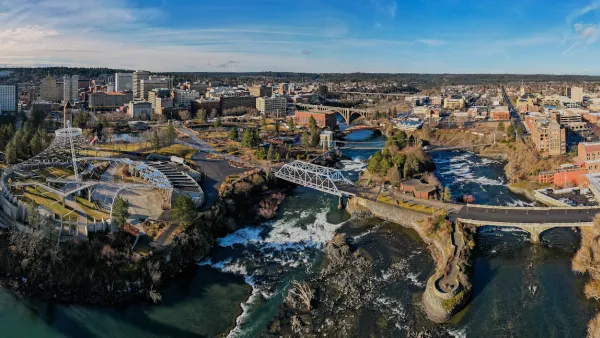
Spokane Could Eliminate Parking Minimums Near Transit
A Washington state proposal to reduce parking minimums failed in the state legislature earlier this year.
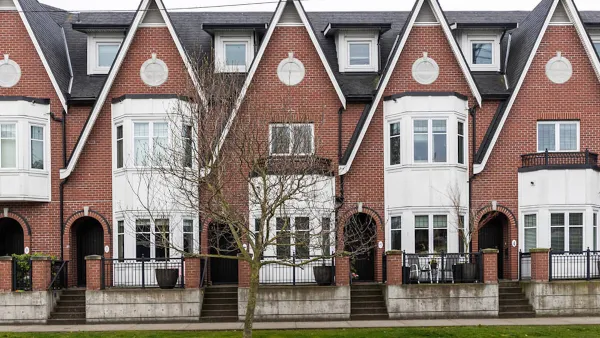
More Affordable Housing for People, Less for Cars
Most jurisdictions have off-street parking requirements that increase motorists’ convenience but reduce housing affordability. It’s time to reform these policies for the sake of efficiency and fairness.
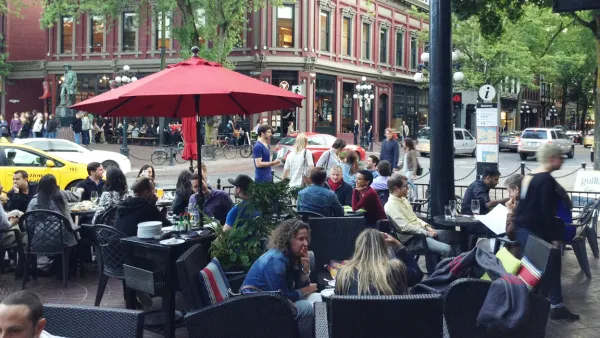
How Zoning Reform Can Help Businesses Transition to Outdoor Operations
A trend toward allowing restaurants and retailers to expand operations to the public realm outside their brick and mortar confines is quickly gaining steam.

Planetizen Federal Action Tracker
A weekly monitor of how Trump’s orders and actions are impacting planners and planning in America.

California plans to bury El Niño’s downpour
If the state plays its cards right, it may be able to store a billion acre-feet of El Niño’s water in aquifers.

Desperate measures: Advocates weigh draining Lake Powell to fill Colorado River
Draining the reservoir could reduce evaporation losses by a couple hundred thousand acre-feet.

Housing is the top priority of Seattle’s sole new councilmember
Jenks campaigned on building 1,000 new units of affordable housing.

New tax cuts may slash $1.5 billion in funding for Miami transit, public parks
Amendment 3 will save Miami-Dade homeowners $2,700 in 2028.

Arizona, Wisconsin, Pennsylvania hope to finally advance climate goals post-midterms
The three states have spent years under Republican or divided control.

FREE Course: Walkable City 1: Why Walkability?
After describing his path towards focusing on walkability as the essence of good planning, Jeff Speck marches through his five principal reasons for making more walkable places.
Reinventing Malls: Planning Alchemy—Turning Gray Fields Into Gold
The course focuses on the opportunities and imperatives that shape reinvention of mall sites.

City of Rosemead
Rutgers University, Edward J. Bloustein School of Planning and Public Policy
One Hundred Miles
University of Michigan School for Environment and Sustainability (SEAS)
Hunter College, City University of New York (CUNY)
The Architects Foundation
City of Cambridge
Montrose County
The Pocatello Development Authority