The half-cent sales tax will fund new rebate programs for zero and near zero-emissions vehicles and multimodal transportation. Opponents claim the privilege tax, as it is called, violates the state constitution because revenues aren't used for roads.


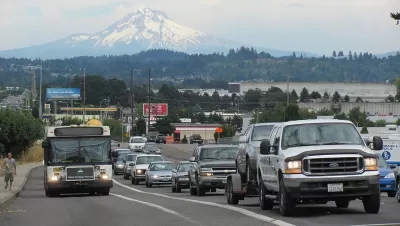
"A group that includes the AAA Oregon/Idaho and the Oregon Trucking Association is asking the state Supreme Court to block a portion of a pending state law they say improperly imposes what amounts to a sales tax worth up to $60 million on new car sales," reports Gary Warner for The Bulletin. The taxes and fees in the law, HB 2017, take effect on Jan. 1.
The pending state law is HB 2017, which also includes a staged, 10-cent gas tax hike and a first-of-its-kind bike tax, passed the legislature in July, and was signed by Democratic Gov. Kate Brown in August. Only the vehicle privilege tax is targeted in the lawsuit.
The petition filed Nov. 3 takes aim at a 0.5 percent “privilege” tax on dealers for every new car sold in Oregon. Under the tax, dealers can pass along the privilege tax through the final sales price of the vehicle. For example, a 2018 Subaru Outback 25i with a retail price of $24,000 would be subject to a $120 privilege tax.
The group says the tax is barred by a voter-approved 1980 law that all vehicle taxes go to a fund to build and maintain state roads and highways.
Lawmakers expected challenge
"Lawmakers were worried that the privilege tax might derail the whole legislation, so they inserted language calling for an expedited review if the tax was challenged," adds Warner. The attorney for the plaintiffs indicates that "the case will likely be heard March 24," well after the tax takes effect.
The constitutional provision in question is Article 9 which "states that 'any tax or excise levied on the ownership, operation, or use of motor vehicles' must go to pay for road construction and maintenance," reported Saul Hubbard and Sherri Buri McDonald for The Register-Guard on May 7, when the legislature was considering a one percent privilege tax. "That provision dates to 1980, when voters approved a ballot measure restricting the use of highway fund dollars."
More about the vehicle privilege tax
It got its quirky name because it's a tax "for the privilege of selling new vehicles in Oregon," so it applies to in-state dealers, according to the Oregon Department of Revenue. In addition, "Oregon residents and businesses that purchase vehicles outside of Oregon" are also subject to the sales tax.
Furthermore, it's not just passenger motor vehicles, but motor homes, trucks and truck trailers weighing under 26,000 pounds, and electric-assist bikes that are subject to the tax, explaining the involvement of the trucking association as well as the AAA in the lawsuit.
About where the revenues go
According to the Oregon Department of Environmental Quality, the upcoming Zero Emission Vehicle Rebate Program will "provide rebates to Oregonians who purchase certain types of electric vehicles (including plug-in hybrid electric vehicles) and other qualifying zero-emissions vehicles (ZEVs). This program was designed by the Oregon legislature to encourage higher adoption of ZEVs, reducing air pollution and advancing progress toward the state’s greenhouse gas reduction goals."
While the state will begin collecting funds on January 1, 2018, the amount of funds collected will not be sufficient to start granting rebates until the summer of 2018.
As posted in September, rebate revenues also fund a new "Charge Ahead Oregon Program" that establishes additional rebates up to $2,500 to low and moderate income residents who retire their high-emission vehicles and purchase new or used EVs.
The first $12 million annually of privilege tax revenue goes to the Zero-Emission Incentive Fund. Remaining funds are transferred to the Connect Oregon Fund, as are revenues from the $15 excise tax paid by those who purchase bicycles costing more $200 and with a wheel diameter of 26-inches or larger. Revenues from the bike tax are restricted to funding bicycle/pedestrian infrastructure.
Hat tip to AASHTO Daily Transportation Update.
FULL STORY: High court asked to halt car tax

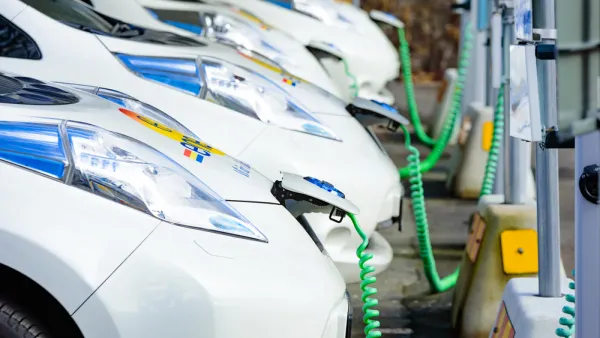
Oregon Supreme Court Rejects Challenge by AAA to Stop Electric Vehicle Rebates
A controversial new sales tax on motor vehicles in a state with no sales taxes survived a court challenge. As a result, Oregon consumers will have another reason to consider purchasing or leasing an electric vehicle: receiving up to a $5,000 rebate.
Oregon Launches EV Rebates Funded by Auto Sales Tax
Oregon is one of five states that has no sales tax, but that will change on January 1, with Gov. Kate Brown's signature on a landmark transportation funding bill that applies a half-cent sales tax to auto sales and increases gas taxes by 10 cents.

Advocates for Oregon's Carbon Pricing Plan Proceed Cautiously
With the re-election of Gov. Kate Brown and Democrats increasing their majorities in both legislative chambers, Oregon appears poised next year to pass the Clean Energy Jobs bill which caps carbon emissions, but opponents could put it on the ballot.

The state-sanctioned urbicide of Austin
People don’t kill cities. Freeways do.

US to reduce Colorado River water deliveries to Mexico
A new Colorado Treaty amendment reduces Mexico’s Colorado River water allocation by 250,000 acre feet.

New Jersey’s second-largest city bans standalone data centers
Jersey City will continue to allow co-location facilities, such as those meant for research institutions that store their own data.

Amtrak not solely to blame for New Jersey commuter rail's unreliability, report finds
A new study from the Garden State Initiative found that NJ Transit’s budget grew 20% across a 4 year period, but reliability declined significantly over the same period.

EPA erases limits on planet-warming pollution from power plants
Under Monday’s plan, power plants would still have some limits on how much mercury, arsenic and other contaminants they can emit.

Phoenix announces new on-demand transit service, more frequent RAPID buses
Both new services will launch in October, and are part of Phoenix's Project Effective Access Solutions for Easing Congestion.

FREE Course: Walkable City 1: Why Walkability?
After describing his path towards focusing on walkability as the essence of good planning, Jeff Speck marches through his five principal reasons for making more walkable places.
Reinventing Malls: Planning Alchemy—Turning Gray Fields Into Gold
The course focuses on the opportunities and imperatives that shape reinvention of mall sites.

Eagle County Government
Harvard University Graduate School of Design
Nashville Planning Department
The Architects Foundation
University of Cincinnati Online
The Pocatello Development Authority
The Urban Renewal Agency of the City of Pocatello
Journal of the American Planning Association