A new guide seeks to answer that question for any street in the world.


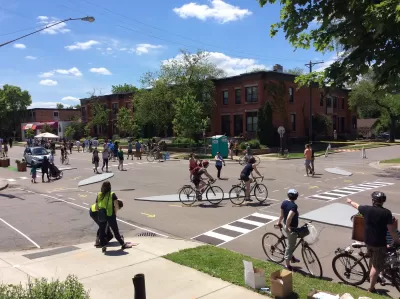
The National Association of City Transportation Officials has released a guide to determining what kind of bike infrastructure to install on any given street. It's one of the most comprehensive such guides in the nation, according to Michael Andersen.
By analyzing the basic components of streets—like auto speed, traffic volume, and lane count—NACTO's formula can recommend a type of bike lane for a street with any combination of those factors. For example:
Got a two-lane, two-way 25 mph street that carries 4,000 autos per day? According to NACTO, a buffered bike lane will do. But if the traffic speed is 30 mph, it’s time to protect the bike lane with a curb, posts or planters.
In some cases, the guide also recommends changing the variables that make stricter precautions necessary in the first place—such as by slowing vehicular traffic to reduce the number and speed of cars passing by bike riders. Overall, the calculations are aimed at producing a "high-comfort" experience for riders "of all ages and abilities"—a higher standard than many existing local guides, Andersen points out.
FULL STORY: Which Bike Lanes Should Be Protected? New Guide Offers Specifics

Cleveland to Boost Bike Safety With New Bike Lanes, School Programs
The program, using curriculum created by Cleveland Bikes, is part of a broader effort to improve safety along school routes.
Austin Outlaws Blocking Bike Lanes
Drivers who park in bike lanes will receive citations of up to $300.
NACTO Releases Updated Urban Bikeway Guide
The third edition of the nationally recognized road design guide includes detailed design advice for roads that prioritize safety and accessibility for all users.

The state-sanctioned urbicide of Austin
People don’t kill cities. Freeways do.

US to reduce Colorado River water deliveries to Mexico
A new Colorado Treaty amendment reduces Mexico’s Colorado River water allocation by 250,000 acre feet.

New Jersey’s second-largest city bans standalone data centers
Jersey City will continue to allow co-location facilities, such as those meant for research institutions that store their own data.

Amtrak not solely to blame for New Jersey commuter rail's unreliability, report finds
A new study from the Garden State Initiative found that NJ Transit’s budget grew 20% across a 4 year period, but reliability declined significantly over the same period.

EPA erases limits on planet-warming pollution from power plants
Under Monday’s plan, power plants would still have some limits on how much mercury, arsenic and other contaminants they can emit.

Phoenix announces new on-demand transit service, more frequent RAPID buses
Both new services will launch in October, and are part of Phoenix's Project Effective Access Solutions for Easing Congestion.

FREE Course: Walkable City 1: Why Walkability?
After describing his path towards focusing on walkability as the essence of good planning, Jeff Speck marches through his five principal reasons for making more walkable places.
Reinventing Malls: Planning Alchemy—Turning Gray Fields Into Gold
The course focuses on the opportunities and imperatives that shape reinvention of mall sites.

Eagle County Government
Harvard University Graduate School of Design
Nashville Planning Department
The Architects Foundation
University of Cincinnati Online
The Pocatello Development Authority
The Urban Renewal Agency of the City of Pocatello
Journal of the American Planning Association