Hurricane Maria left the flooded island of 3.4 million American citizens without power, communications, and running water, which may take months before they are restored. An exodus to Florida, which had begun before Maria hit, will likely accelerate.


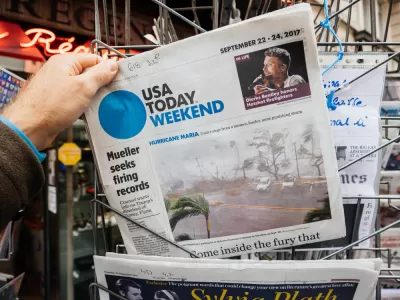
The devastation caused by Hurricane Maria, which made landfall on September 20, has been described as "apocalyptic," and despite claims by the Trump Administration that "[t]he federal response has been anything but slow," the island's residents, who are American citizens as the island is an unincorporated U.S. territory, are hurting badly.
All of the electricity on the island now comes from generators. The problem lies not with the power plants, but from the fact that "roughly 80 percent of transmission lines which take power from the plants to distribution centers, are down," reports Rachel Becker for The Verge.
The mayor of San Juan has said she expected it could take four to six months for the lights to turn back on — but the Puerto Rico Electric Power Authority's chief executive told the New York Times he expected three to four months, at most.
"Even before it was hit by Irma [on Sept. 20] and now Maria, the Puerto Rico Electric Power Authority said it needed more than $4 billion to overhaul its outdated power plants and reduce its heavy reliance on imported oil," reported Steven Mufson for The Washington Post. "The company filed, in effect, for bankruptcy July 2."
Similarly, the island had already suffering from a host of economic and financial problems well before the two hurricanes hit, reports for The Washington Post, which resulted in an exodus of "about 80,000 Puerto Rico residents" moving to the mainland United States last year. "Most of them relocated to Florida."
[T]he arrival of thousands of island transplants has transformed cities such as Orlando and Kissimmee and is changing local and national politics. Puerto Ricans are U.S. citizens who can participate in presidential primaries but cannot vote for president while living on the island.
Another area likely to see Puerto Rican migration in the "thousands" will be New York City, said Mayor Bill de Blasio, report Yoav Gonen and Danika Fears for The New York Post.
Without immediate help from the US government to rebuild the island, “there will be a mass exodus to the United States,’’ said Puerto Rico Gov. Ricardo Rosselló.
"Rep. Nydia M. Velázquez (D-N.Y.), whose Brooklyn-area district has a significant Puerto Rican constituency...warned that if legislation addressing the economic problems isn’t coupled with federal hurricane relief, 'we’re going to have an unprecedented number of people who will continue to leave the island,'" adds O'Keefe.
Read the full story: Hurricanes may compel even more Puerto Rico residents to flee to the mainland, officials warn

An Island of 3.4 Million Living Off the Grid
Living off the grid usually refers to a lifestyle choice to live far from power lines and other basic infrastructure that most of civilization takes for granted—until a natural disaster wipes it all out.
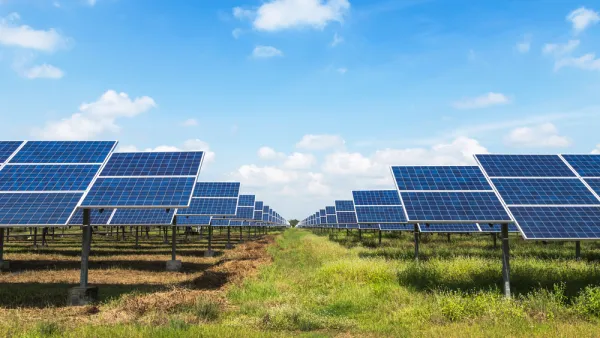
Solar Industry Growing Fast, but is Hampered by Aging Grid
One of solar’s biggest challenges is getting the energy where it needs to go.
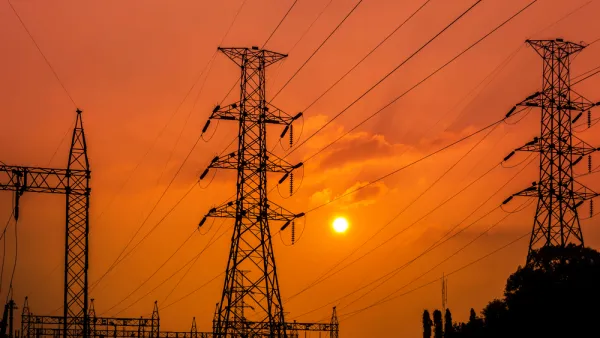
Disaster Averted!
The California power grid withstood its biggest test ever on Tuesday and passed—barely. The only rolling blackouts that occurred during the Stage Three Energy Emergency alert were results of miscommunication.

Planetizen Federal Action Tracker
A weekly monitor of how Trump’s orders and actions are impacting planners and planning in America.

Amtrak, CN end decades-long dispute with eight-year agreement
The new operating agreement establishes an updated framework for the companies to work together, including processes to resolve disputes.
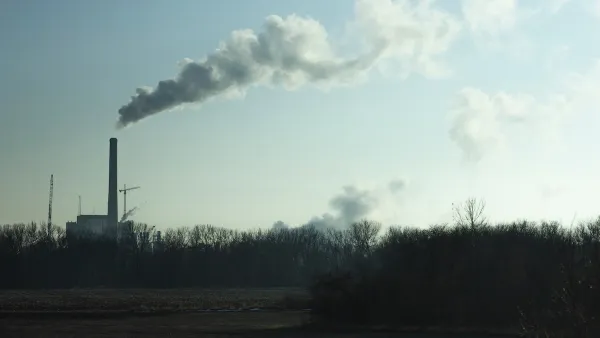
Nation's most wind-powered state turns to coal as data centers increase energy demand
For the first time in decades, Iowa has increased its generation of coal power.

Alabama scores up to $2.5 billion federal loan for largest infrastructure project in state’s history
The Mobile River Bridge and Bayway Project aims to ease congestion at Alabama’s worst bottleneck.

Trump is considering data centers on 6 states' public land — some state officials say they had no idea
If the administration approves the proposed projects, data center and data center-related developments will cover 17,600 acres of public land.

Despite court ruling, Trump is keeping nearly all wind projects in the US on hold
At least 110 wind energy projects have not heard from the government since a federal judge ruled that the Trump administration's freeze on wind turbine clearances was likely illegal.

FREE Course: Walkable City 1: Why Walkability?
After describing his path towards focusing on walkability as the essence of good planning, Jeff Speck marches through his five principal reasons for making more walkable places.
Reinventing Malls: Planning Alchemy—Turning Gray Fields Into Gold
The course focuses on the opportunities and imperatives that shape reinvention of mall sites.

KFH Group Inc.
Greater Baltimore Committee
Eagle County Government
The Architects Foundation
University of Cincinnati Online
The Pocatello Development Authority
The Urban Renewal Agency of the City of Pocatello