Reno is considering a law that critics say is a textbook example of the criminalization of homelessness and everyday life.



As part of an effort to revitalize Reno's downtown core, business owners and city officials are moving to push out a growing number of people living on the streets. Next City's Josh Cohen reports:
The proposed ordinance would make it illegal to climb, sit or lay on public structures not 'designated for such purpose'; to spit on public property; sleep on public or private property without permission; use a cell phone while crossing the street; or sit or lay in Retrac Plaza, a large, open plaza in the heart of downtown. Violators would face a penalty of eight to 200 hours of community service cleaning up downtown.
Supporters say that by focusing on these "aggressive" behaviors, the law avoids targeting a class of people. But Cohen writes, "Though the ordinance focuses on some behaviors that aren't specific to homeless people, there's no question it is an ordinance targeted at people living and sleeping downtown, a group that some business owners see as an impediment to downtown revitalization plans and a new business improvement district to help fund it."
Advocates say the proposal is an improvement over previous anti-homelessness efforts, primarily because it would usher in a new police protocol to prioritize assistance over arrest. Cohen has his doubts: "the city's priorities are out of order, [and] without first addressing macro issues such as a lack of affordable housing and robust social services for homeless residents, the ordinance will only exacerbate things."
Read the full story: In Push for Downtown Revitalization, Reno Might Criminalize Homelessness

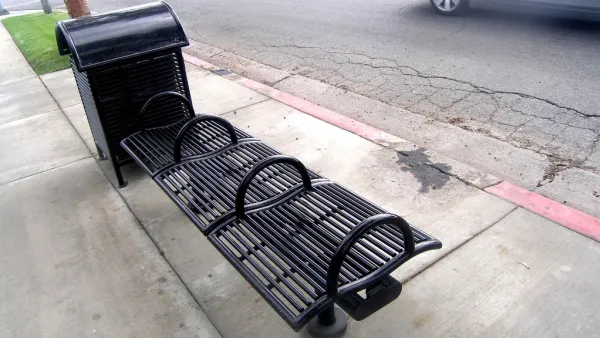
Booming Downtowns Are Squeezing Out Homeless Shelters
In downtowns across America, booming development has come at the expense of crucial homeless services that have traditionally located there.

Downtown Reno: A Place Where Nobody Dared to Go
Residents of Reno, Nevada participating in a rewrite of the city’s master plan have spoken out about the myriad of problems afflicting their downtown—it's dirty, dangerous, and deserted.
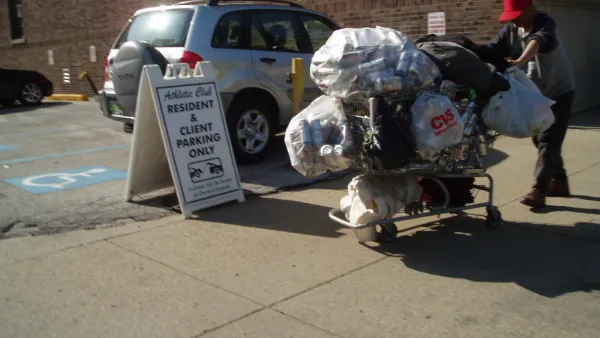
Indiana bans public homelessness
A new law prohibits sleeping or camping on public property.

Planetizen Federal Action Tracker
A weekly monitor of how Trump’s orders and actions are impacting planners and planning in America.

Northwest rail fans eager for Sept. 30 debut of Amtrak’s Airo fleet
Get ready for that new train smell and more seats. But they won’t go faster or run more frequently on the Cascades route in Washington and Oregon.

Record-breaking wildlife overpass in Colorado brings 91% reduction in animal collisions
Prior to the overpass, vehicles were hitting one deer per day on Colorado’s Interstate 25.

Detroit to transform waterfront with $2.2 billion investment
Developers will convert about 18 acres of unused parking lot space into civic spaces.

‘Going backwards:’ Baltimore mayor, students rally against state's transit funding plan
Maryland's proposed six-year plan provides no funding for Baltimore’s BMORE bus program and reduces its road maintenance funding.

Trump wants to cancel nearly 98% of funding for HUD housing support program
Multiple housing groups are suing the administration in an effort to preserve the funding.

FREE Course: Walkable City 1: Why Walkability?
After describing his path towards focusing on walkability as the essence of good planning, Jeff Speck marches through his five principal reasons for making more walkable places.
Reinventing Malls: Planning Alchemy—Turning Gray Fields Into Gold
The course focuses on the opportunities and imperatives that shape reinvention of mall sites.

City of Thousand Oaks
City of Wisconsin Rapids
Harvard University Graduate School of Design
The Architects Foundation
University of Cincinnati Online
Northern Illinois Transit Authority (NITA)
The Pocatello Development Authority
The Urban Renewal Agency of the City of Pocatello